
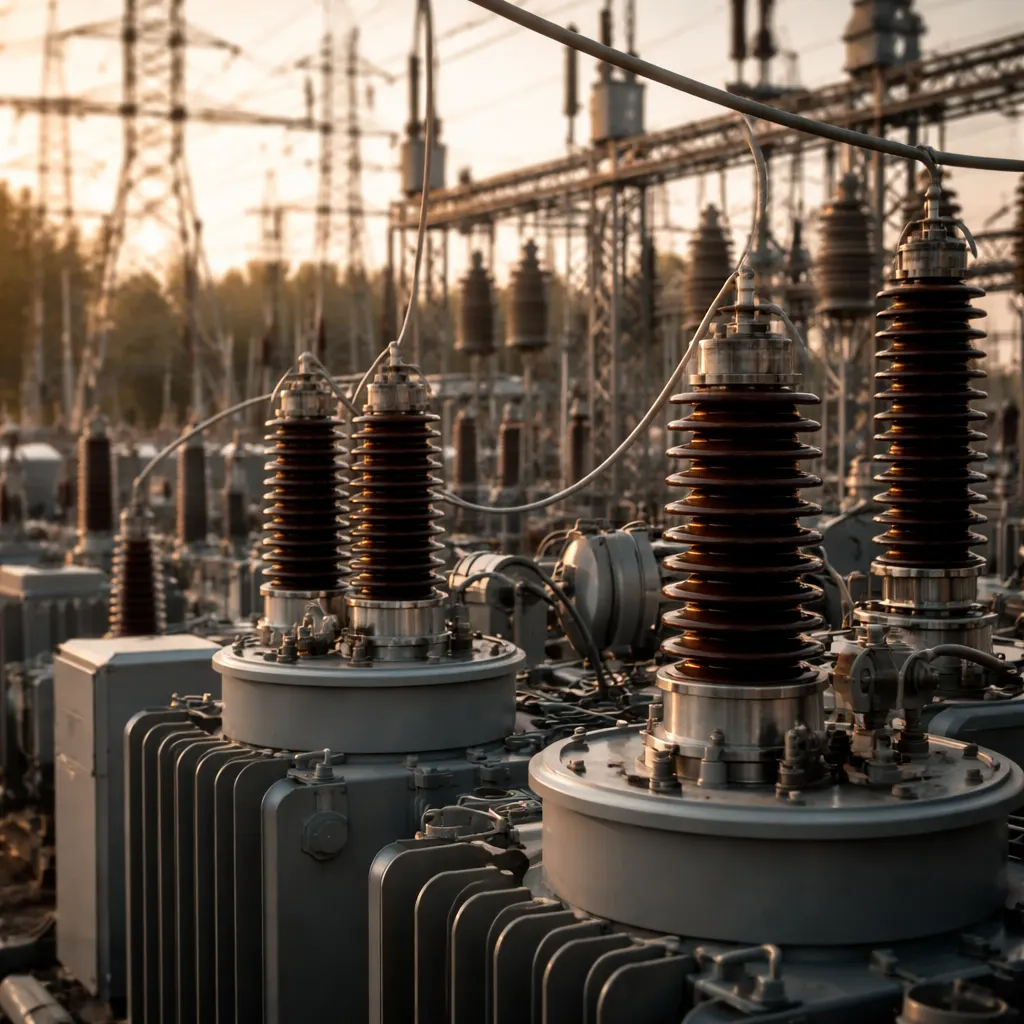
President Donald Trump on Wednesday signed an executive order preparing to prevent utilities from connecting certain foreign-manufactured equipment to the nation's bulk power system, including transformers, batteries, inverters, and related software and digital products. The directive also allows for the removal of equipment already in place, according to a White House fact sheet. The order targets transactions involving foreign nationals that pose what the administration calls an "undue risk of sabotage, unauthorized access, or other disruption" and applies to equipment above the distribution level.
The executive order instructs the Secretary of Energy to draft implementing rules within 120 days. It permits the Energy Secretary to place conditions on the continued use, operation, maintenance, servicing, or updating of foreign-made or foreign-operated bulk power system equipment that was acquired or installed before the order's signing date. The White House justified the action by citing an "extraordinary foreign threat" involving bulk power systems made overseas that may create national security weaknesses. The administration pointed to the rapid expansion of advanced manufacturing, data centers, artificial intelligence, and defense production, which has made the nation more dependent on abundant, reliable electricity and heightened the potential damage from a successful attack. According to the International Energy Agency, China is responsible for 80% or more of global production of certain grid equipment, including lithium-ion battery cells and some solar components.
The Edison Electric Institute, which represents investor-owned power companies, said utilities are committed to collaborating with the Department of Energy "on the implementation of [the] order to ensure that we can maintain the reliability and affordability of electricity across the country," spokesperson Dani Marx told Utility Dive. The trade group estimated last year that U.S. electric utilities would invest $1.1 trillion between 2025 and 2029, a sharp increase in capital spending to meet rising demand. By comparison, capital expenditures from 2015 to 2024 totaled $1.3 trillion, the group noted. Manufacturers of grid equipment said they're still reviewing the directive and will likely require clarification on multiple aspects.
Bridget Bartol, who leads industry and regulatory affairs at the National Electric Manufacturers Association, described Trump's Wednesday order as building off a 2020 executive order that focused on large power transformers from China, calling it "kind of an update and expansion." But Bartol cautioned that the order has the potential to create confusion in the markets and emphasized the need for continued engagement with the administration. Software provisions, in particular, may "raise a lot of questions around what does it mean to be designed and developed by a covered foreign entity," she said, noting that the order doesn't identify specific countries. The lack of clarity around which entities are covered means "there's going to be a lot of dialog between the industry and the administration," Bartol said.