
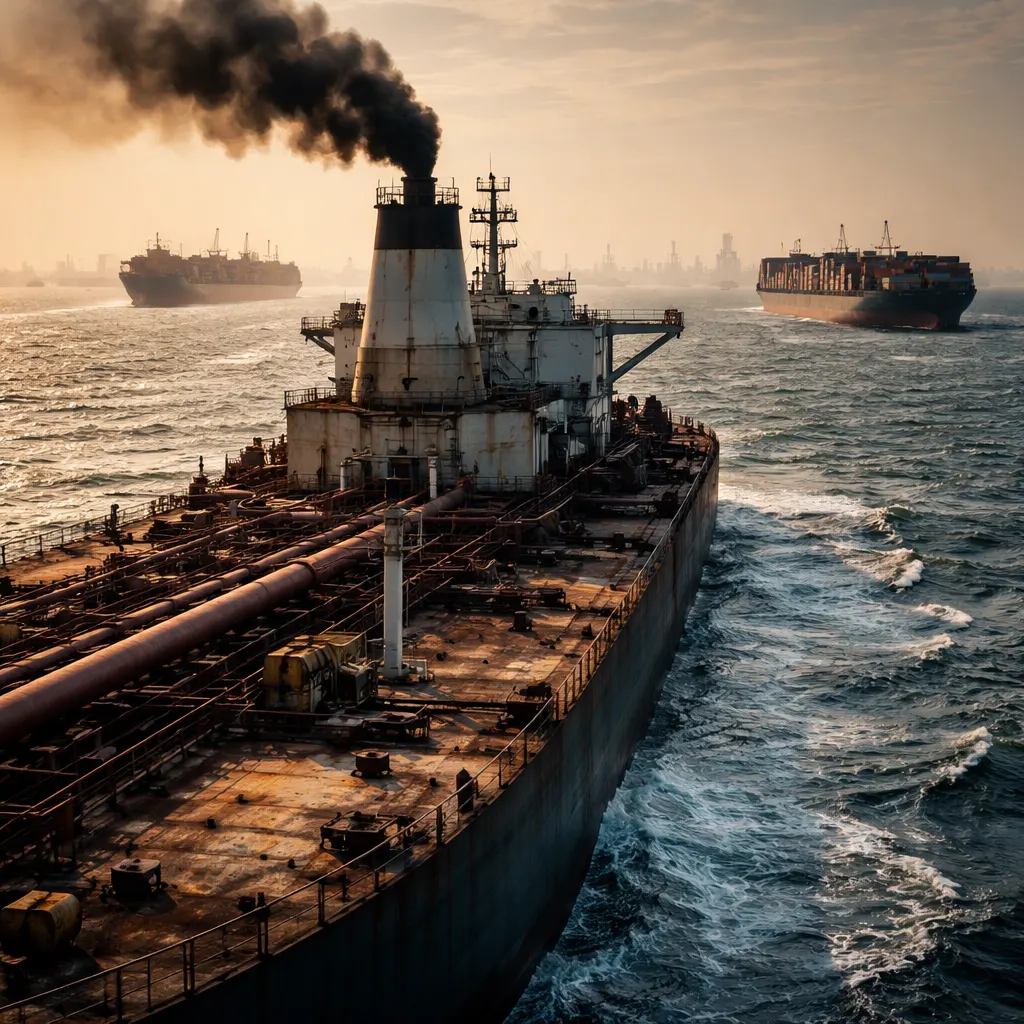
Fuel costs per container on a typical China-to-U.S. West Coast voyage jumped from $155 to $269 for the newest ships and from $360 to $626 for the oldest ships after oil prices surged 74% in early 2026, according to a report published by the Federal Reserve Bank of St. Louis in July 2026. The analysis examines how the Iran war and the resulting blockade of the Strait of Hormuz, which carried roughly one-fifth of world oil supply before the disruption, affected container shipping costs across different types of vessels. The report finds that oil-price shocks hit older, smaller ships far harder than modern, large containerships.
The report measured bunker fuel prices before and after the shock using February 2026 as a baseline, when Very Low Sulfur Fuel Oil averaged $518 per ton, and March through May 2026 as the post-shock period, when prices averaged $901 per ton. On a standard 21-day trans-Pacific voyage, fuel costs per 20-foot container rose from $365 to $635 for the smallest feeder ships and from $98 to $171 for the largest Post-Panamax vessels. Ships up to five years old use about 0.014 tons of fuel per container per day, while ships older than 20 years burn about 0.033 tons per container per day. Oil flows through the Strait of Hormuz averaged about 20.5 million barrels per day in 2025 before the blockade. The Drewry World Container Index, which averaged about $1,930 per 40-foot container in February 2026, rose gradually after the shock, while oil and bunker fuel prices spiked sharply.
The report finds that under a competitive benchmark where firms earn zero profits, "the increase in fuel cost per TEU is equal to the increase in shipping prices needed to cover the fuel shock." According to the analysis, the fuel-cost increase for ships older than 20 years on the China-to-U.S. West Coast voyage would require about $266 more per container, compared with about $114 more for ships up to five years old. The authors write that these amounts equal about 12% and 28% of February freight rates, respectively, showing that "fuel can account for a meaningful share of shipping costs." The report concludes that "oil-price shocks are also shipping-cost shocks, but they are not uniform shipping-cost shocks."
The reason fuel efficiency varies so dramatically comes down to technology and scale. The report explains that younger ships use substantially less fuel because they're built with modern engines and hull designs, while larger containerships can spread their fuel consumption across more containers, lowering the cost per unit. Voyage length magnifies these differences: for ships up to five years old, the additional fuel cost rises from about $38 per container on a seven-day voyage to about $114 on a 21-day voyage, while for ships older than 20 years it jumps from about $89 to about $266. The formula is straightforward: fuel cost per container equals fuel consumption per container per day, multiplied by voyage days, multiplied by bunker fuel price. That means a longer route or a less efficient ship turns the same fuel-price spike into a much bigger hit to operating costs.
The report's central takeaway is that aggregate shipping-cost indexes can hide important differences in how energy shocks affect global supply chains. Ship characteristics and voyage length determine which routes and vessels bear the heaviest burden when oil prices surge. The authors note that actual pass-through to shippers and consumers depends on contracts, market conditions, carrier capacity, demand, and competition, but the direct fuel-cost channel shows clear winners and losers. Newer, larger ships operating shorter routes weather oil shocks far better than older, smaller vessels on long-haul trips, creating uneven pressure across the global containership fleet.