
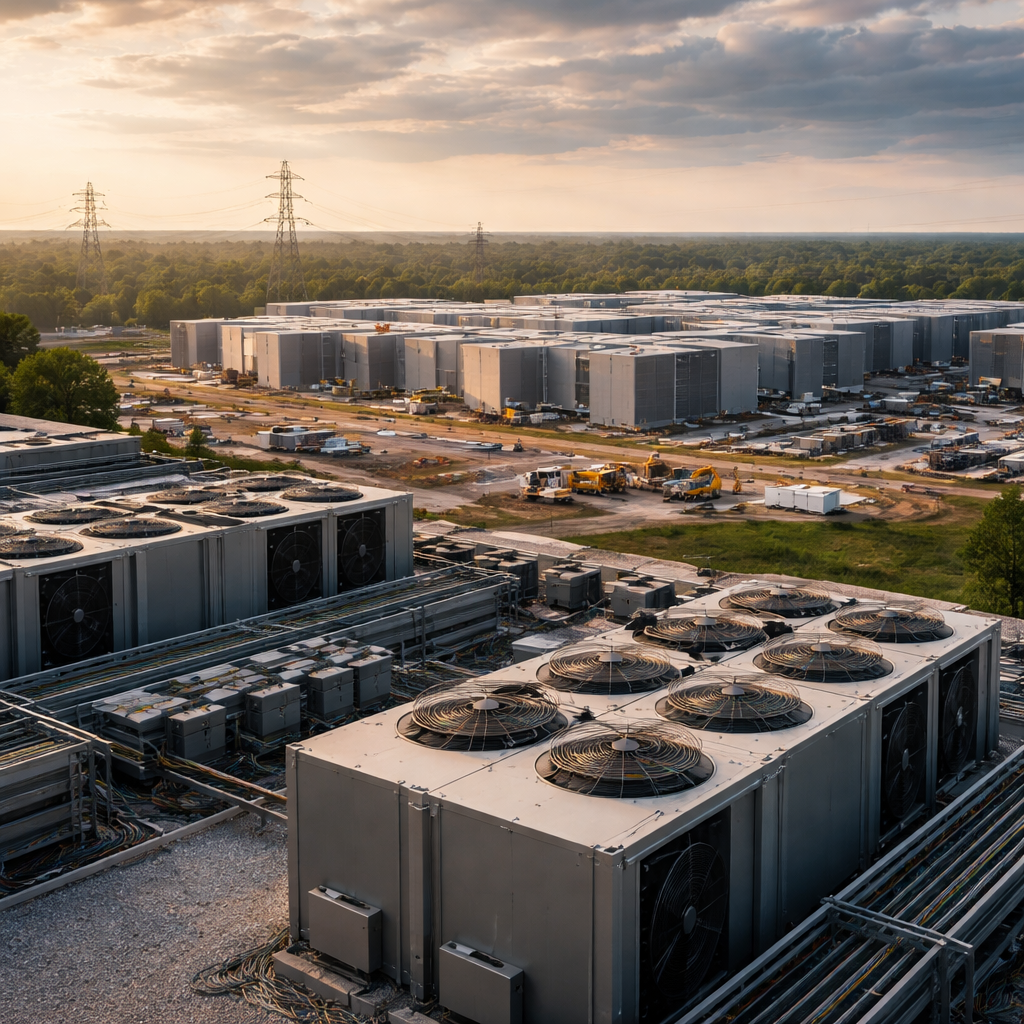
Ohio's market-oriented energy reforms generated more than $4 billion in data center investments and approved nearly 2 gigawatts of behind-the-meter power projects within months of enactment, according to a new report published June 17, 2026, by the National Taxpayers Union. The study examines Ohio's House Bill 15, signed in 2025, as a blueprint for states competing to attract AI infrastructure amid unprecedented electricity demand growth. Data centers are projected to consume nearly 10% of total U.S. electricity by 2030—a near fourfold increase from 2023 levels—while the entire PJM regional grid serving 67 million people across 13 states added just 2,669 megawatts of new dispatchable capacity in its most recent reliability auction after four consecutive years of decline.
The report details how regulatory bottlenecks create severe infrastructure delays that threaten state competitiveness. Natural gas power plants take approximately five years to build and cost more than $1 billion, but permitting processes create the most immediate barrier to meeting AI-driven electricity demand. Environmental reviews under the National Environmental Policy Act alone average 4.5 years, while PJM Interconnection has more than 200 gigawatts of proposed generation awaiting approval in its interconnection queue, with median study durations exceeding 36 months and 80% of projects ultimately withdrawing. The Electric Reliability Council of Texas (ERCOT), operating outside federal regulatory frameworks, connected 14.2 gigawatts of new generation in 2021–22 while PJM—more than twice ERCOT's size—connected only 5.6 gigawatts. ERCOT processes interconnection in two to three years compared to PJM's five-plus years.
According to the report, House Bill 15 implemented four strategic reforms to address regulatory barriers: binding "shot clock" deadlines forcing the Ohio Power Siting Board to review energy project applications within defined timeframes, explicit behind-the-meter generation rights allowing data centers to build onsite power plants, brownfield siting incentives steering development toward previously industrialized sites with existing infrastructure, and mandatory publication of transmission capacity heat maps showing where grid capacity exists. The report finds that behind-the-meter generation resolves the critical mismatch between data center construction timelines of 18 to 24 months and grid interconnection timelines of four to five years through PJM's queue. An onsite gas turbine can be operational in 12 to 18 months, and Ohio's abundant natural gas reserves and pipeline infrastructure make this approach viable at scale. The report's author, Aswin Prabhakar of The Buckeye Institute, writes that "markets, not mandates, are the most reliable path to abundant, affordable energy."
The report identifies American Electric Power's monopoly utility conduct as undermining Ohio's legislative reforms. AEP imposed a unilateral moratorium on new data center connections in March 2023 without prior regulatory approval, then replaced it with a July 2025 tariff requiring an 85% minimum demand charge, 12-year contract terms, and steep exit penalties for customers exceeding 25 megawatts. The report explains that AEP initially projected 30,000 megawatts of data center demand, but once developers faced the tariff's terms, demand estimates collapsed to 5,700 megawatts—even as the utility plans a $72 billion capital expansion. Adding large, predictable loads like data centers to a grid reduces per-unit costs for all ratepayers by spreading fixed costs across a larger base, but driving such customers away guarantees residential customers will bear a larger share of infrastructure costs. The Ohio Manufacturers' Association Energy Group has challenged the tariff before the Ohio Supreme Court over discriminatory pricing.
The report concludes that permitting reform and pro-market frameworks must be paired with regulatory vigilance against monopoly utilities that resist competition. House Bill 15's behind-the-meter framework provides a working solution while legal fights over utility conduct proceed through the courts, ensuring Ohio's data center investment doesn't stall. The report warns that in a global competition for capital deployment and technological advantage, every year spent litigating interconnection rights or defending monopoly tariffs is a year that investment flows to other states and countries with fewer institutional frictions. States that can supply reliable, affordable power on commercially viable timelines will gain significant competitive advantage in capturing AI infrastructure—the sector the report identifies as driving the largest share of U.S. economic growth in new jobs, tax revenue, and private fixed investment over the next decade.