
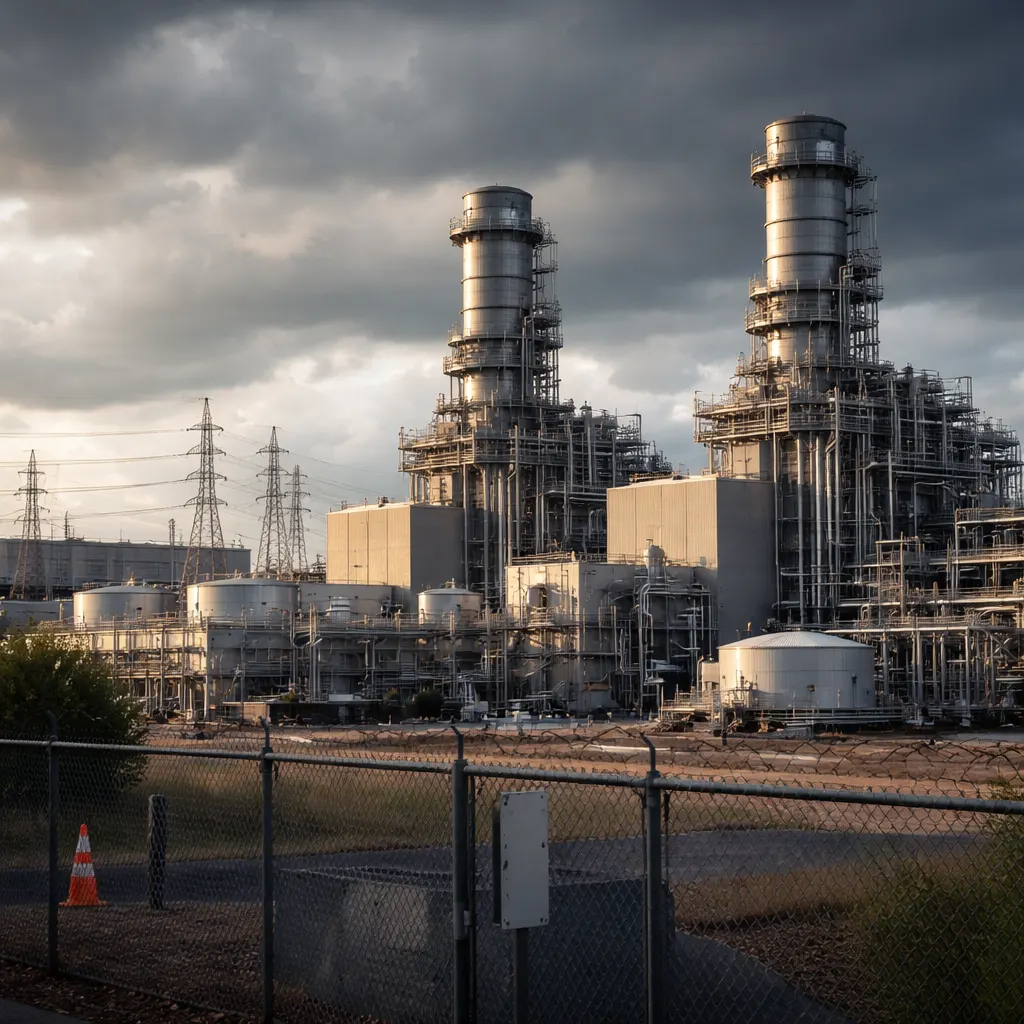
North Carolina regulators have rejected Duke Energy's proposal to build a 255-megawatt natural gas combustion turbine at its Smith Energy Complex in Richmond County, citing the project's $584 million price tag and unreliable projections about future electricity demand. The North Carolina Utilities Commission's Sept. 18 decision questioned whether the facility would serve the public interest, pointing to uncertainty around anticipated load growth driven largely by data centers. Duke said it's disappointed by the ruling and is reviewing potential next steps.
The commission's order cited staff testimony describing the $584 million cost as "staggering" and "very expensive," while questioning the project's necessity and value for customers. Although Duke's modeling projects significant load growth, the commission noted that much of this increase appears tied to expected data center customer additions, which it deemed insufficiently reliable to justify approval at this time. The proposed hydrogen-capable turbine would have been installed at the Smith Energy Complex, a site that began operations in 2001 and currently houses five simple cycle turbines and two combined cycle units. One witness testified the new generator could be operational by Jan. 1, 2030.
The commission referenced Duke's commitment to the White House Ratepayer Protection Pledge, a voluntary agreement by utilities and data center operators not to shift data center costs onto other customers. According to the order, "The record does not adequately establish the specific extent to which the Proposed Facility is intended to serve the anticipated growth in data center customer demand," and therefore doesn't show how Duke plans to honor its pledge commitments regarding this project. In February, Duke executives told investors the company's $103 billion capital spending plan was the largest on file at any regulated U.S. utility as it sought to capitalize on the data center boom.
The decision reflects deeper tensions between Duke's aggressive timeline and regulators' demand for certainty. Public staff engineers testified they're concerned Duke is "moving toward violating" a requirement for a 22% planning reserve margin in 2031, with one engineer saying Duke's capacity needs will require accelerated development and flawless execution—"We are banking on a plan of perfection, and that has me very nervous," he said. Despite initially opposing the turbine, public staff ultimately recommended approval, pointing to Duke's "aggressive signing of new load" and noting the turbine was "the only resource that is executable on a constrained timeline." But the commission said granting approval before completing its evaluation of Duke's Consolidated Carbon Plan and Integrated Resource Plan would substantially increase costs for ratepayers and impose significant risk that new generation is approved before the need is determined. That decision isn't expected until late 2026, effectively putting Duke's plans on hold for at least two years.