
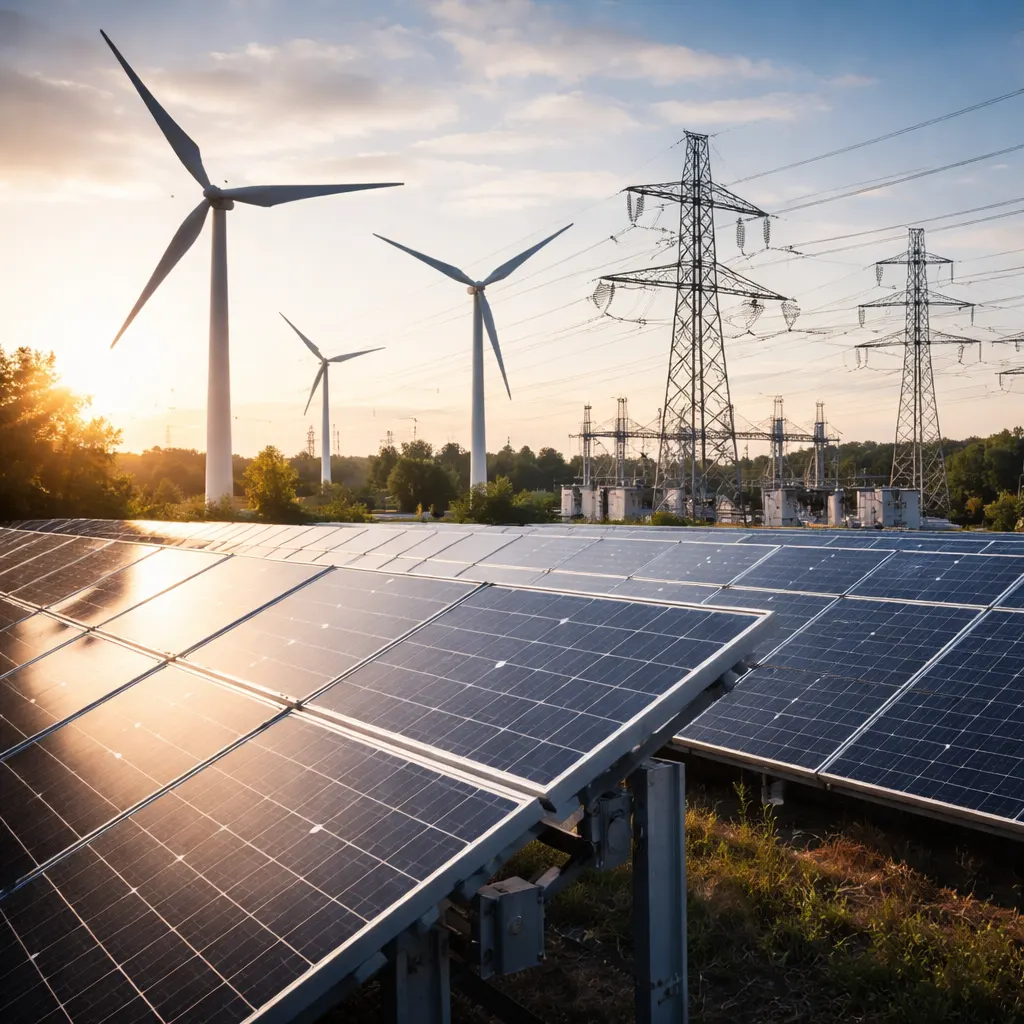
Three-quarters of the clean electricity capacity that would have been added to the United States' grid under the Inflation Reduction Act will still come online despite the One Big Beautiful Bill Act's rollbacks, according to a new study released by the Massachusetts Institute of Technology. The report compared clean electricity, fossil generation, and emissions reductions under the original IRA trajectory to the scenario created by the OBBBA, which phased out some tax credits and rolled back Environmental Protection Agency regulations. It found that on average over 2025 to 2035 and relative to 2021, the OBBBA preserves 67–74% of the clean energy and emissions reductions benefits the IRA would have delivered.
The impacts vary sharply by technology. Onshore wind faces the steepest cuts, with only 52% of the generation and 47% of the capacity expected under the IRA preserved under the OBBBA scenario, because it's most sensitive to the loss of tax credits. Utility-scale solar and battery storage fare better, with at least 80% preserved over the 2025–2035 period. Fossil capacity barely changes between scenarios, but fossil generation is 19% higher under the OBBBA scenario as existing plants run more. Coal retires more slowly than it would have under IRA regulations, while gas capacity is actually 3% higher under the IRA trajectory. Battery storage retains 83% of the IRA trajectory's capacity buildout as reduced solar deployment shrinks the market opportunity.
The report was authored by Lily Bermel, a former research associate with MIT's Center for Energy and Environmental Policy Research and currently a visiting fellow at the Columbia Center on Global Energy Policy. Bermel concluded that the gap between the OBBBA and IRA scenarios is "inherently limited" because the impact is largely to the demand side through tax credit changes, and both scenarios face the same supply-side ceiling "on how fast clean energy can be permitted, sited, built, and interconnected." For solar, the report found that "falling module costs and strong underlying cost competitiveness absorb most of the policy change shock, suggesting that solar is credit-sensitive but not credit-dependent." In either scenario, the model sees essentially no new nuclear, geothermal, or hydropower, with wind, solar, and storage accounting for all new clean capacity and therefore all of the shortfall.
The OBBBA moved up phaseout deadlines for wind and solar facilities to qualify for tax credits, requiring projects to start construction by July 4 or face a placed-in-service deadline of December 31, 2027. Other technologies like batteries and geothermal can continue to qualify for 100% of credits until 2034. But the report concluded that even if the IRA trajectory had continued, transmission and other supply-side barriers made its projections unlikely to be fully realized. Executive-branch actions including permitting freezes, stop-work orders, investigations, tariffs, and impoundments push real deployment below the OBBBA scenario in the near term. Alleviating supply-side barriers primarily through permitting reform and transmission buildout would lift that ceiling, rapidly increasing deployment speed and lowering costs.
Restoring wind and solar tax credits would only recover about 2.5 years of lost solar and storage deployment each year, the report found, moving deployment toward its existing ceiling rather than raising it. Offshore wind hasn't been as impacted by the OBBBA as onshore wind because it has limited sensitivity to the credit change, with deployment driven by other forces. The bottom line: supply-side constraints, not tax credits alone, now define how fast America's grid can go green.