
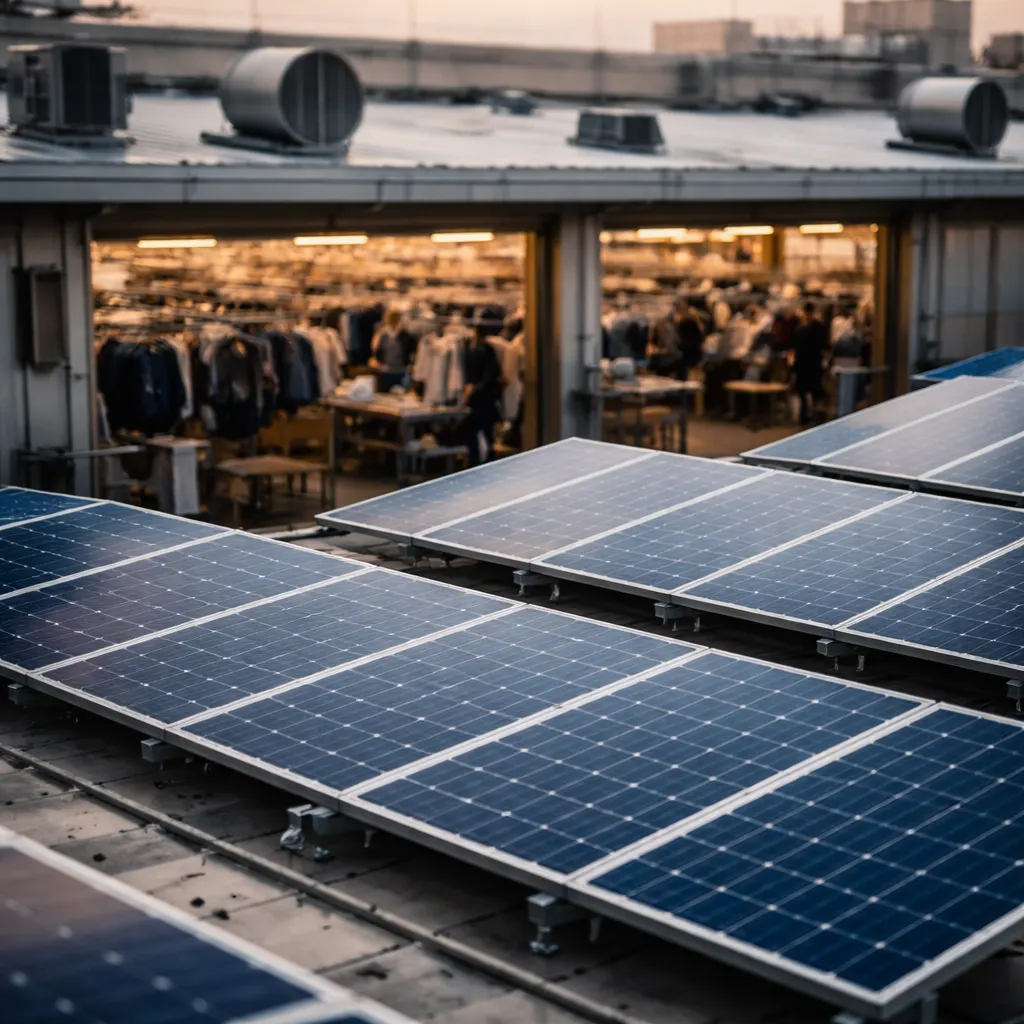
Levi Strauss and Marks & Spencer have partnered with Schneider Electric to create a program helping clothing industry suppliers switch to renewable power, the three companies announced last week. The initiative, called the "Fashion Renewable Collaborative," was unveiled Sept. 22 during New York City's annual climate week with an open invitation for other apparel brands to participate. The program aims to provide garment manufacturers, fabric mills, and dye houses with a structured roadmap for understanding and adopting clean electricity at scale.
The fashion sector and its supply chain rank as the world's third-largest polluter, according to a 2021 World Economic Forum report cited by the companies. A separate analysis found the industry releases nearly 10% of global greenhouse gas emissions each year — more than international flights and maritime shipping combined. If current trends continue, the fashion industry is projected to consume more than 26% of the world's carbon budget aimed at limiting global warming to an additional 2°C by 2050, the Ellen MacArthur Foundation estimates. An Apparel Impact Institute study quoted in the companies' announcement found that fashion suppliers are responsible for over half the industry's carbon footprint, though switching these suppliers to renewable electricity represents "one of the fastest and most scalable paths to progress" for reducing emissions.
The collaborative is structured around an implementation model that lets suppliers learn and put ideas into practice through online educational modules, the companies said. The framework gives brands a shared strategy while offering suppliers customized assistance to make the transition easier. "It's become abundantly clear that the most effective way forward on emissions reduction is working in partnership with suppliers," Levi's Senior Director of Sustainability Jennifer DuBuisson said in a release. "The FRC enables greater support for suppliers that want to access or would like to increase use of renewable electricity but haven't been able to so far."
The program was created as fashion brands search for methods to turn their individual climate pledges into tangible, lasting emissions cuts across sprawling global supply chains, the announcement stated. The initiative is designed to broaden supplier access to renewable energy options including power purchase agreements, energy attribute certificates, local energy storage, and on-site or distributed renewable power generation. Suppliers participating in the program will gain access to SE Advisory Services' tools, market guidance, and digital education as part of the framework. The collaborative positions renewable electricity adoption as a practical route for fashion suppliers to meaningfully shrink the industry's carbon footprint while maintaining production capacity.