
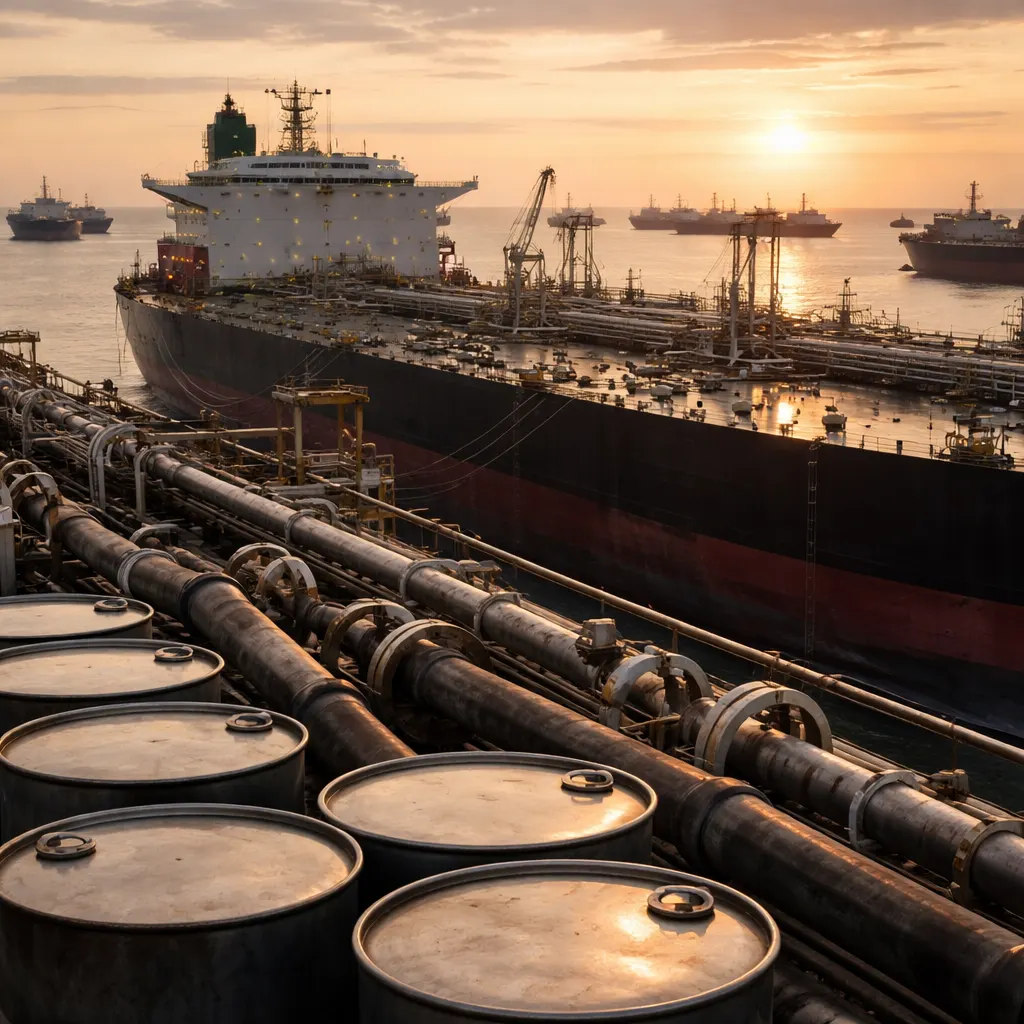
A Jones Act waiver that enabled foreign-flagged tankers to carry energy products between U.S. ports moved 90.3 million barrels of fuel across 337 voyages before its Sunday night deadline, according to the Cato Institute's Jones Act Waiver Tracker as of Oct. 30. The waiver, which the Department of Homeland Security granted in March 2026 at the request of the Department of War, allowed foreign vessels to transport gasoline, crude oil, diesel, jet fuel, propane and other products along routes the domestic tanker fleet couldn't fully serve on its own. Cargo must be loaded by 11:59 p.m. Eastern Time on Sunday, Nov. 15, or those shipping lanes close. As of Tuesday morning, no extension had been announced.
Gasoline led the cargo mix with 98 voyages carrying 26.7 million barrels, while crude oil followed closely at 55 voyages and 25.6 million barrels, the tracker data shows. Propane accounted for nine voyages and 1.63 million barrels. The 337 voyages involved 251 unique vessels and included 82 trips through the Panama Canal, across 16 different cargo categories. California received 69 inbound interstate voyages and Puerto Rico received 46 under the March and May waivers, with Texas accounting for 133 outbound departures and Louisiana for 54. The West Coast received 20.7 million barrels from other U.S. regions, surpassing the previous full-year record of 16.1 million barrels set in 2024, according to Cato researcher Colin Grabow's mid-October analysis. Puerto Rico got 10.1 million barrels of petroleum products from the mainland, including 1.2 million barrels of propane—a fuel that no Jones Act oceangoing tanker can carry in bulk. The mainland's share of Puerto Rico's propane imports jumped to 78 percent from April through August, compared with just 0.7 percent for all of 2025.
The Cato Institute calls its 90.3 million barrel tally "a floor, not a complete count," noting the data isn't comprehensive. Grabow found in mid-October that none of the 56 Jones Act-compliant tankers had been laid up, writing that foreign vessels "supplemented, not replaced, the Jones Act fleet" and that with the domestic fleet "fully employed, each foreign-flagged voyage represents demand that would otherwise have gone unmet." In the waiver's first 50 days, foreign-flagged tankers moved roughly 1.59 million barrels of energy products from the Gulf Coast to the West Coast—about four times the volume moved by water on that route in all of 2025, the tracker findings show. More gasoline and jet fuel traveled from the Gulf Coast to the West Coast in the first 70 days than in the entire period from 2020 through 2025 combined. The American Action Forum estimated the waiver generated $99.9 million to $110.1 million in freight-cost savings from March through November, though it said the waiver had "minimal impact on U.S. gasoline prices" because disruptions tied to Iran and the Strait of Hormuz dominated pump costs.
The waiver's future remains uncertain as winter approaches and heating fuel stocks tighten. New England's distillate inventory stood at just 2.7 million barrels for the week ended Oct. 30, down 22.7 percent from a year earlier and 52.7 percent from two years earlier, according to the Energy Information Administration. Residential heating oil in the region hit $6.073 per gallon for the week of Nov. 2, up $2.525 from a year earlier. An Aug. 17 extension added a voyage-by-voyage approval process that sharply slowed shipments—the tracker shows 294 voyages and 76.87 million barrels under the March and May waivers, against just 43 voyages and 13.4 million barrels under the August rules. The American Maritime Partnership, which opposes the waiver, argues that targeted emergency waivers remain available and that the domestic fleet can handle essential cargo. A coalition led by the National Taxpayers Union called an extension "particularly imperative" ahead of winter. If the waiver lapses Sunday night, Americans in California, Puerto Rico and New England could face tighter access to fuel they've come to rely on—without a single Jones Act tanker having sat idle.