
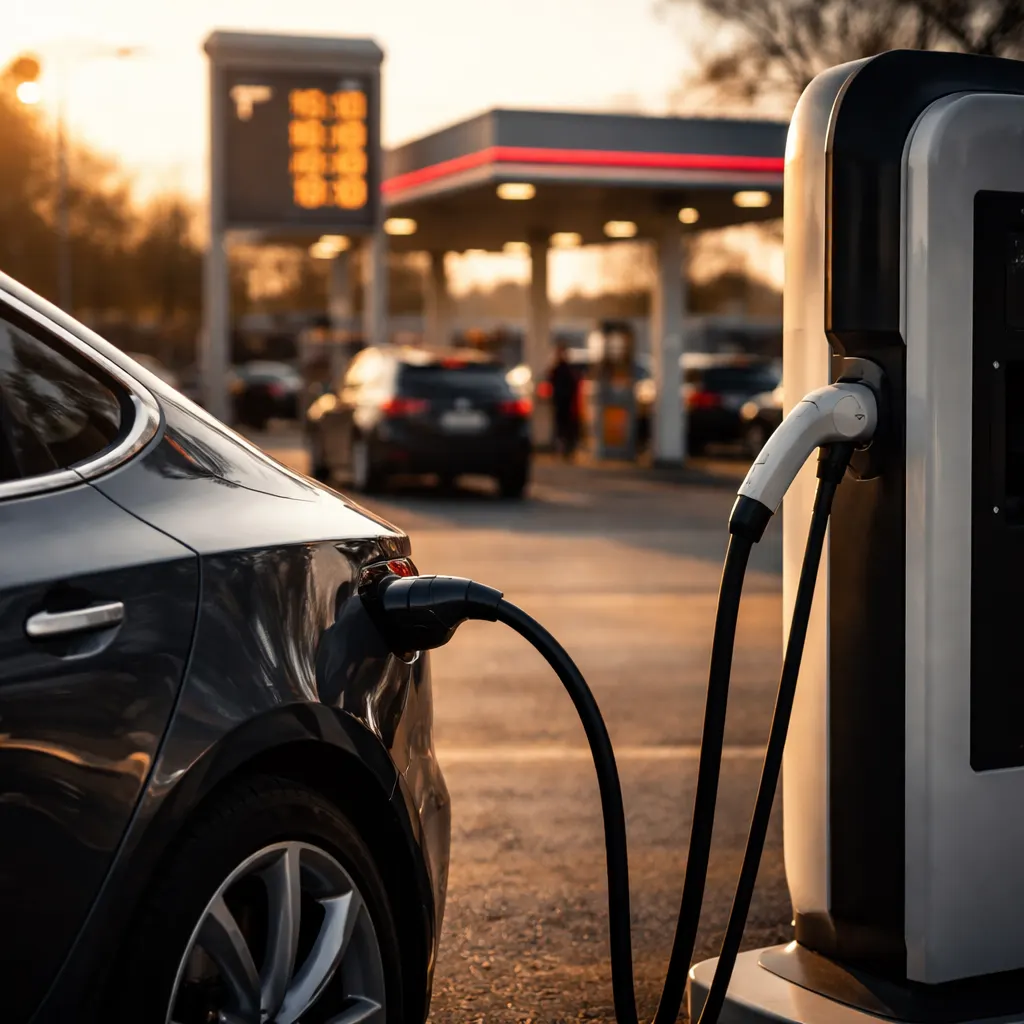
A sustained period of elevated oil prices stemming from conflict in the Gulf could accelerate global electric vehicle adoption significantly faster than expected at the start of 2026, according to a new analysis from Wood Mackenzie. Following fuel price increases that followed the outbreak of fighting in the Gulf in February, EV sales have surged in response across multiple markets. The possibility that crude and oil product flows from the Gulf could remain disrupted for years has raised the prospect that worldwide EV take-up could progress much more rapidly than seemed probable just months ago.
Battery-electric vehicle sales have jumped sharply in several major markets over the first seven months of 2026. In France, BEV sales climbed 69% compared to the same period last year, while Germany saw a 51% increase and the UK recorded a 29% rise. Wood Mackenzie estimates that BEVs will represent roughly 30% of light passenger vehicle sales in Thailand this year and nearly 25% in South Korea. China has been a principal beneficiary of the international EV boom, with vehicle exports soaring—more cars were sold abroad in the first eight months of 2026 than in all of 2025, with about half of those exports classified as new energy vehicles. In China's domestic market, BEVs are expected to account for approximately 40% of sales this year. The US remains an outlier, with BEVs projected to comprise only about 6% of car sales in 2026.
The conflict in the Middle East has driven Brent crude above $108 a barrel for the first time since May, with the latest escalation including strikes against oil tankers by both Iran and the US. President Donald Trump said Wednesday he expected the war to end "immediately" after the November 3 midterm elections, but the Wall Street Journal reported that his advisers raised the possibility the war could continue through the remainder of his term ending in January 2029. The impact on fuel prices has been worsened by Ukraine's attacks on Russian refineries, adding tightness to global product markets, particularly for diesel. Ultra-low sulphur diesel in New York harbour has traded this week at the equivalent of more than $200 a barrel. Average US retail gasoline prices reached about $4.28 per gallon this week, up roughly 34% from a year ago, while diesel prices hit new all-time highs at about $5.98 per gallon.
Wood Mackenzie's analysis maps out a scenario in which the global EV fleet in 2040 could be about 50% larger than in its base case forecast. The report's authors say three key conditions would need to be satisfied: governments around the world need to invest in EV and battery supply chains to reduce reliance on China, there needs to be continued progress in EV technologies such as fast charging, and consumers need to decide that high and volatile fuel prices are here to stay, cementing the economic benefits of EV ownership. Neither metals supply nor grid and charging infrastructure would be insurmountable obstacles to that faster pace of adoption—putting 50% more EVs on roads by 2040 would require another 800,000 tons of copper supply that year, only about 2% of projected worldwide supply, while the impact on lithium demand would be greater at about a 14% increase by 2040. The report notes that conventional wisdom until now has been that EV sales generally haven't been driven by fuel prices, but the emergence of low-priced Chinese EVs and mid-market options from companies including Tesla, Volkswagen, and Hyundai may be changing that equation. If accelerated EV take-up occurs, the report warns, it would have profound implications for the global oil market—Wood Mackenzie's base case forecast shows world oil demand hitting a plateau in the early 2030s, and accelerated growth in EVs with structurally lower long-term oil demand could turn out to be one of the lasting consequences of the Iran war.