
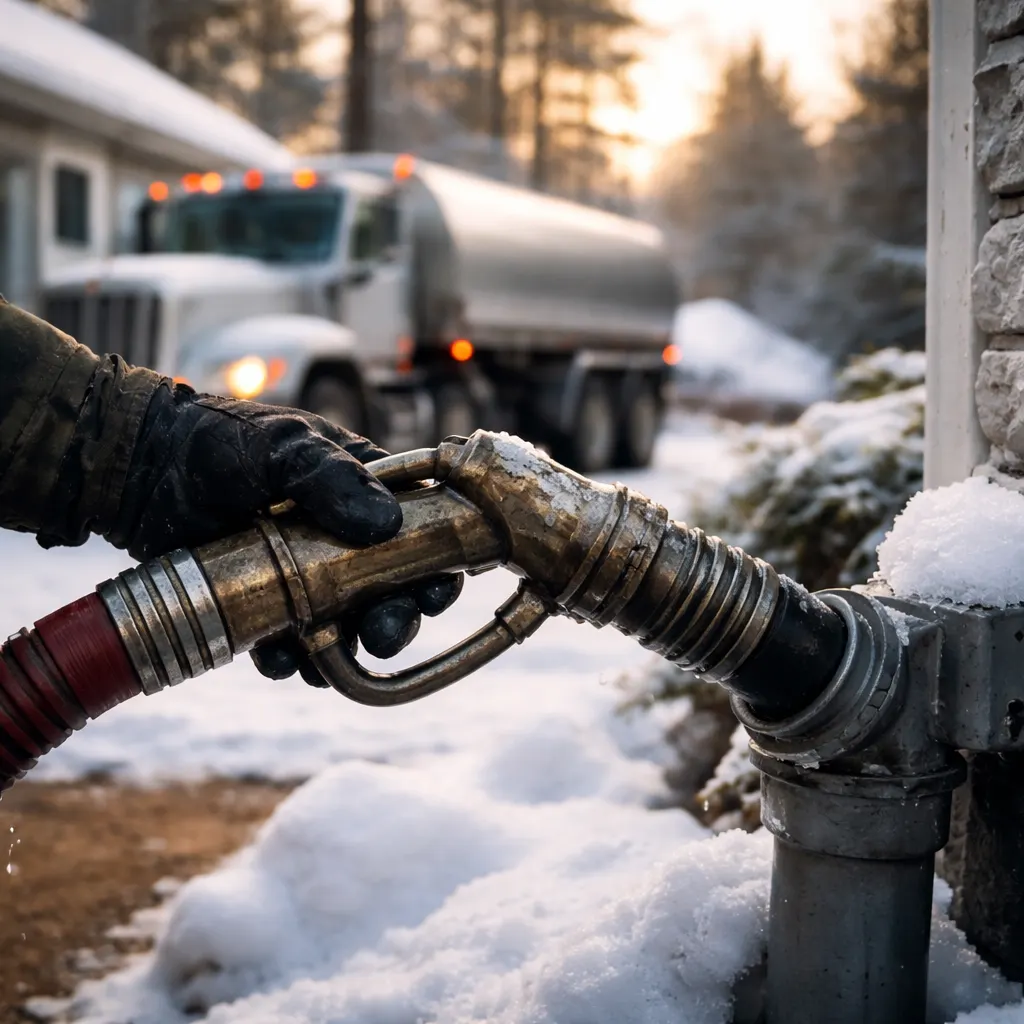
Residential heating oil opened the season at $6.04 a gallon, the highest weekly price in government records stretching back to 1990 and 70% above last fall's level, according to a new analysis published this week by Energy News Beat. The government projects oil-heated households will spend 21% more this winter, but state energy-aid officials expect closer to 50%. The report describes the crisis as driven by decades of environmental policies that shut refineries down, compounded by wars in Ukraine and Iran.
Filling a standard 275-gallon home tank in Massachusetts now costs roughly $1,683, compared to about $976 a year ago—a gap of $707. Maine rose 82% year-over-year, Connecticut 76%, and Pennsylvania 79%. The U.S. Energy Information Administration expects heating oil to average $5.26 a gallon from November through March, up 34%, but anticipates a milder Northeast winter with 12% fewer heating degree days and oil consumption falling 9%. The net result: the typical oil-heated home spends about $2,115, up 21% from $1,745. The National Energy Assistance Directors Association is gloomier, now projecting $2,627, up about 50%, with New England homes averaging $2,849. At EIA's estimate, January's oil bill alone works out to about $509—roughly half of what USDA says a thrifty family of four spends on a month of groceries. If the winter turns 10% colder than EIA assumes, its own estimate climbs to $2,332.
About 82% of the nation's 4.1 million oil-heated homes sit in the Northeast, the report notes, and in Maine, half of all homes heat mainly with fuel oil or kerosene. Lisa Furman, a Hancock County, Maine, homeowner, expects to spend $3,400 on oil over the next 10 months, against the $1,500 she's used to. "Now you're going to double my heating oil bill? This is just a slap in the face," she said. She earns too much for federal heating aid, so the extra goes on her credit card. Charlie Uglietto, president of Cubby Oil and Energy in Massachusetts, told reporters, "Seniors on fixed incomes—they see a delivery come in at $6 a gallon, they can't pay it all at one time." The report counts about 1.2 million low-income oil-heated households in the region, and notes the roughly 3.6% Social Security increase expected in January "would not come close" to covering this jump.
Heating oil and diesel are, for practical purposes, the same fuel, and the report explains that the Iran war and the squeeze on tanker traffic through the Strait of Hormuz, Ukrainian drone strikes on Russian refineries, and Chinese export limits have all cut global supplies of diesel-type fuels. AAA's national diesel average sits at $6.28 today, against $3.68 a year ago. U.S. distillate stocks were 105.1 million barrels on Oct. 2, the lowest for that week in EIA data back to 1982. On the East Coast, where most heating oil is burned, stocks were 21.7 million barrels, about 30% below the 2021–25 average for the week. EIA puts September at 32% below normal and expects East Coast stocks to stay 20% to 30% below average all winter. New England has no refineries of its own, so it relies on fuel shipped in by pipeline, tanker, barge, and truck. The report attributes the supply crunch to what it calls "decades of Green Energy policies shutting refineries down," compounded by regulatory overreach and Green New Deal policies that left Blue States with heating costs 38% to 42% higher than Red States and no new refineries. Texas has the first new one coming online in early 2027, but it won't solve the home heating oil issue.
Federal aid is funded but not yet flowing; a stopgap spending law keeps the government open through Dec. 11 and requires HHS to send at least 90% of this year's roughly $4 billion LIHEAP allotment to states by Nov. 1, but the federal LIHEAP Clearinghouse showed no fiscal 2027 release as of this week. States are moving: Massachusetts declared an energy emergency Monday, raised oil-heat benefits 20%, and created a one-time benefit of up to $680 for middle-income oil customers, with applications opening in December. Maine has taken applications since Aug. 3; New Hampshire and Vermont accept them through local agencies and online; New York and Pennsylvania open Nov. 2. G7 nations agreed Oct. 2 to release 100 million barrels of diesel and crude; the IEA board is expected to set the details Oct. 14–15. Hurricane Isaias, strengthening in the Gulf, could hit refineries representing about 14% of U.S. capacity late Friday or early Saturday. For now, the report's advice is simple: call the dealer, ask about a budget plan, and if money's tight, apply for help before the first cold snap.