
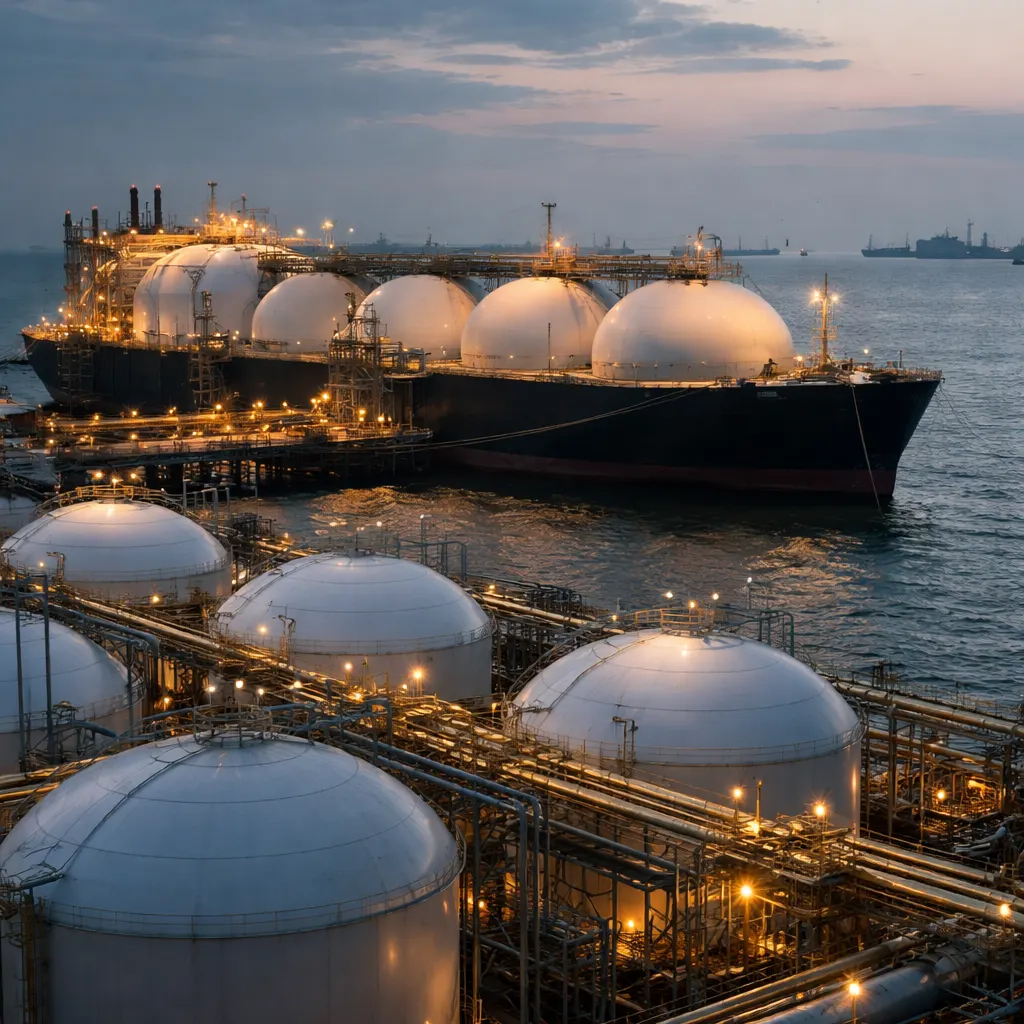
Asian LNG demand is heading for a second consecutive year of decline, according to a new forecast from Wood Mackenzie. The energy research firm projects Asia Pacific demand at 257 million tonnes in 2026, down from 268 Mt in 2025 and a peak of 278 Mt in 2024. The Middle East conflict has tightened global supply and pushed spot prices high enough to force buyers across the region to cut volumes, switch fuels, and accelerate supply diversification.
Northeast Asian demand covering China, Japan, South Korea, and Taiwan is forecast to fall to 191 Mt in 2026 from 202 Mt in 2025. China's LNG imports are projected at 62.4 Mt in 2026, down from 66.4 Mt in 2025, with regas utilisation dropping to just 29% against a nameplate capacity of 218.3 Mt. Japan holds term contracts covering over 90% of 2026 LNG demand, but faces estimated exposure to Middle East disruption of up to 0.5 Mt per month. South Korea faces sharp contractual exposure, as KOGAS holds two 2 mmtpa contracts tied to Ras Laffan Train 6, damaged in Iran's missile attacks, with supply potentially interrupted for three to five years. Taiwan has offset the shortfall in Qatari supply by increasing US LNG imports and is expected to replace more than 75% of any LNG shortfall via spot purchases. South Asia faces harder conditions: India faces potential supply curtailments of up to 1.5 Mt per month, Pakistan returned to the spot market in April 2026 after a two-year absence, and Bangladesh secured two spot cargoes at $23–28 per million British thermal units for March delivery. Southeast Asia shows a different pattern, with aggregate regional demand forecast to rise from 27 Mt in 2025 to 31 Mt in 2026, reaching 39 Mt by 2028. Indonesia's LNG demand grew by more than 20% in the first half of 2026, while Malaysia recorded growth exceeding 40% driven by data centre expansion and coal plant retirements.
"A tighter global LNG market is doing what it always does. It separates buyers with contracted cover and fuel-switching options from those without," said Maoping Hu, principal analyst for gas and LNG at Wood Mackenzie. The report finds that Japan and China are better insulated from the shock, while South Asia is absorbing a genuine impact. According to the analysis, even the more resilient markets are making decisions now on nuclear, coal, and long-term contracting diversification that will shape their LNG demand trajectories well into the next decade. The report notes that Asia accounted for nearly 90% of Qatari and UAE LNG shipments transiting the Strait of Hormuz in 2025, making disruption exposure significant but highly variable depending on contracted position and fuel-switching flexibility.
The divergence in regional responses reveals how contracted position and fuel optionality determine outcomes when spot prices spike. China enters 2026 with the largest inventory buffer in the region and the most diversified supply portfolio of any major Asian LNG buyer, while Japan's 90%-plus contracted coverage insulates it more effectively than almost any other buyer. South Korea's spot exposure exceeds 20%, meaning additional purchases will materially elevate costs and flow through to end consumers. In South Asia, the report explains that spot prices are now at levels translating directly into demand curtailment, industrial fuel switching, fertiliser plant shutdowns, and power sector load shedding. India has diverted gas allocation to essential sectors and seen energy-intensive industries cut run rates and switch to propane, fuel oil, and naphtha at pace, though this trades one supply concentration risk for another since India imports 80–85% of its LPG via the Strait of Hormuz.
Wood Mackenzie forecasts Asia Pacific LNG demand recovering to 279 Mt in 2027 and reaching 297 Mt by 2028, as geopolitical risk subsides, new regas infrastructure comes online, and structural demand growth resumes. That recovery path implies a net gain of 40 Mt over two years, a significant volume requiring both new supply and normalised spot pricing to materialise. The pace and shape of recovery will depend on variables that remain genuinely uncertain: the duration and severity of Middle East supply disruption, the trajectory of spot prices, competition from oil products, the rate at which Chinese and South Asian gas demand rebounds when prices fall, nuclear restart timelines in Japan and South Korea, and the speed at which Southeast Asian power gas demand progresses. The supply security question, the report concludes, will not go away.