
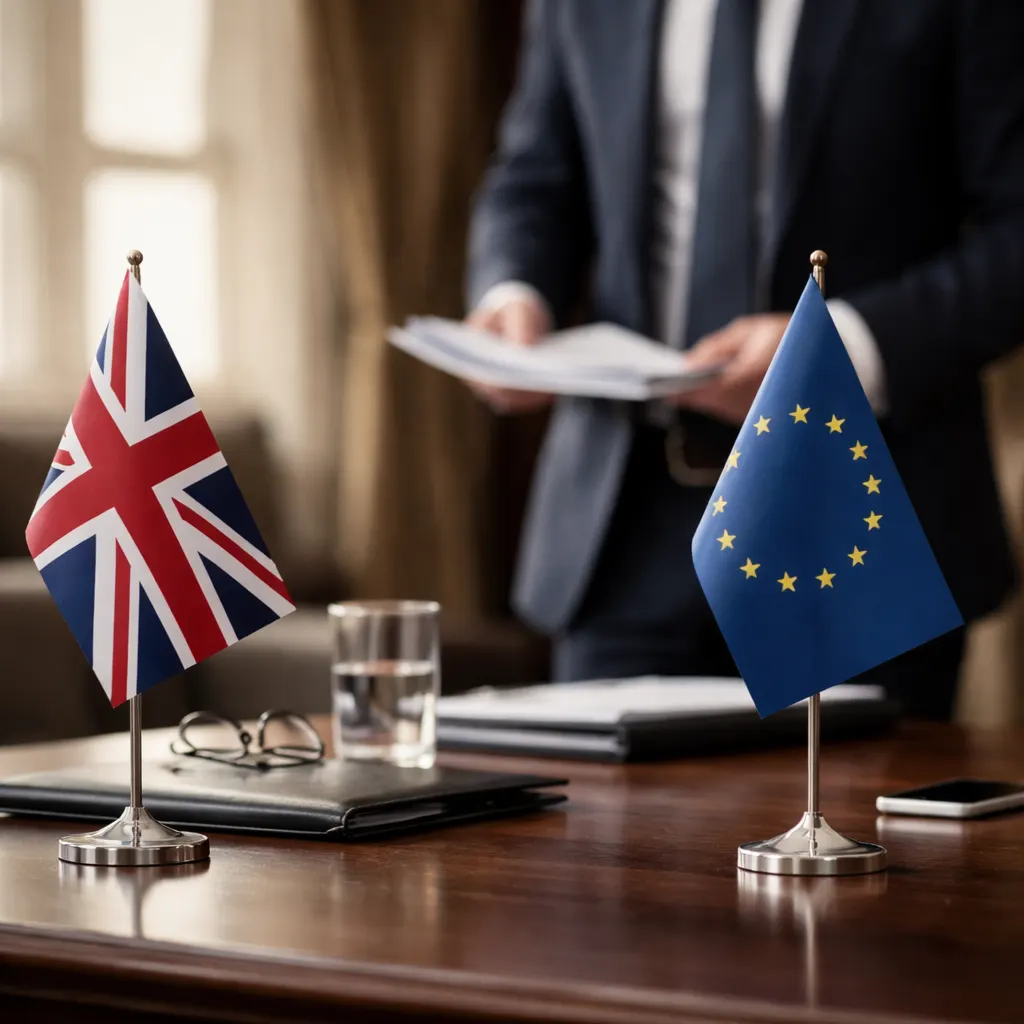
British Prime Minister Andy Burnham has announced plans to integrate more closely with the European Union ahead of a UK-EU summit on November 20, reversing his earlier pledge not to take Britain back into the bloc. The move, detailed in an article by Mark Nayler for the Foundation for Economic Education, comes as new research shows the UK's economy is 8% smaller than it would have been without Brexit and as public opinion has shifted decisively against the 2016 decision to leave. The proposed deal spans agriculture, youth mobility, and emissions trading, with Burnham claiming it will boost the economy by £17 billion.
The economic toll of Brexit has been substantial, according to a 2025 report from the US National Bureau of Economic Research cited in the article. Britain's GDP sits 8% below where it would have been had the country remained in the EU, while both employment and productivity have fallen by roughly 4%. UK businesses have spent nearly £8 billion over the past four years complying with post-Brexit trade regulations, with one department store reportedly hiring an entire warehouse just to store paperwork. Exports to the EU dropped 14% in 2025 compared to 2019, the year before Britain formally exited, while imports from the bloc fell 10%. Public sentiment has also reversed: polls since July 2022 consistently show more than half of Britons believe Brexit was a mistake, with that figure reaching 57% as of June. A June poll for the European Council on Foreign Relations found that three quarters of British voters want closer European relations and 52% would vote to rejoin if another referendum were held today.
The summit deal will eliminate border inspections for fresh produce entering the EU from Britain, preventing "entire truckloads" of goods from spoiling during paperwork delays, as Burnham described it. A reciprocal visa program will allow British and EU citizens under 30 to live and work in each other's territories, while Britain will join the EU's "cap and trade" emissions scheme and pay billions of pounds to avoid a cross-border carbon tax taking effect in January. John Powell, chief executive of the British Meat Processors Association, told The Independent that Brexit hasn't freed UK companies from EU regulations, only forced them to prove compliance "with a mountain of costly paperwork, certificates and checks." Andrew Bailey, governor of the Bank of England, recently said London would benefit from more open trading relationships with its largest and closest external market.
The timing is driven partly by Brussels's "Made in Europe" initiative, announced in March, which aims to strengthen European industries like steel and energy by requiring low-carbon or EU-made components in products purchased by European public authorities or manufactured with EU subsidies. This has sparked debate over whether the UK, which maintains a free trade relationship with the bloc, should qualify as "Made in Europe." Burnham has proposed subsidizing fees for European students at British universities in exchange for inclusion, responding to concerns that exclusion would devastate the UK's automotive industry. Conservative leader Kemi Badenoch has criticized Burnham for "unpicking the deal this country signed with the EU a decade after the referendum," but the article notes that "large swathes" of EU legislation remain on Britain's statute book despite claims of regained sovereignty. The article concludes that for many UK businesses, Brexit has proven burdensome rather than liberating, and that Burnham's proposed reset addresses a world very different from the one in which the 2016 vote was cast.