
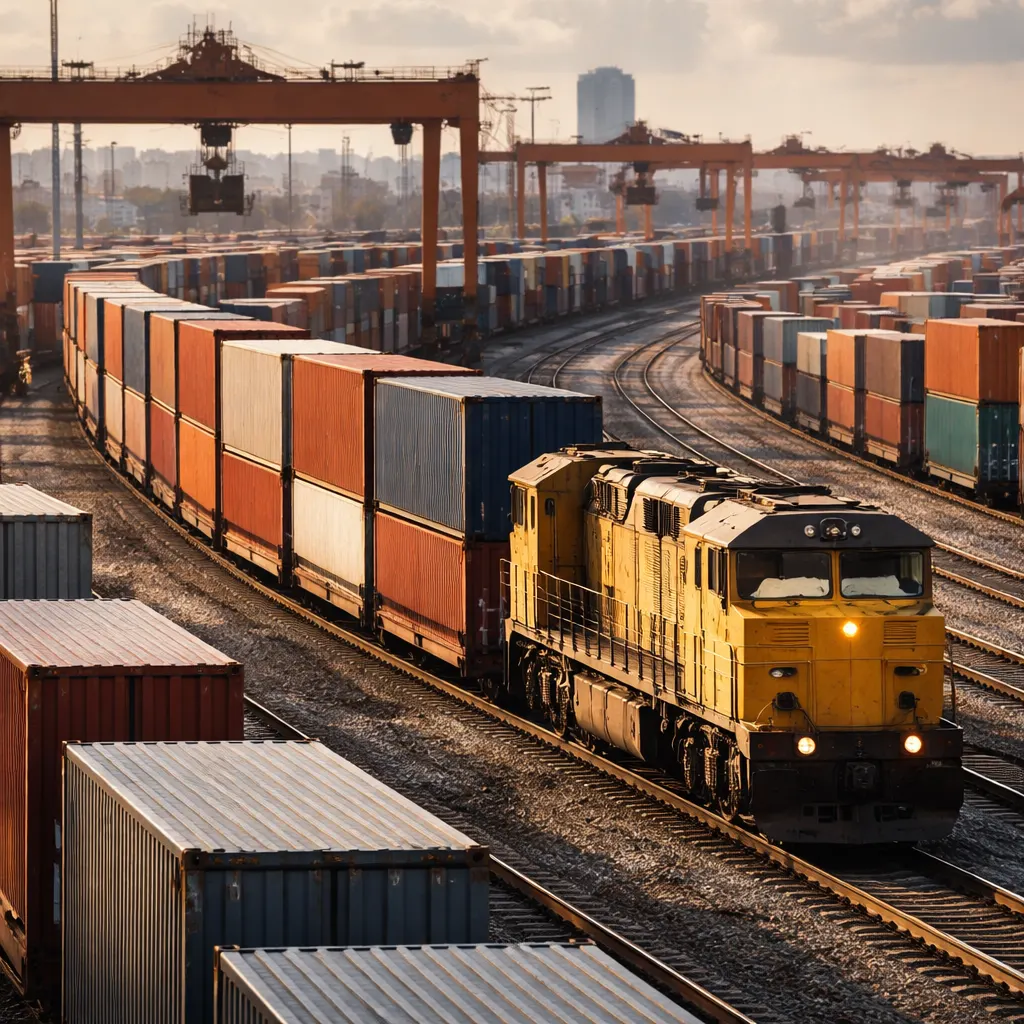
Freight moving on U.S. railroads jumped 7.2% in the week ending June 13 compared to the same period last year, driven by a double-digit surge in intermodal traffic as shippers abandoned trucks for cheaper rail options. According to data released by the Association of American Railroads on June 24, 2026, the shift reflects strengthening truck rates pushing domestic conversions to rail, while an early peak shipping season floods U.S. ports with international containers. Total freight reached 520,406 carloads and intermodal units for the week, marking a decisive turn toward rail as the more economical choice.
The numbers tell a story of divergence between freight types. Intermodal volume hit 289,447 containers and trailers, outdistancing year-ago traffic by 10.9%, while traditional carloads came in at 230,959 units, up a more modest 2.8%. Among the 10 carload commodity groups tracked, six posted year-over-year gains. Grain topped the winners, climbing 21.7%, while metallic ores and metals used in steelmaking increased 19.2%. U.S. grain exports for the week ending June 11 totaled 2.807 million metric tons inspected for export, up from 2.760 million the prior week and 2.340 million in the same week in 2025. Coal sagged 8.3% on seasonal weakness, and motor vehicles and parts dipped 0.5%. For the first 23 weeks of 2026, cumulative U.S. volume reached 5,215,944 carloads (up 3.2%) and 6,403,177 intermodal units (up 2.7%), for combined traffic of 11,619,121 units, better by 2.9%.
The report notes that intermodal's improvement has come as strengthening truck rates push domestic conversions to less expensive rail. At the same time, an early start to the peak shipping season has international volumes surging through U.S. ports. Across North America, nine reporting U.S., Canadian, and Mexican railroads moved 337,700 carloads (up 1.7%) and 379,536 intermodal units (ahead 9.3%) for the week, combining for 717,236 carloads and intermodal units, a 5.6% improvement. Canadian railroads handled 93,827 carloads (up 2.8%) and 75,465 intermodal units (up 1.1%), while Mexican railroads saw carloads fall 20.3% to 12,914 but intermodal units jump 27.3% to 14,624.
The data reveals a freight market in transition, where price sensitivity is steering cargo away from over-the-road trucking. When truck rates climb, shippers face a straightforward calculation: pay more for speed and flexibility, or save money by moving containers on rail. The report's findings suggest that calculation is tilting decisively toward rail, especially for domestic freight that once moved almost exclusively by truck. The early arrival of peak season—typically a summer and fall phenomenon driven by retailers stocking up for back-to-school and holiday demand—compounds the trend by flooding ports with imports that need inland distribution. Grain's outsized performance reflects strong U.S. export demand, while coal's seasonal softness tracks predictable summer patterns when power generation shifts away from heating fuels. The intermodal surge isn't just a blip; it's a structural shift responding to cost pressure and capacity constraints in trucking.
For the first 23 weeks of 2026, North American volume climbed 2.5% to 15,993,851 carloads and intermodal units compared to 2025, signaling sustained momentum. Mexican intermodal traffic's 27.3% weekly spike, despite a sharp carload decline, underscores cross-border trade's growing reliance on containerized rail. If truck rates stay elevated and import volumes remain strong through the traditional peak season, railroads stand to capture an even larger share of freight that once rolled on highways. The takeaway is clear: when trucking gets expensive, rails get busy—and 2026 is proving that rule in real time.