
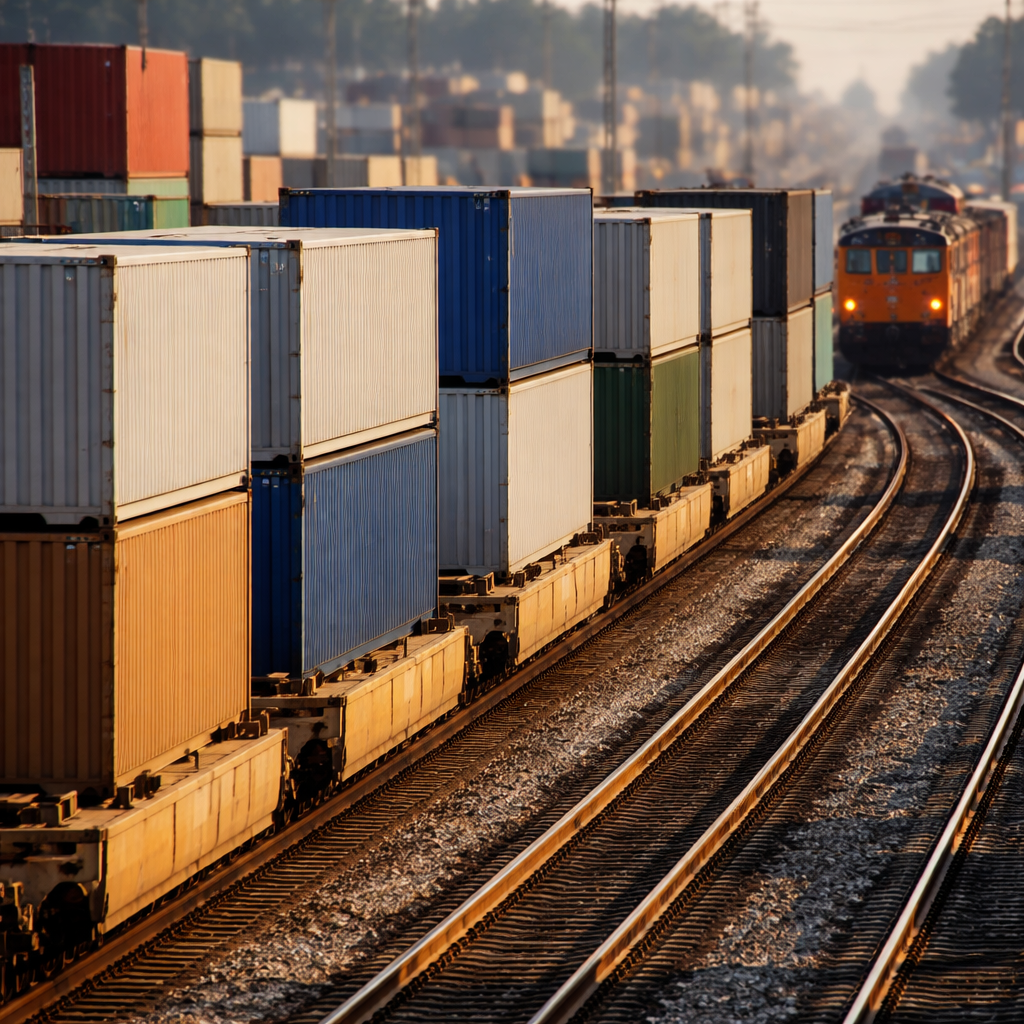
Intermodal rail traffic jumped 10% year-over-year to 264,449 containers and trailers for the week ending May 30, powered by shippers fleeing a trucking market where rates, fuel costs, and tender rejections are hitting weekly highs, according to data released Thursday by the Association of American Railroads. Overall U.S. rail traffic climbed 7.2% to 492,795 carloads and intermodal units, while commodity shipments alone rose 4% to 228,346 carloads. The rail freight rally marks a sharp reversal from recent years as challenges in the trucking industry drive shippers back to the rails.
Seven of 10 carload commodity groups posted year-over-year gains during the week, the AAR reported. Grain led the pack with a 33.8% increase, followed by metallic ores and metals at 19.5% and motor vehicles and parts at 9.1%. A category labeled "Other" — miscellaneous unidentified ladings — jumped 20.2%. Coal led decliners with a 9% drop, while petroleum and petroleum products fell 3.4% and nonmetallic minerals slipped 2.4%. For the first 21 weeks of 2026, cumulative U.S. volume hit 4,756,909 carloads, up 3.4% from 2025, while 5,820,002 intermodal units improved 1.8%. Total combined traffic reached 10,576,911 carloads and intermodal units, ahead by 2.5%.
North American rail volume for the week on nine reporting U.S., Canadian, and Mexican railroads increased 2.7% to 336,920 carloads from a year ago, with 353,702 intermodal units up 7.2%. Total combined traffic came to 690,622 carloads and intermodal units, better by 4.9%, while year-to-date volume edged up 2.3% to 14,567,984 carloads and intermodal units.
The report attributes the intermodal boom to shippers abandoning a trucking market in crisis. The environment for motor carriers has improved amid a capacity squeeze created by multi-pronged federal enforcement that has "weeded out non-English speaking drivers, shuttered sketchy trucking schools, and sidelined chameleon carriers that reemerge with new identities after accidents," according to the analysis. As trucking capacity tightened, tender rejections — when carriers refuse shipments — soared alongside rates and fuel costs, forcing shippers to seek alternatives. Rail intermodal became the beneficiary of this shift, offering companies a way around skyrocketing trucking expenses and limited truck availability.
The outlook suggests continued rail gains as long as trucking market pressures persist. With federal enforcement showing no signs of easing and capacity remaining tight, shippers face an extended period of elevated trucking costs and service challenges. Rail's double-digit intermodal growth isn't just a one-week anomaly — it's a late spring surge that reflects a fundamental reshuffling of freight modes driven by regulatory crackdowns and market dynamics that won't reverse overnight.