
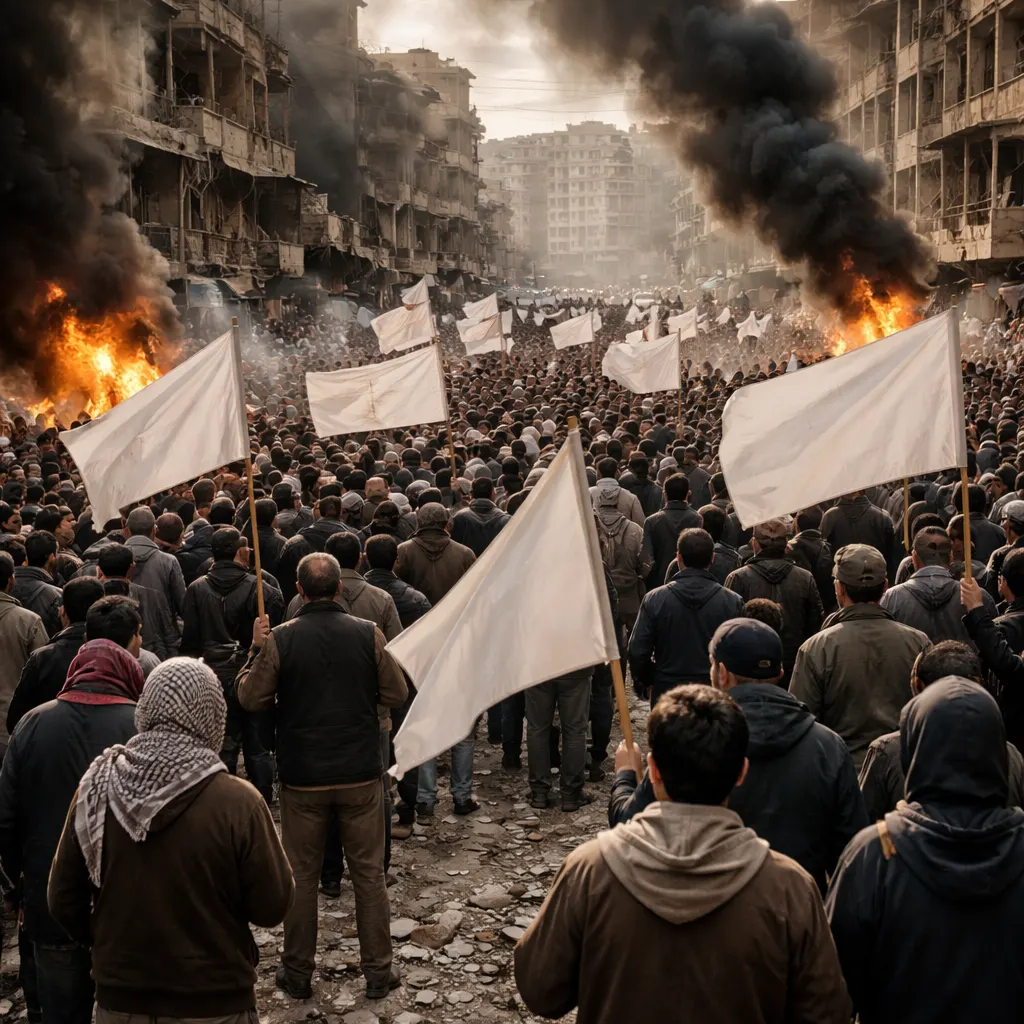
The Syrian government's decision to raise diesel prices by 40 percent and gasoline by 30 percent has triggered mass protests across eight provinces, including in Maarat al-Numan, a city in Idlib that historically resisted the movement now leading Syria, according to a report published by Syria Direct. The demonstrations represent the most extensive wave of unrest since Bashar al-Assad's government fell in December 2024. The government attributed the fuel hikes to rising global oil prices, but residents say the increases threaten their ability to survive and rebuild.
The protests began Monday in Maarat al-Numan, where hundreds of demonstrators blocked the M5 highway connecting Damascus and Aleppo by burning tires, mirroring tactics from 2011. The city has a troubled history with Hay'at Tahrir al-Sham (HTS), the group formerly led by current Syrian President Ahmad al-Sharaa. HTS and its earlier forms, Jabhat al-Nusra and Jabhat Fateh al-Sham, fought bloody battles with local Free Syrian Army factions before taking complete control of the city in 2017. Residents repeatedly held large protests demanding HTS withdraw, but the group maintained authority until Assad's forces captured the city in 2020 following a two-month siege. Nearly two years after Assad's fall, prices for essential goods including fuel, bread and services have continued climbing, pushing residents to their breaking point. In 2025, the government eliminated electricity subsidies, with some tariffs jumping as much as 60-fold.
"Today, there is no barrier of fear and we won't stay silent," Jaber al-Adel, a 50-year-old former FSA fighter who helped organize the Maarat al-Numan protests, told Syria Direct. "If we had solutions we wouldn't have come out to protest—we came out into the streets out of hunger." Farmer Madhad Darwish, 62, echoed the frustration: "We want to rebuild our homes, but now we can't even afford cinderblocks and many of us are still living in camps." The fuel increases affect every economic sector, from agriculture and transportation to heating and reconstruction. Political economist Joseph Daher told Syria Direct that rising costs stem directly from ending or reducing subsidies and austerity policies that have driven inflation higher. Farmers are particularly vulnerable in a country where 45 percent of the population depends on agriculture. Safia Muhammed, a 55-year-old farmer and mother of 12, said her family hasn't watered their fields because of fuel costs and worries about affording fertilizer, which is fuel-derived, before the November planting season begins.
Daher argues the government justifies removing subsidies by claiming it frees resources for social programs, but simultaneously eliminates funding sources through tax exemptions for major investors and a regressive tax structure. The outcome, he explains, is subsidy elimination without establishing safety nets, effectively transferring the financial burden from the state to poor families and from large corporations to average consumers. He recommends Syria build a sustainable subsidy system anchored in progressive taxation and special levies on the wealthiest to support it, along with price controls on essential goods and tying wages to inflation rates. Such measures could help the government gain popular support and legitimacy while preventing extremist groups from exploiting public anger. Al-Adel captured the stakes plainly: "We paid the price with all our blood and we don't want to fall into the same errors as the previous regime."