
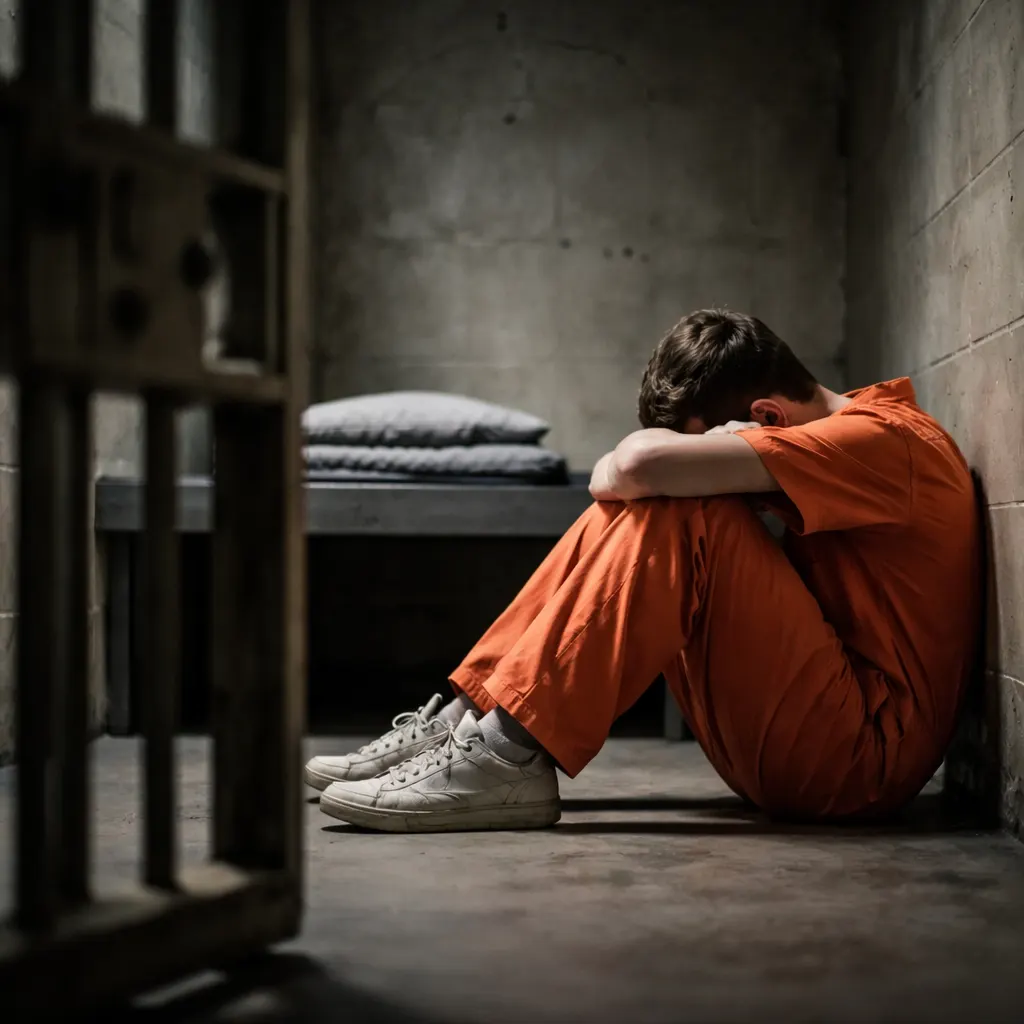
The number of young people locked in adult prisons has surged 50 percent since 2021 as states retreat from decades of bipartisan reforms, according to a new analysis published this spring by the R Street Institute. The report finds that 2026 marked a turning point in juvenile justice, with seven states passing laws that reshape their youth systems, often in sharply opposing directions. What was once a nationwide consensus favoring rehabilitation over adult punishment has fractured into a patchwork where a teenager's ZIP code can determine their fate as much as the offense itself.
The shift became starkest in Kansas, where lawmakers this year reversed more than a decade of reform by implementing what the report describes as one of the most punitive youth systems in the country. The new law creates a "two strikes" rule that mandates detention for children brought to intake twice within three months, regardless of risk, and doubles the maximum detention period from 45 to 90 days. It also diverts millions from mental health services and functional family therapy to reopen group homes that the Kansas Department of Corrections had recommended shuttering a decade earlier. This happened despite a 36 percent drop in violent crimes by youth between 2022 and 2025, a 50 percent decline in property crime, and youth recidivism cut in half over the same period. Maryland moved in the opposite direction this spring, raising the age at which teenagers can automatically face adult charges from 14 to 16 and removing five offenses from a list of 33 automatic adult charges. Mississippi went the other way, lowering the age to 13 for some offenses, while Missouri expanded prosecutors' power to pursue adult charges and Utah banned diversion for youth gun possession entirely.
The report highlights the financial absurdity of the Kansas rollback: the state now pays roughly $159,000 annually to house a single youth at the Juvenile Correction Complex in Topeka, nearly 14 times the cost of in-state tuition at the University of Kansas. By contrast, the state's Functional Family Therapy program costs about $9,200 per youth and returns $18.71 in benefits for every dollar spent, according to estimates from the Washington State Institute for Public Policy. Kansas corrections officials opposed the new law, testifying that bypassing risk assessments should be a last resort, while the state's bipartisan Juvenile Justice Oversight Committee said the approach was neither "evidence based" nor "data driven." Maryland's Youth Charging Reform Act is projected to save $17 million per year by keeping cases in juvenile court that previously cycled through adult charges only to be transferred back or dismissed without conviction.
The report traces the current vibe shift to cracks that appeared in 2024, when Louisiana repealed its 2019 "Raise the Age" law and North Carolina overrode a gubernatorial veto to funnel more 17-year-olds into adult court. But it also points to a longer arc: during the 1990s, an estimated 20 to 25 percent of all juvenile offenders faced adult prosecution, a rate that declined sharply after bipartisan task forces in seven states rewrote their juvenile codes between 2013 and 2018. The 2018 Juvenile Justice Reform Act, which restricted confining children in adult facilities, passed both chambers of Congress unanimously and was signed by President Trump. The strategy delivered results—juvenile crime has fallen 86 percent since its peak 30 years ago and hit generational lows in states that cut youth incarceration while investing in alternatives. Although arrests ticked up slightly during the pandemic, they've now returned to below pre-COVID levels, and self-reported delinquent behavior among young people has dropped substantially in the anonymous Youth Risk Behavior Survey.
The report warns that recycling the sentencing philosophy of the 1990s ignores hard-won evidence: charging youth as adults doesn't deter crime and in fact produces worse outcomes across nearly every measure, including recidivism. A child in an adult jail is 36 times more likely to die by suicide than one in a juvenile facility. Meanwhile, automatic charging provisions strip prosecutorial discretion while targeting a narrow slice of cases—in Louisiana, only 13 percent of 17-year-olds charged as adults under the recent overhaul faced serious felonies like armed robbery or murder, crimes that always move to adult court anyway. If lasting public safety is the goal, the report concludes, age-appropriate restorative solutions will prevent more crime than the rigid mandates of a bygone era.