
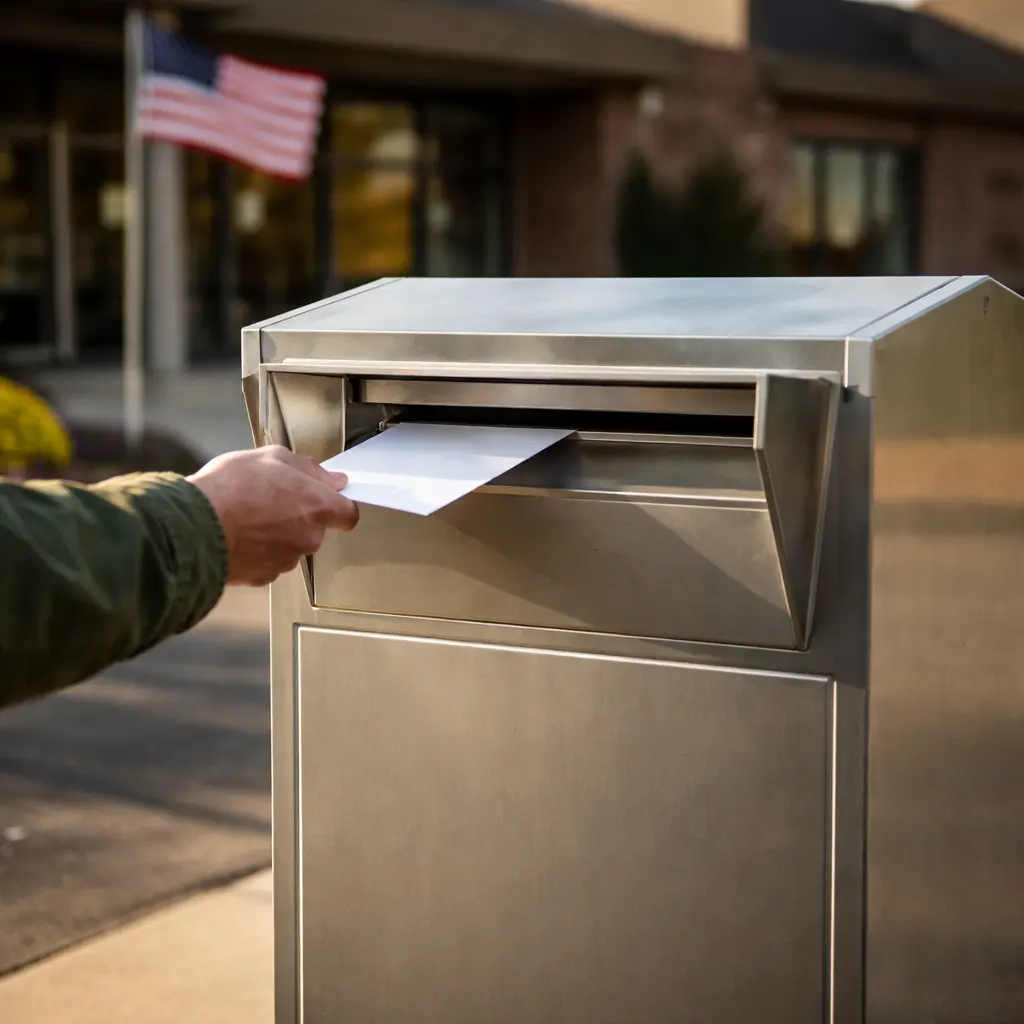
Nearly four out of five Wisconsin voters want to see statewide standards for ballot drop boxes, according to a new poll released by the MacIver Institute on June 24, 2026. The survey reveals rare bipartisan agreement on election policy in a state where ballot drop boxes have sparked controversy since 2020. Pollster Dave Sackett said at a WisPolitics lunch that drop box regulation is one of just two questions where Republicans and Democrats see eye to eye.
The poll shows 79% of all likely voters support creating regulations for ballot drop boxes. That support crosses party lines: 83% of Republicans, 76% of Democrats, and 76% of independents back the idea. The survey, conducted by The Tarrance Group between May 16th and 19th, reached 600 likely voters across Wisconsin through cellphones, texts, and landlines. The poll didn't specify what those regulations would look like or who would enforce them. Confidence in Wisconsin's election system splits sharply along party lines: over 90% of Democrats say they're either "very confident" or "somewhat confident" that votes will be counted accurately this November, compared to just 46% of Republicans. When asked about election integrity, 18% of all voters believe election managers knowingly falsify vote counts "often," while another 23% said it happens "occasionally."
Wisconsin's relationship with ballot drop boxes remains complicated, the report notes. Lawmakers never specifically authorized them, but the Wisconsin Elections Commission and eventually the Wisconsin Supreme Court allowed their use starting in 2020. The Tarrance Group is described as a Republican-tied polling firm, and the survey explored both drop box preferences and broader election integrity concerns among voters.
The wide support for drop box standards suggests voters want clear rules even when they disagree about election security itself. The partisan confidence gap—a 44-percentage-point difference between Democrats and Republicans—helps explain why standardization appeals across the aisle. Republicans worried about fraud and Democrats confident in the system both appear to see value in uniform regulations. The finding that roughly two in five voters believe vote count manipulation happens at least occasionally also points to why concrete standards might ease concerns. When trust diverges this sharply, shared rules can serve as common ground.
The poll captures voter sentiment heading into November elections, but it doesn't predict what form those standards might take or whether Wisconsin lawmakers will act on the broad public support. What's clear is that voters want something done: 79% support is rare in any policy area, let alone one tied to hotly debated election practices. For a state where ballot drop boxes have sparked legal battles and political division, the consensus around regulation offers a potential path forward.