
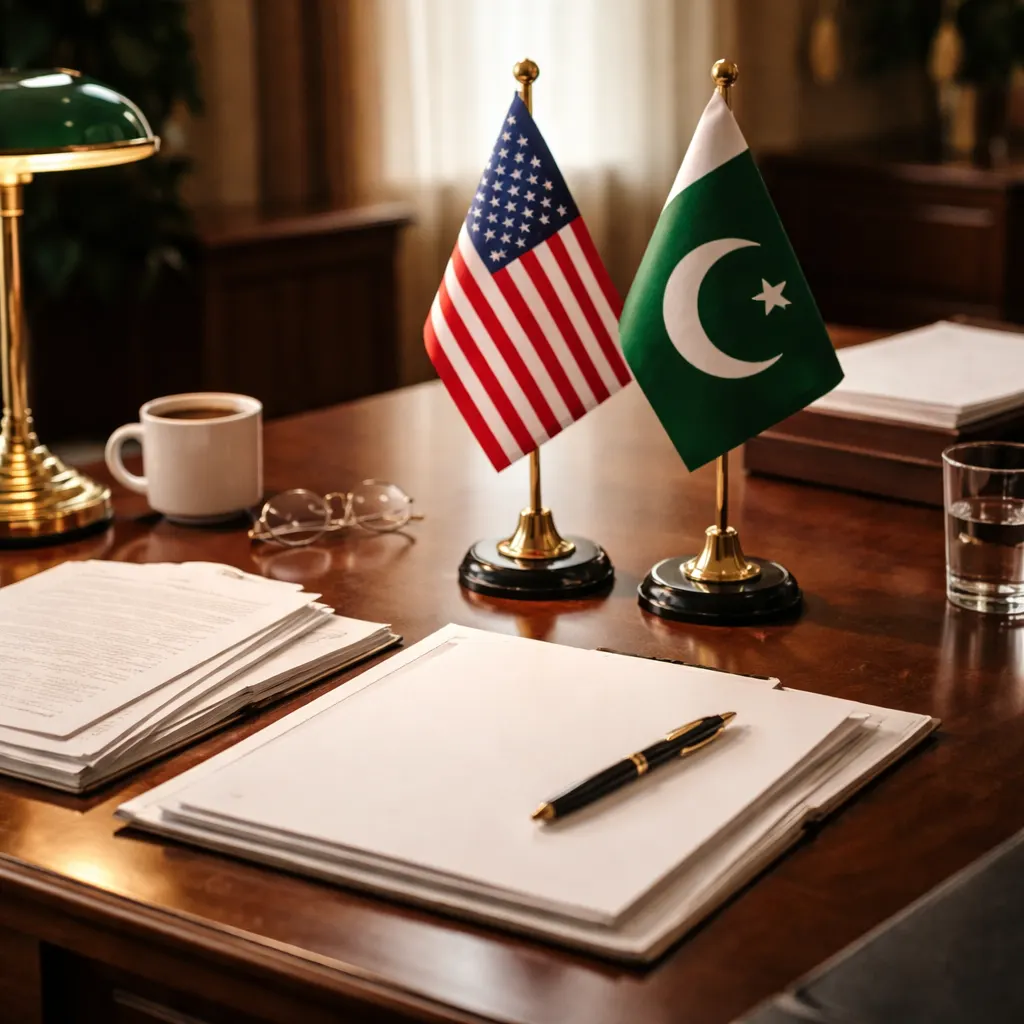
Washington has spent decades trying to buy Pakistan's loyalty with aid packages and sanctions, but a new report from the Hudson Institute argues America should abandon that strategy and embrace a simpler truth: Islamabad isn't for sale, but it is for rent. The analysis, published by foreign policy expert Ken Moriyasu, contends that the United States holds a structural advantage over China in competing for Pakistani cooperation—not because America needs Pakistan more, but because it needs Pakistan less.
The report highlights recent episodes that illustrate Pakistan's value as a hedging power. During the US-Iran conflict, Islamabad brokered the cease-fire that temporarily reopened the Strait of Hormuz, trusted by both Tehran and Washington in a role traditional treaty allies like France, Germany, or the United Kingdom couldn't fill. In June 2025, Pakistan and Azerbaijan signed a deal worth up to $4.6 billion for 40 JF-17 fighter jets—aircraft built on Chinese airframes, powered by Russian engines, and sold by an American ally to a nation Washington is actively courting. After helping broker talks during the Iran crisis, Islamabad reportedly requested a $10 billion exchange-stabilization facility from Washington to bolster its foreign-exchange reserves, again converting geopolitical relevance into economic support without severing ties with Beijing.
According to the report, Pakistan's strategy centers on maximizing its strategic value to both Washington and Beijing simultaneously. The analysis notes that China can't walk away from Pakistan without undermining its Eurasian strategy, while America can engage only when its interests demand it. "Pakistan's geography places it at the intersection of China's continental and maritime strategies, linking western China to the Arabian Sea," the report states, adding that it's also Beijing's largest defense export market, forcing India to divide its military attention. By contrast, America needs Pakistan only episodically—for Iran diplomacy, regional stability efforts, or international prestige opportunities—allowing Washington to think transactionally because its interests are narrower.
The report identifies several levers Washington can use to tilt Pakistan's hedging toward American interests. Pakistan's dependence on international financial institutions like the IMF and World Bank represents one area where U.S. influence remains decisive, since Beijing offers higher-interest bilateral loans and hesitates to finance the Pakistani state directly. Expanding professional military education, officer exchanges, joint exercises, and counterterrorism cooperation can offset China's growing influence over Pakistan's defense establishment, while trade preferences and market access—Pakistan's largest export market is the United States—encourage better behavior more effectively than aid. The analysis emphasizes that Pakistan's leadership values international prestige, which strengthens domestic legitimacy, meaning White House visits, Pentagon invitations, and State Department dialogues cost Washington little but deliver outsized diplomatic returns.
The report recommends Washington judge Pakistan not by whether it reduces ties with China, but by whether it prevents China from monopolizing those relationships. Demanding that Pakistan abandon the China-Pakistan Economic Corridor is a nonstarter, the analysis cautions, since a skilled hedging power won't accept demands forcing it to pick sides. Critics will worry deeper US-Pakistan engagement unsettles India, but the report argues an exclusively Chinese Pakistan is worse for New Delhi than one retaining meaningful military, economic, and diplomatic connections with America. The goal isn't to punish Pakistan for terrorism through threats, but to create so many opportunities that terrorism would destroy what Pakistan itself values—making terrorism too costly not because America threatens punishment, but because it would spoil everything. America's error was never engaging Pakistan, the report concludes—it was believing Pakistan could be bought when rent is cheaper and the only product available.