
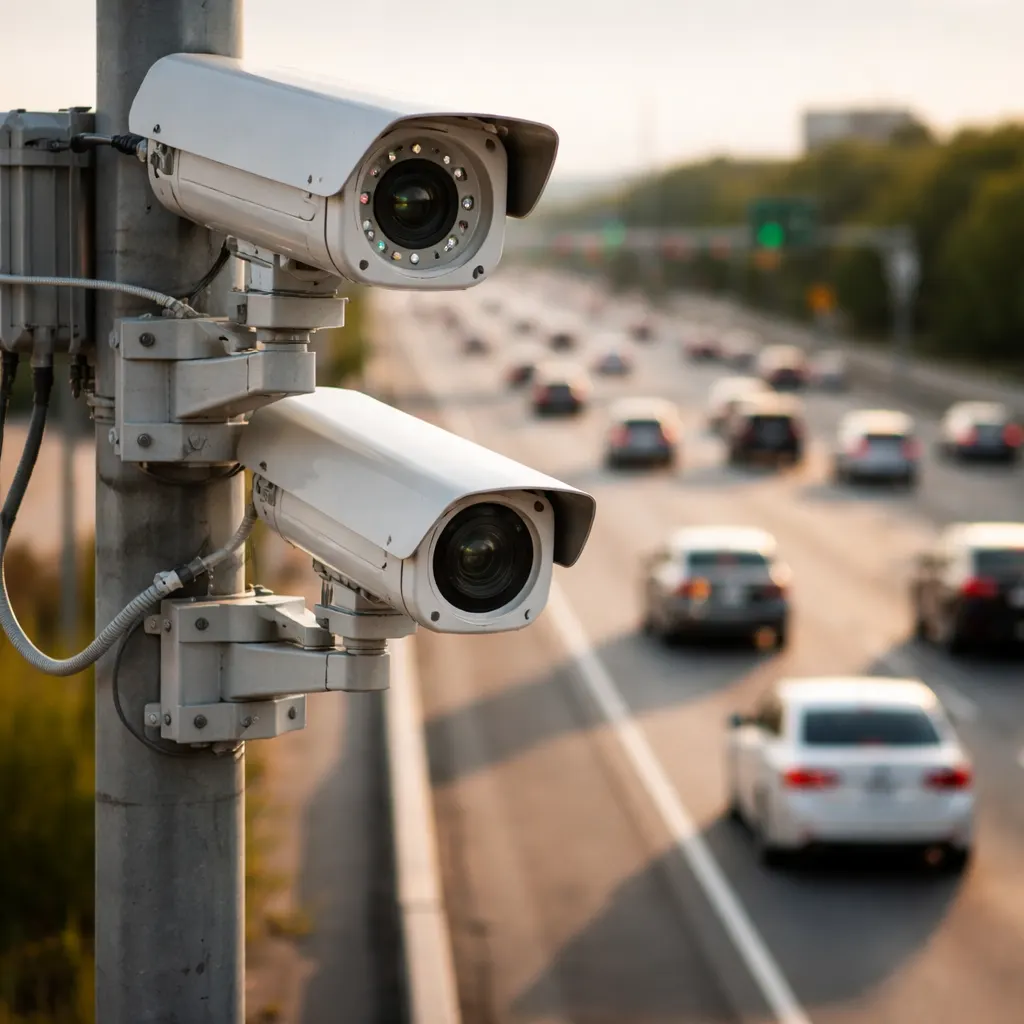
A little-known Texas state agency has spent at least $30 million from a 2023 auto insurance fee increase to deploy more than 3,200 surveillance cameras across the state, an analysis by The Texas Tribune found. The Motor Vehicle Crime Prevention Authority, whose board is largely appointed by Gov. Greg Abbott, awarded no fewer than 95 grants helping law enforcement agencies buy and operate roughly 2,000 Flock cameras, while another $15.9 million enabled the Texas Department of Public Safety to add nearly 1,200 more. The Legislature passed the $1 insurance fee hike unanimously in 2023 to combat catalytic converter theft, but the bill made no mention of license plate readers.
The authority's grants ranged from $7,000 for two cameras in Bellmead to almost $1.7 million for 201 cameras in Dallas, according to the Tribune's review of meeting records and documents from 101 city councils and county commissions. Some city networks were completely funded by the grants, including 165 cameras in Laredo and 150 in El Paso. The $1 annual fee increase has generated an estimated $81 million, allowing the authority to distribute $50.8 million across 234 grants that also reimbursed police departments for officers, crime analysts, attorneys, drones, and other surveillance equipment. DeFlock, an anti-surveillance watchdog, has identified about 13,000 Flock cameras in Texas, suggesting the insurance fee paid for one in four cameras statewide. The agency approved another $3 million in early August to help DPS install 583 additional cameras along Texas tollways over the next year, though Abbott's office announced Friday evening it was pausing all state funding for local Flock camera grants.
Miguel Rodriguez, who chairs the Motor Vehicle Crime Prevention Authority and serves as Laredo Police Chief, said during an August 2023 meeting that he hoped to use the fee proceeds to "cover the entire state" with cameras. The cameras were by far law enforcement's top choice for fighting catalytic converter theft when the authority asked for input in 2023, beating overtime for investigators and additional training. Data from the license plate readers was searched 62,000 times in 2025, leading to roughly 1,660 cleared catalytic converter theft cases, an authority report said. Flock cameras use artificial intelligence to create a "vehicle fingerprint" that stores each vehicle's license plate, make, model, color, and details like dents and bumper stickers in a database accessible by law enforcement nationwide without a search warrant.
The camera expansion has triggered mounting backlash from legislators who voted for the fee and residents concerned about privacy. State Sen. Carol Alvarado and Rep. Jeff Leach, the bill's author and House sponsor, told the Tribune that surveillance cameras were never discussed when the legislation was considered. "I did not have that in mind when we passed the bill," Alvarado said, adding she was surprised to learn the insurance fee was funding AI-supported license plate readers. Rep. Brian Harrison, who voted for the bill, said he wasn't aware of any conversations about using the fee this way and called it "effectively warrantless surveillance." Harrison and Rep. Mitch Little said they plan to file bills next session banning the devices because they believe the cameras violate Fourth Amendment protections against unreasonable searches. Recently revealed cases of misuse—including officers using Flock data to stalk ex-partners and co-workers—have intensified concerns, with a Lufkin officer indicted Aug. 24 on 100 counts of misusing official information. Almost 100 U.S. municipalities have ended their Flock contracts in response to public outcry, including several in Texas such as Bandera and Hood County, which had received grants but canceled their contracts after installation issues and public uproar.