
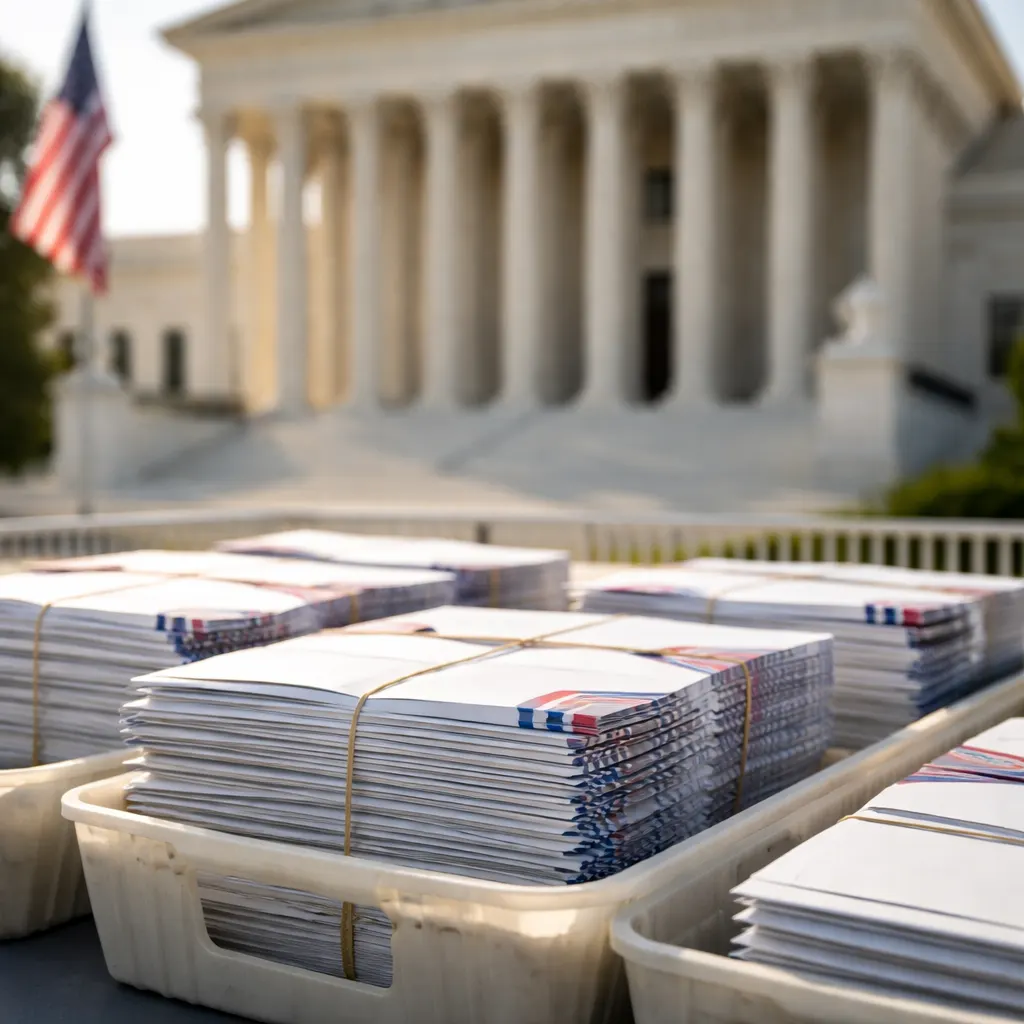
In a 5-4 decision issued in the final week of its 2026 term, the U.S. Supreme Court upheld a Mississippi law that permits the counting of mail ballots arriving up to five days after Election Day, according to a new commentary published by R Street. The ruling in Watson v Republican National Committee means that Mississippi and 13 other states can maintain their current policies of counting late-arriving ballots this November and beyond. While the decision avoids disruptive changes to election procedures less than six months before the midterms, it also keeps the door open for reporting delays that could leave Americans waiting days to learn which party controls Congress.
The Watson case originated from a 2024 challenge by Republican and Libertarian parties to Mississippi's law allowing mail ballots postmarked by Election Day to be counted if they arrive within five days after the election. Mississippi is one of 14 states that count late-arriving ballots if mailed by Election Day, with late arrival windows ranging from just one day in Texas to 21 days in Washington. The Republican and Libertarian challengers argued that counting late-arriving ballots conflicted with federal law's definition of "Election Day" and shouldn't be permitted in federal elections, but the Court's majority disagreed. Six of the 18 U.S. House races classified as "toss ups" by the Cook Political Report are in states that count late-arriving mail ballots—California, New Jersey, New York, Texas, Virginia, and Washington.
The commentary notes that from an administrative perspective, the decision "maintains the status quo and does not require major changes to election procedures" in the 14 affected states. Had the Court struck down Mississippi's law, states would've faced operational challenges related to voter education about new deadlines and policy choices around how broadly to apply an Election Day deadline. The authors write that if these competitive House races remain tight and it's unclear which party will control the chamber, "Americans could find themselves waiting for mail ballots to be counted" in those six states before knowing the overall result of the 2026 midterms. According to the commentary, "slow results lead to information vacuums that can allow distrust in the process to take root."
The report explains that while the Supreme Court didn't find that counting late-arriving ballots conflicts with federal law, the practice still carries significant risks for election integrity and public trust. The problem isn't just the mail ballot deadline—other factors like lengthy ballot curing periods and whether states let election officials pre-process early-arriving mail ballots also contribute to slow reporting. But the commentary argues that "setting an Election Day mail ballot deadline remains a concrete step that lawmakers can take after the 2026 midterms to help minimize the risk of future reporting delays" that could erode trust in American elections. The decision also avoided complications like Maryland's preemptive policy to create separate deadlines for state versus federal contests, which would've introduced a bifurcated system if the Court had ruled differently.
Ultimately, the Supreme Court's decision means that setting mail ballot deadlines is now a choice for states to make, not a federal requirement. While late-arriving ballots will certainly be part of November's elections, the commentary recommends that lawmakers in the 14 states permitting late arrivals should consider enacting an Election Day deadline by 2028 to minimize the risk of trust-eroding reporting delays in the next presidential election cycle and beyond. With control of Congress potentially hanging in the balance this November, the stage is set for exactly the kind of extended vote-counting period that could test Americans' patience and faith in the electoral process.