
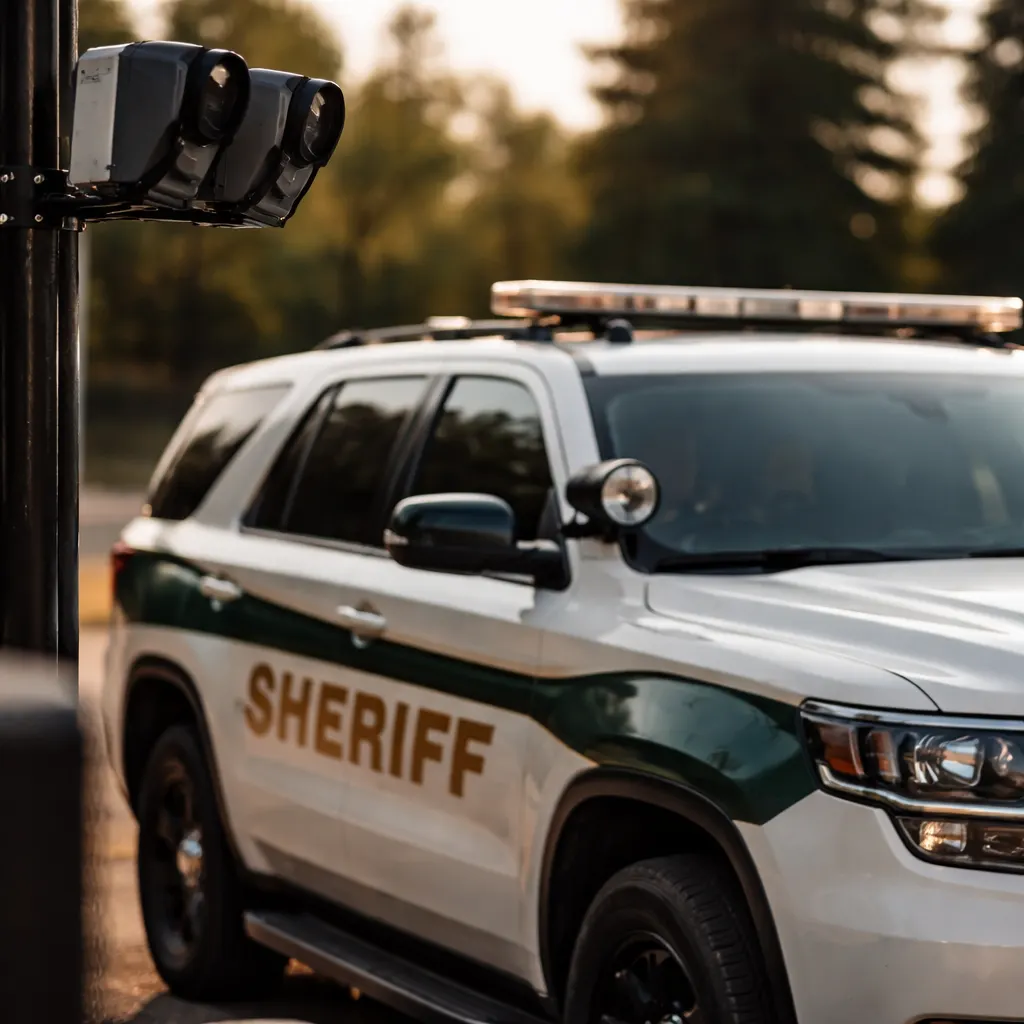
The Shasta County Sheriff's Office may be failing to document why law enforcement officers access data from the county's automated license plate reader cameras, a requirement under California law, according to an investigation by Shasta Scout. Audit logs released this summer in response to a public records request do not include reason codes that explain why Flock camera data was accessed each time it was used. Sheriff Michael Johnson hasn't responded to multiple requests for comment over four days, leaving unclear whether the county is violating state documentation requirements or improperly withholding public records.
Shasta County has installed 24 Flock cameras across the region starting in 2025, designed to help staff investigate crimes, missing persons cases, and other law enforcement matters. Audit logs from the sheriff's office lack any documented reason for Flock searches, contrasting sharply with logs from the city of Anderson, which include the reason for each search query alongside the name of the individual conducting the search and other key details. A staff services analyst from the sheriff's office initially said the county tracks search reasons but doesn't record them in audit logs, then later claimed the information was logged but withheld under a government code exemption for personally identifiable information. The only exemption cited in the county's summer records response was Government Code 7922, which allows withholding information when privacy concerns "clearly outweighs the public interest served by disclosure," though it's unclear how search reasons like "narcotics," "larceny," or "stolen auto" would qualify as personally identifiable.
California Senate Bill 34 requires law enforcement agencies to maintain "a record of access" that includes the "purpose for accessing the information." The sheriff's own November 2025 training bulletin states that officers "are required to properly document a case number, or sufficient information that validates your use of the system for a legitimate law enforcement purpose." The bulletin explains that law enforcement should document the nature of the crime and whether the vehicle being searched connects to the crime or victim. During an Oct. 27 county board discussion, Supervisor Allen Long asked Johnson whether each search requires a case number, and the sheriff responded "yes," but added that "we don't actually enter that case number into the tracking system because we don't want to make that discoverable by anybody else."
Senate Bill 34, authored in 2015 by former California State Senator Jerry Hill, was the first law of its kind encouraging local regulations of automated license plate reader data beyond agencies like the California Highway Patrol. Before the law, limited oversight existed for these cameras, with data retention capped at 60 days and only baseline restrictions on data sharing. The legislation filled an accountability gap requiring local law enforcement to maintain internal regulations and allow public input to better protect community members' privacy. Concerns about Flock cameras center partly on potential privacy violations, with cases documented nationwide where law enforcement has used the technology to stalk or harass community members. Though no such harassment claims have emerged in Shasta, the sheriff's current policies and practices may leave residents vulnerable and potentially violate state law.
Supervisor Matt Plummer plans to question the sheriff about audit logs during the board's meeting, seeking to understand what's currently being documented and how the county can ensure sufficient oversight to comply with state law. "I don't think that any policy should be written on the basis of trusting an individual who works in the government," Plummer told Shasta Scout. "I think it should be written in such a way that it provides the proper accountability and oversight to minimize the chances of being abused." He's recommending an independent, third-party audit of the logs that would potentially go beyond what's publicly available. A protest against the county's Flock cameras is scheduled for Tuesday morning, just before the board meeting where Johnson is set to present on the controversial technology.