
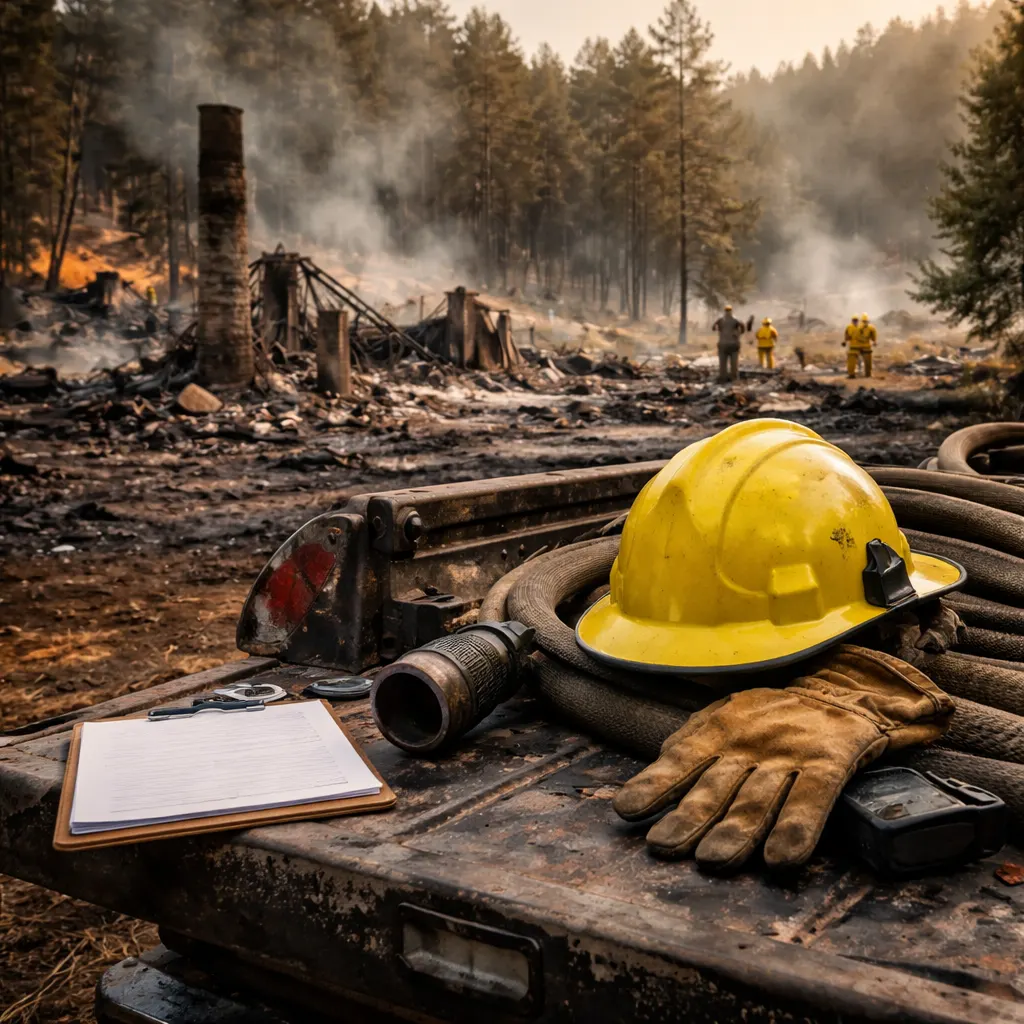
New Mexico has averaged four disaster declarations per year over the most recent five-year period, according to a report updated July 8, 2026, by USAFacts based on Federal Emergency Management Agency data. The state has seen one disaster declaration so far in 2026 as of June, following six declarations in 2025. Fires have emerged as the dominant type of disaster in the state, accounting for the majority of federal emergency declarations over both recent years and the past four decades.
Since 1980, New Mexico has recorded 126 total disaster declarations, with fires representing 73 of those—64% of all declarations in that timeframe. In the most recent five-year period from 2021 to 2025, fires accounted for 18 out of 23 total disasters, making them the most common declaration type. The state's 2025 declarations included the Cotton 2 Fire, Desert Willow Fire Complex, Trout Fire, and Rio Grande Fire, while severe storms, flooding, and landslides also triggered multiple declarations. The most recent disaster, declared June 30, 2026, involved severe storms and flooding.
The report explains that a disaster declaration is more than just recognizing an event—it's a formal request for federal aid when state, local, or tribal resources are overwhelmed. According to USAFacts, the president must approve all declarations, and the federal aid available depends on what kind of disaster is declared. Major disaster declarations apply to hurricanes, tornadoes, snowstorms, floods, earthquakes, wildfires, and other severe natural events that typically cause widespread damage requiring long-term recovery efforts, while emergency declarations cap aid at $5 million for urgent crises.
The report notes that fire management represents a separate declaration category with a distinct process. Instead of the longer timelines for other declarations, these expedited decisions are usually made within a few hours. The prevalence of fire-related declarations in New Mexico reflects both the state's vulnerability to wildfire conditions and the federal government's recognition that local resources often can't handle large blazes or multiple simultaneous fires. With fires accounting for nearly two-thirds of all disaster declarations since 1980, New Mexico's pattern stands as a clear indicator of how climate and geography shape federal emergency response in the Southwest.