
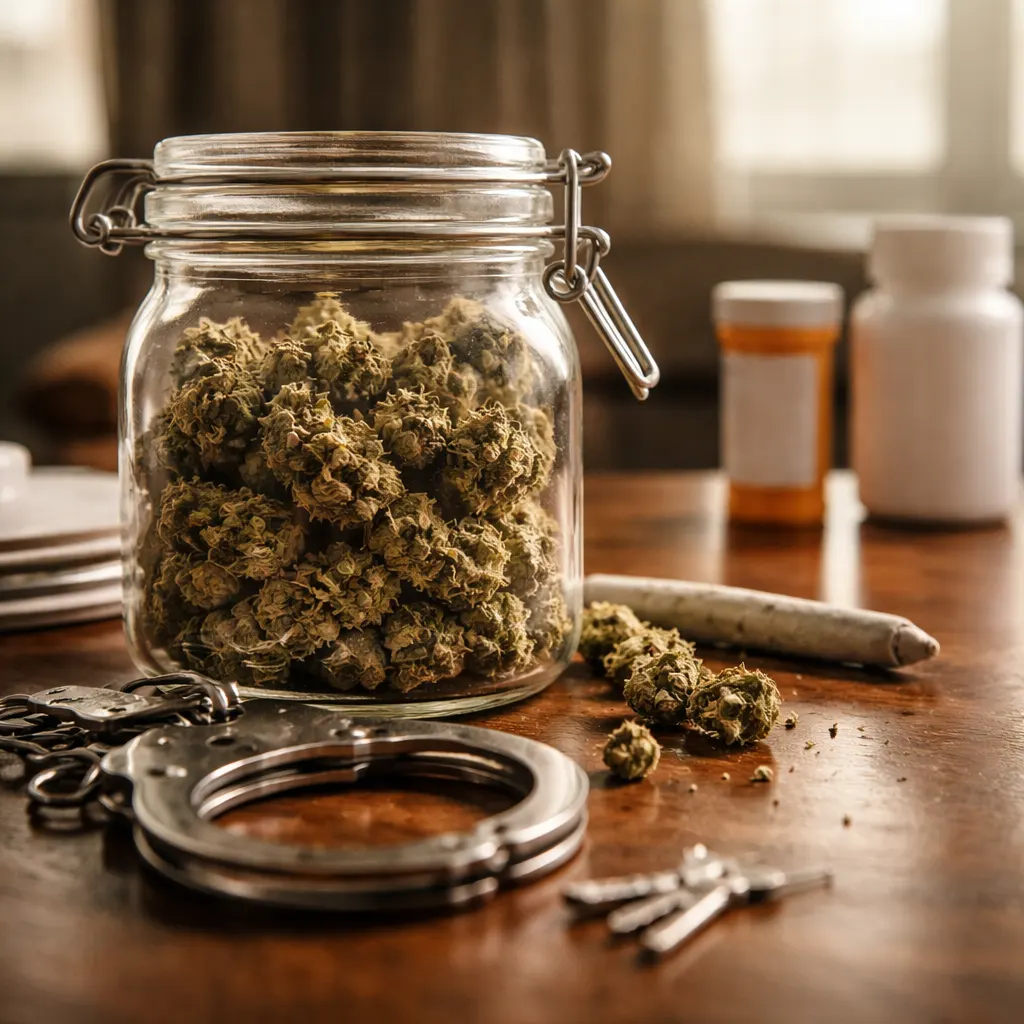
Nearly four million adults in the United States who live under community supervision on probation or parole are barred from accessing medical marijuana treatment that's legal for all other citizens, according to a policy brief published July 23, 2026, by Reason Foundation. The report finds that while 47 states now allow marijuana for medical purposes, individuals serving supervision sentences typically can't access this physician-recommended care without risking reincarceration. The exclusion affects nearly double the combined population held in jails and prisons nationwide.
The financial toll of supervision violation policies is substantial. In 2023, states spent approximately $3 billion locking up people for technical violations that involved no new criminal conduct—the same category into which a positive marijuana test typically falls, the report shows. Many individuals on supervision manage chronic health conditions requiring ongoing medical attention, including ailments for which state authorities have approved marijuana use. A single violation of release conditions, even one involving no new crime such as missing an appointment with a parole officer, can trigger automatic reincarceration.
The report finds that supervision systems designed to support rehabilitation and reentry shouldn't create obstacles to medical care that's legal for everyone else and may significantly affect stability and reintegration. According to the analysis, the contradiction undermines the purpose of marijuana reform by continuing to criminalize access and denying potential benefits to a population that may need them most. The brief identifies promising frameworks across multiple states: statutory protections in Minnesota, Missouri, Connecticut, New York, and Colorado that require individualized assessments before courts can restrict supervisee access; appellate court decisions in Pennsylvania, Michigan, and Arizona striking down blanket prohibitions as inconsistent with state medical marijuana laws; and corrections agency policies in Washington, Florida, and Minnesota permitting registered marijuana patients to continue treatment while under supervision.
The federal government's move to reschedule marijuana from Schedule I to Schedule III makes remaining state-level restrictions increasingly hard to justify, the authors write. Once rescheduled, marijuana's medical value will be expressly recognized under both state and federal law. States that have enacted statutory protections mandate individualized assessments rather than automatic bans, while some appellate courts have found blanket prohibitions on medical marijuana use inconsistent with state statutes authorizing physician-recommended treatment. Even without legislative mandates, corrections agencies in several states have adopted administrative policies allowing registered patients to maintain their treatment regimens. The report argues that as marijuana gains formal medical recognition at the federal level, policies that deny doctor-recommended treatment to people on supervision become harder to defend on public health or rehabilitation grounds.