
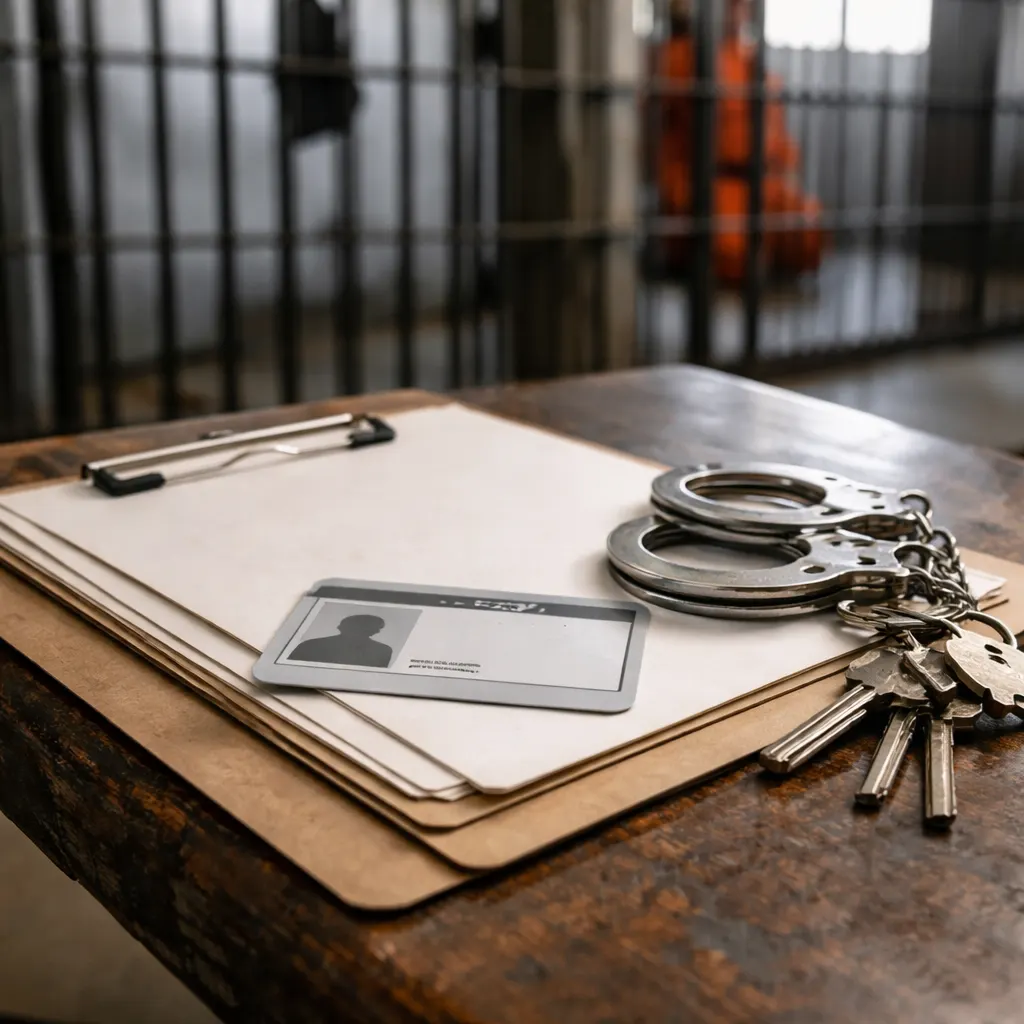
Louisiana will require state prisons to provide inmates with identification documents before they leave custody under House Bill 167, signed into law June 8 by Gov. Jeff Landry. The new law, which takes effect Aug. 1, directs the Department of Public Safety and Corrections to work with the Office of Motor Vehicles to give eligible inmates a state ID card, along with copies of their birth certificate, Social Security card, and work and training records before release. The law aims to help the more than 1,000 people who leave Louisiana prisons each month secure jobs, housing, and bank accounts.
Under the new law, the Department of Public Safety and Corrections must begin gathering paperwork for a special identification card as early as nine months before an inmate's release. The department must identify whether an inmate already holds a state ID or driver's license, and for those who don't have current identification, DPSC and OMV must coordinate to issue a special ID card by the time they walk out. The law requires DPSC to provide every eligible inmate with a copy of their educational and vocational credentials earned in prison, their work record, and—where obtainable—a copy of their birth certificate and a Social Security card or replacement card. The resulting card is valid for six years, and OMV may charge a reasonable fee covered by inmate trust funds, existing appropriations, and donations.
Sponsored by Rep. Barbara Freiberg, a Baton Rouge Republican, the bill addresses a practical barrier to reentry. "We have over 1,000 folks leave our prisons every month, and in order to get employment, in order to get housing, they need identification," Freiberg said during the Senate Judiciary Committee hearing. The law also allows an inmate's birth certificate and "master prison record"—a document detailing an inmate's sentence, release date, and credit for time served, good behavior, and program participation—to serve as valid photo identification for obtaining the special ID card. This flexibility helps address what the report describes as "the chicken-and-egg problem of needing additional secondary documents (such as a Social Security card, a utility bill, or an out-of-state ID) that a standard Louisiana ID application demands."
Prior to HB 167, state law already directed DPSC to designate a transition specialist at each facility responsible for ensuring inmates receive a photo ID card upon release, but there was no formal requirement for DPSC and OMV to coordinate on issuing IDs. The existing statute was also silent on birth certificates and Social Security cards, and the level of assistance likely varied by facility and parish. The new law creates a formal handoff between DPSC and OMV, ensuring that because corrections departments already verify the identities of people in their custody, they're well-positioned to help inmates obtain IDs before release rather than leaving them to navigate state agencies alone on the outside. Louisiana's move follows similar reforms in states such as Georgia and Virginia, which have also strengthened requirements for helping released inmates obtain identification documents. As more states recognize that a driver's license or state ID is often the first practical step toward a job, housing, and a bank account, Louisiana's approach of linking DPSC's existing prison records directly to the OMV's ID-issuance process offers a template other states can adapt.