
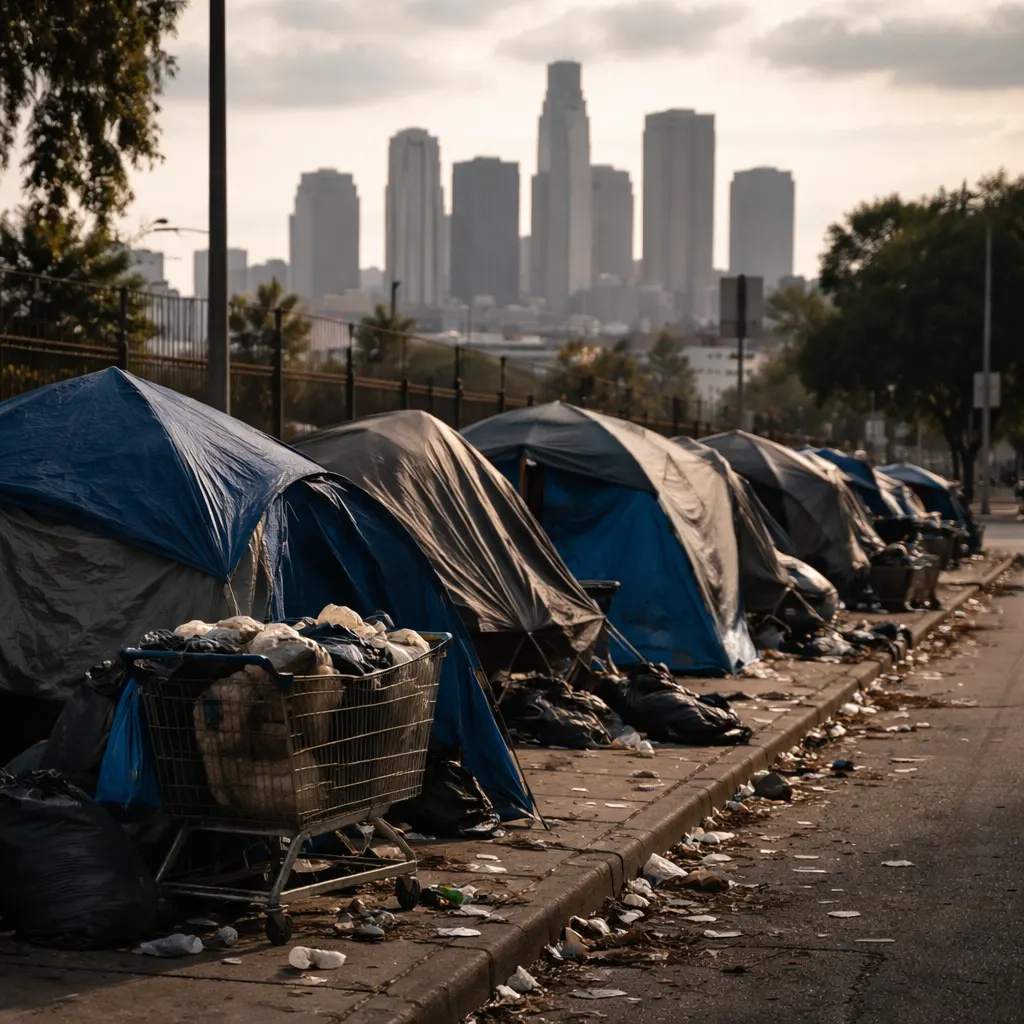
Los Angeles budgeted nearly $4.4 billion to combat homelessness between fiscal years 2022–23 and 2025–26, yet the city's homeless count climbed from roughly 42,000 when Mayor Karen Bass took office to more than 45,000 today, according to a new analysis published by the Hoover Institution last week. That 7.6 percent jump works out to approximately $100,000 in allocated funds per homeless person at the time Bass was elected. The report argues that Los Angeles failed not because of inadequate resources, but because policies rested on flawed assumptions about the mental health and substance abuse challenges facing the homeless population.
The city's homeless population would now rank larger than nearly 60 percent of all California municipalities if counted as its own city, while Los Angeles County's total homeless count exceeds 73,000, the report states. In 2019, the Los Angeles Homeless Services Authority claimed that only 29 percent of the county's homeless had either serious mental illness or substance-use disorder, suggesting the vast majority did not face these barriers. But research paints a sharply different picture: one Journal of the American Medical Association study found that 37 percent of homeless individuals regularly use methamphetamine, nonprescription opioids, or cocaine, and nearly 20 percent had overdosed. Another JAMA analysis surveying 85 studies discovered that approximately 44 percent struggle with drug or alcohol abuse, 67 percent have one or more mental health disorders, and rates of conditions like antisocial personality disorder, major depression, and bipolar disorder run 10 to 28 times higher than in the general population. Self-reported data also showed about 42 percent drank heavily and 49 percent used drugs regularly before becoming homeless, figures the report notes likely understate true incidence.
California adopted a "housing first" approach in 2016 that prioritizes placing homeless individuals in permanent supportive housing without requiring sobriety or treatment, and construction costs have soared to eye-watering levels. A Venice development was estimated at $1.24 million per apartment unit including land and parking, a Santa Monica project will exceed $1 million per unit not counting land, and several Northern California projects crossed the $1 million threshold more than four years ago, according to the report. The author calculates that only about 7 percent of U.S. households could afford such housing at market rates. Meanwhile, administrative failures at LAHSA have been severe: a 2024 county audit found the agency advanced $50.8 million to service providers without formal repayment agreements and recovered just $2.5 million by July 2024, while a May 2026 review discovered LAHSA couldn't produce complete financial statements, hadn't properly recorded $145.1 million in county advances, and maintained duplicate entries overstating cash by $47.2 million. Federal prosecutors have charged the head of one LAHSA-funded nonprofit with operating an alleged $23 million fraud scheme, and in June 2026, HUD suspended LAHSA from future federal transactions over suspected false certifications and inadequate financial controls.
The report contends that placing people with untreated mental illness and addiction into permanent housing has proven deadly in too many cases, pointing to nine overdose deaths at a single permanent supportive building on Skid Row in 2022 and San Francisco data showing 25 to 30 percent of overdose deaths occur in permanent housing. A 2020 analysis found that among all individuals exiting federally funded permanent supportive housing, 25 percent died while enrolled, 21 percent returned to homelessness or institutional settings, and only 27 percent moved to other permanent housing. Los Angeles's companion policy of harm reduction, which distributes clean needles and overdose-reversal drugs without mandating treatment, has generated what the report describes as unintended harms: peer-reviewed studies link needle exchange programs to lower HIV infection but more overdoses and overdose deaths, while widespread naloxone availability correlates with increased overdoses, emergency room visits, and theft. Skid Row has expanded into a roughly 54-block zone where drugs are openly available and the murder rate runs 17 times higher than the rest of the city, and homeless-related incidents consume about one-third of fire department calls and 15 percent of police calls.
The report recommends abandoning housing first and harm reduction in favor of building treatment centers in affordable locations, creating sober-living environments like San Francisco recently implemented, and improving accountability for city staff and nonprofit operators. But the author sees little appetite for change among California's Democratic leadership, noting that San Francisco's sober-living policy faced fierce resistance from homelessness-sector nonprofits who stand to lose if the status quo shifts. The bottom line: policies designed with good intentions have created incentives for drug use, made the city a magnet for those struggling with addiction, and failed to give people reasons to take responsibility for their recovery. Without a fundamental break from the current approach, homelessness is here to stay.