
Kentucky's highway system now ranks 15th in the nation for overall cost-effectiveness and condition, sliding four spots from last year's 11th-place position, according to the 29th Annual Highway Report published by Reason Foundation. The drop reflects declining performance in several key areas, particularly urban road safety and pavement quality. The report evaluates state-controlled highways across 13 categories, including pavement and bridge conditions, traffic fatalities, congestion, and spending.
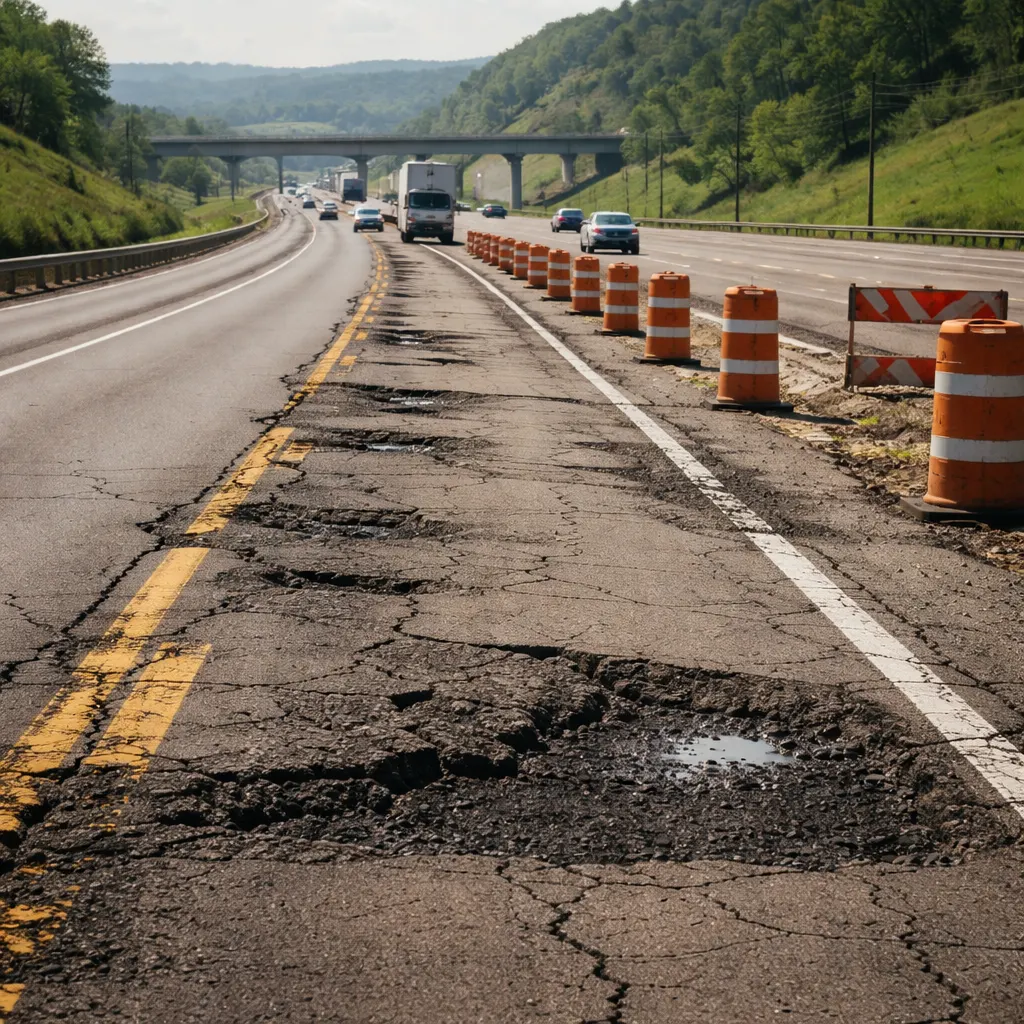
In pavement quality, Kentucky's rural Interstate roads rank 24th nationally, while urban Interstate pavement sits at 36th. The state performs better on arterial roads, placing 15th for rural arterial pavement and 10th for urban arterial pavement. Structurally deficient bridges rank 32nd nationwide. For traffic safety, Kentucky's rural fatality rate ranks 11th, but its urban fatality rate has plummeted to 42nd, down from 22nd in the previous report—the state's worst decline of any category. Drivers in Kentucky spend roughly 22 hours per year stuck in traffic congestion, placing the state 27th for congestion. On spending, Kentucky ranks 15th in capital and bridge disbursements—the costs of constructing new roads and bridges and expanding existing ones—and 23rd in maintenance disbursements such as repaving and pothole repairs. The state leads the nation at 1st in administrative disbursements, representing office spending that doesn't directly reach roads.
Baruch Feigenbaum, the report's lead author and senior managing director of transportation policy at Reason Foundation, noted that "Kentucky should focus on improving its Urban Interstate Pavement Condition and reducing its Urban and Other Fatality Rates." The report highlights that while Kentucky performs strongly in administrative spending efficiency and rural road safety, its high fatality rates and worsening urban pavement quality remain areas of concern. When measured against neighboring states, Kentucky outperforms Indiana (18th), West Virginia (30th), and Illinois (37th), but trails Virginia (1st) and Tennessee (12th) in overall highway performance.
The rankings system places states on a 1-to-50 scale where first place indicates the best outcome—such as the lowest fatality rate or highest pavement quality—and 50th represents the worst. For spending categories, first place means the state spends the least, while 50th signals the highest relative spending. The report's data primarily draw from information each state submitted to the Federal Highway Administration for 2023, supplemented by deficient bridge data from Better Roads and Bridges and congestion data from INRIX. Kentucky's steepest improvement came in rural fatality rate, which jumped from 17th to 11th, and in other disbursements, which rose from 31st to 24th.
Kentucky's challenge lies in reversing the urban fatality trend while maintaining its strengths in administrative efficiency and rural safety. The report suggests that targeted investment in urban Interstate pavement and comprehensive urban safety measures could help the state regain lost ground in next year's rankings. For a state that spends less on administrative overhead than any other, the question is whether those savings can be redirected to the areas where Kentucky is falling behind.