
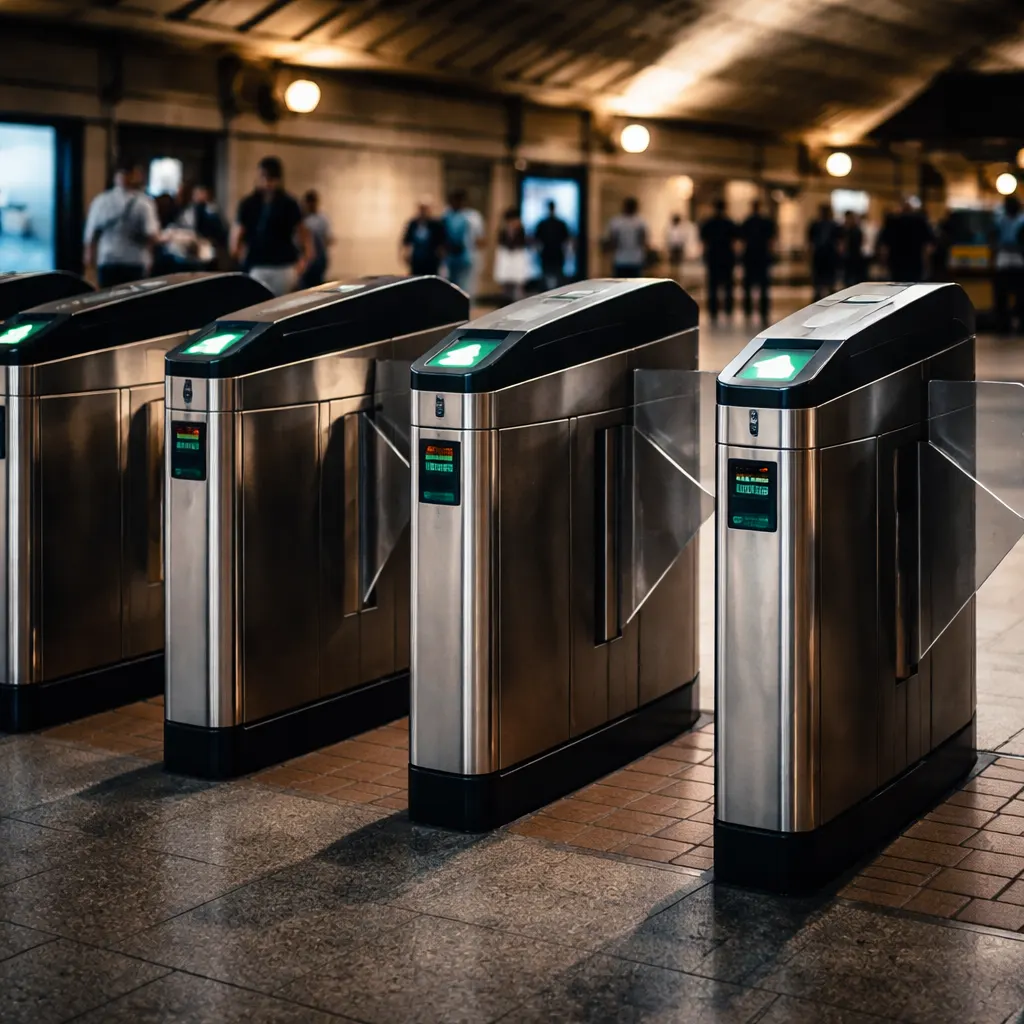
Installing taller fare gates at transit stations cut fare evasion by 82% across Washington, D.C.'s Metro system after the city paired them with stronger enforcement, according to a July 2024 report published by the Illinois Policy Institute. The report examines how Washington and San Francisco have tackled fare evasion through infrastructure upgrades, arguing that Chicago should follow their lead to revive the struggling Chicago Transit Authority. The CTA announced July 16 it's seeking proposals for new fare technology to replace aging equipment and deter evasion.
Chicago's transit ridership sits at just 74% of pre-pandemic levels despite the COVID crisis having long passed, leaving the system struggling to generate revenue. The Washington Metropolitan Area Transit Authority installed more than 1,200 five-foot-tall fare gates across its 98 Metrorail stations between July 2023 and 2024, driving the sharp drop in evasion. The transit agency estimates conservatively that fare evasion cost it $40 million in 2022. San Francisco's Bay Area Transportation Authority has also begun installing higher, more secure gates that prove far harder to bypass than traditional designs, and saw an immediate reduction in required maintenance costs after the upgrade. Meanwhile, the Chicago Tribune recently reported that CTA employees and passengers have been assaulted at much higher rates than on other transit systems, prompting the Cook County state's attorney to launch a task force training more than 30 prosecutors in handling CTA crime.
The report finds that fewer riders means less revenue, which leads to worse service and conditions, creating a cycle that's difficult to break—with fare evasion sitting at the center of that cycle. According to the analysis, the CTA has rolled out new measurement and enforcement efforts and pilot programs, including expanding installation of higher-barrier gates at stations "that are typically staffed but continue to have high rates of fare evasion." Riders continue to cite cleanliness and safety as major concerns.
The report's authors explain that the benefits extend beyond just collecting more revenue. They cite research showing that as few as 1% of offenders committed more than 60% of violent crime in the U.S., and argue that higher gates can help deter many of these potential offenders, leading to declines in crime rates. A system with fewer fare evaders tends to be safer and cleaner, making it more attractive and cheaper to maintain in the long run. The logic is straightforward: if it's harder to evade paying the fare, fewer people will try.
The report concludes that Chicago has the resources to expand higher-barrier gates across the system, noting that the Regional Transportation Authority recently received an influx of $1.5 billion. The authors recommend the CTA pair the higher gates with other proven improvements, including preventing crime with a higher police presence and stronger enforcement through increased citations. This isn't just about stopping people from skipping fares—it's about improving the rider experience and stabilizing CTA finances without turning to higher taxes or even more bailouts.