
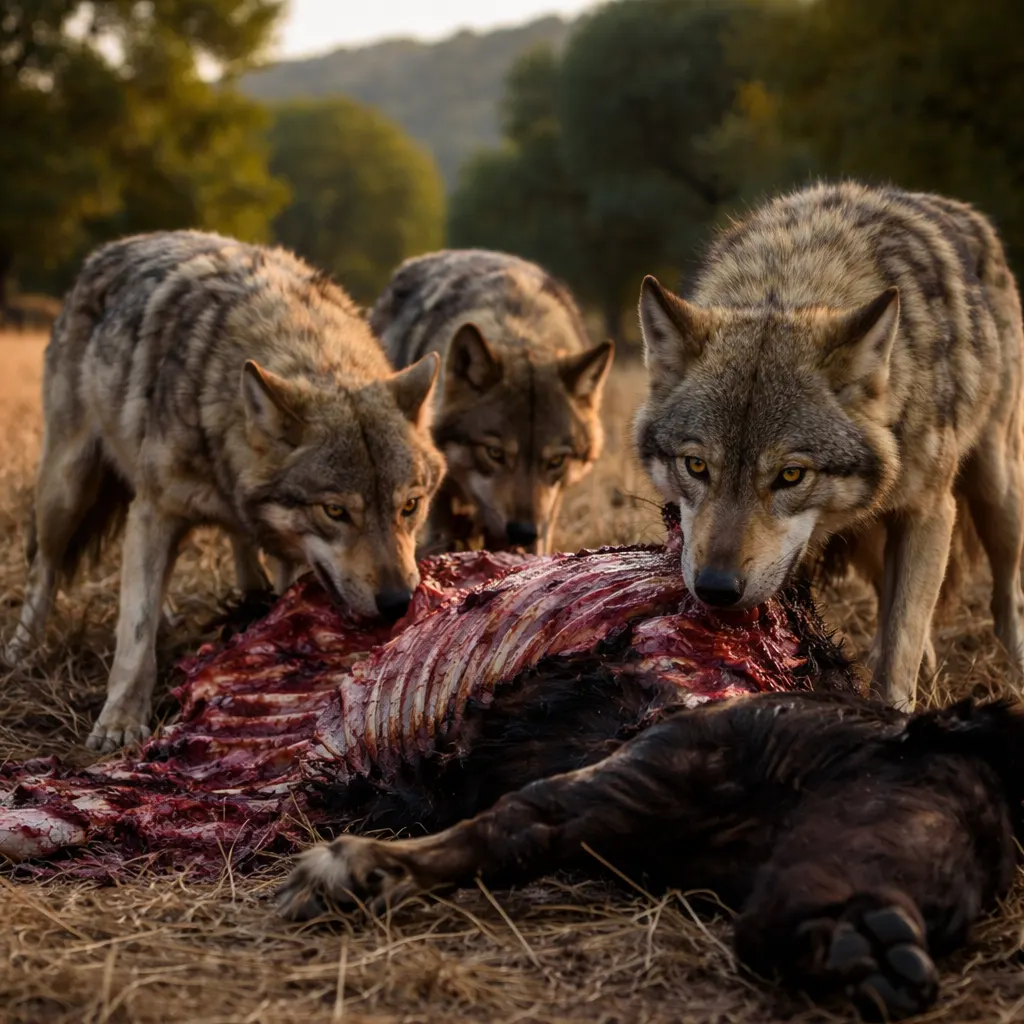
Gray wolves in northeastern California derived 72 percent of their diet from beef during a two-year study period, according to research from the University of California, Davis. Scientists collected and analyzed wolf scat from the Lassen and Harvey pack territories between June and October of 2022 and 2023, using DNA sequencing to identify prey animals. The findings reveal cattle as the dominant food source for wolves in a region where wild prey remains scarce.
The study successfully identified 20 individual wolves and found beef made up 86 percent of their diet in 2022 and 55 percent in 2023. The 2022 data came exclusively from the Lassen Pack, while 2023 samples included both the Lassen and Harvey packs. Researchers gathered scat samples opportunistically from roadways and game trails during summer and fall months. Confirmed or probable cattle losses to wolf depredation jumped from 54 incidents in 2024 to 198 in 2025, according to the California Department of Fish and Wildlife's annual report. The state's current wolf population stands at roughly 90 animals, most living in the northern third of California, well below the estimated carrying capacity of 371 wolves for that region.
The report notes that while the study was relatively small, it warrants replication on a larger scale to better understand why wolves target cattle in California. Researchers point to the overall absence of wild ungulate populations combined with the modern landscape as factors pushing wolves toward the more accessible prey of range cattle. The analysis suggests the scat findings likely represent active hunting rather than scavenging, since California's range cattle have low natural mortality rates of just 1 percent for cows and 2 percent for calves that rise when wolf packs are present.
The authors argue the situation stems from a continually shrinking wild prey base and a conservation framework that prevents ranchers from protecting their herds. California's current plan doesn't allow hunting, trapping, or "caught in the act" protections for livestock because gray wolves remain listed as endangered by both state and federal authorities. The report recommends three policy shifts: updating the conservation plan with flexible population benchmarks, developing a protocol for downlisting and eventually delisting wolves from endangered status, and reconvening stakeholders to discuss coexistence strategies. When the state published its Conservation Plan for Gray Wolves in 2016, two of five goals were managing native ungulates to provide abundant prey for wolves and managing conflicts to minimize livestock losses, both of which the current data suggests have fallen short.
The report warns that without management changes, depredations will likely worsen as wolf populations grow toward carrying capacity, potentially triggering a 300 percent increase in wolf numbers in northern California. Author Pam Lewison, a Pacific Research Institute fellow and fourth-generation farmer, calls for immediate action to create sustainable management solutions that balance rural community needs with conservation goals. The bottom line: wolves are eating cattle at rates that demand new policies before losses escalate further.