
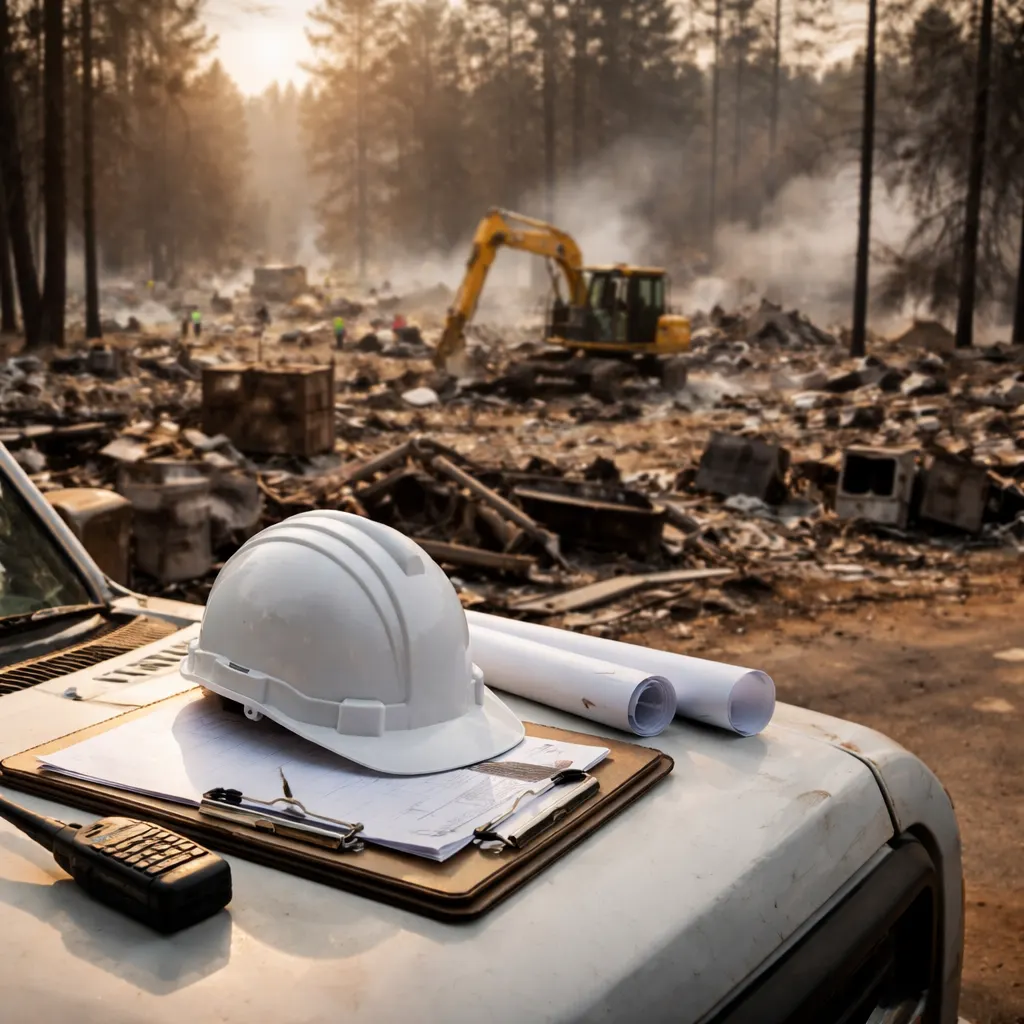
Within a year of the January 2025 wildfires that destroyed parts of Altadena, the Pacific Palisades, and Malibu, California approved disaster recovery financing districts (DRFDs) to decentralize financial authority and accelerate reconstruction, according to a May 2026 report from the Milken Institute. The districts draw on growing property tax revenue to finance reconstruction, economic recovery, and resilience measures. But the report argues that the most significant benefit of a DRFD might not be the tax dollars it collects—it's the opportunity for community-led planning and local decision-making.
The January 2025 wildfires became the most expensive wildfire disaster in world history, causing over $130 billion in extreme weather losses. The new districts can tap incremental property tax revenue, accept nontax revenue streams, and issue revenue bonds. They can also serve as channels for future rebuilding grants, which would allow communities to manage those funds with greater local control. The report traces how policy evolved to create these DRFD tools and evaluates the limitations and possibilities local governments and residents face as they implement them.
The report offers five guiding principles for district leaders and community members. First, because incremental property tax revenue will grow gradually, DRFDs should issue revenue bonds and pursue upfront operating grants to cover startup expenses and secure early victories. Second, they should deploy scarce early revenue strategically, prioritizing investments that will spur additional property value increases while directing other capital toward projects capable of supporting low-cost borrowing. Third, districts should position themselves as intermediaries for potential future rebuilding grants. Fourth, fundamental questions about density, displacement, and neighborhood identity must be resolved at the community level, with DRFDs serving as the forum for negotiating these difficult issues and shaping the vision for recovering areas. Fifth, the report recommends that DRFDs test both established and novel financial mechanisms, including revolving loan funds, backing for community land trusts, and even innovative insurance products that supplement individual homeowners' policies.
Why does localized control matter so much? The report suggests that DRFDs can act as a venue for addressing existential trade-offs—whether to rebuild denser or preserve existing character, how to prevent displacement, and who shapes the future of devastated neighborhoods. These aren't technical questions with right answers; they're choices that require collective negotiation among residents. By creating a structure for community-based planning, the districts give local voices formal authority over recovery decisions that would otherwise be made by distant state or federal agencies. If they succeed, the report notes, they could become a valuable template for other communities managing disaster recovery.
The report frames DRFDs as experimental institutions that should embrace both proven and untested tools. By combining tax-increment financing with grant channeling, community land trust support, and innovative insurance models, the districts could unlock resources and stabilize neighborhoods faster than traditional recovery methods. But the key insight is strategic: slow-growing tax revenue alone won't rebuild these areas quickly, so districts must act as conveners, intermediaries, and innovators to leverage multiple funding streams and protect community priorities. For devastated neighborhoods weighing whether to adopt a DRFD, the takeaway is clear—the real power isn't just the money, it's the seat at the table.