
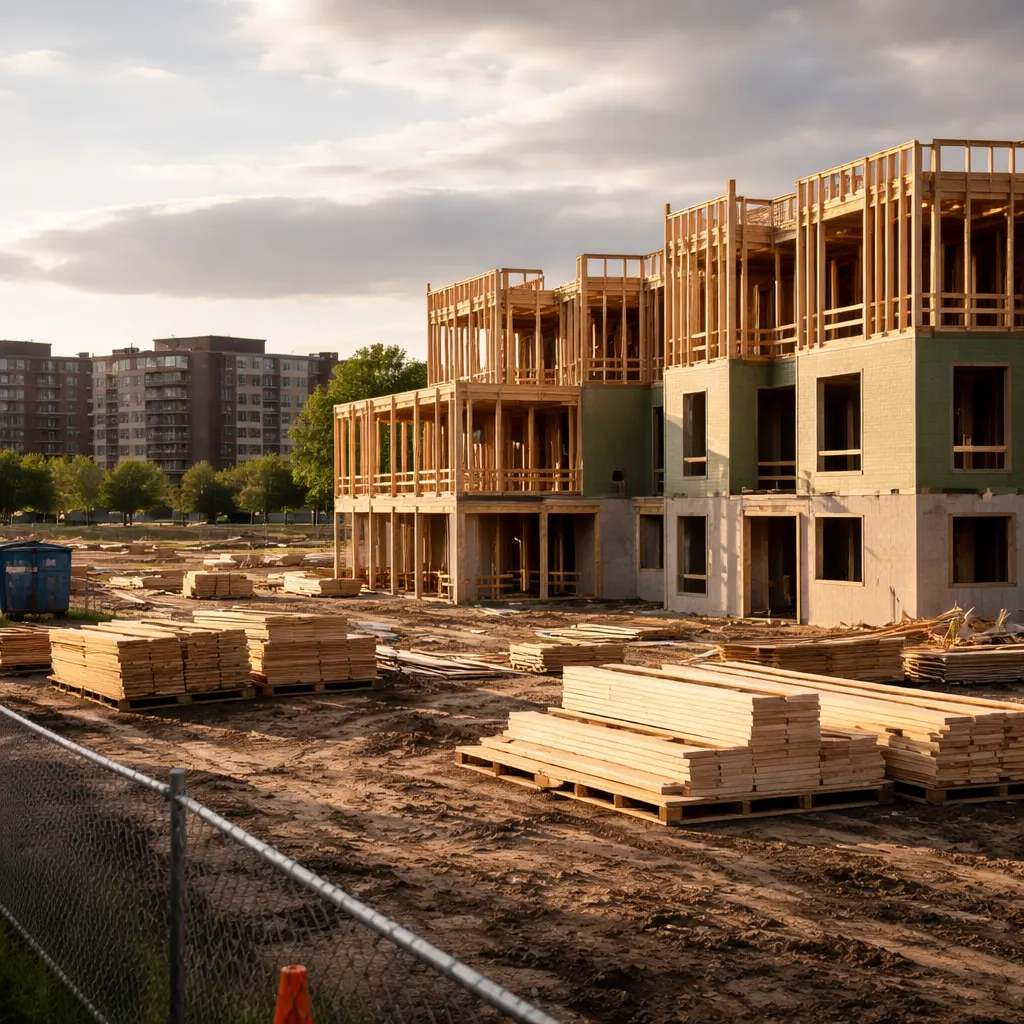
An average of just eight condo units were added each year in Milwaukee from 2021 to 2025, a 97% drop from the roughly 309 units built annually during the pre-recession boom years of 2004 to 2008, according to a Wisconsin Policy Forum report published September 25, 2026. Madison experienced a similar collapse, with annual condo additions falling from roughly 547 units during the earlier period to just 16 units in recent years. The report, which analyzed municipal assessment records across Wisconsin's largest cities, concludes that 15 years after the Great Recession, the construction of new condominiums in the state remains at extremely low levels.
Wisconsin's condo market mirrors a national pattern in which production surged during the 2000s, then collapsed during the Great Recession and never recovered. The state's owner-occupied housing units in buildings with five or more units—the vast majority of which are condos—accounted for just 0.9% of Wisconsin's population in 2024, compared to 1.6% nationally. More than 52,000 Wisconsinites lived in these types of units as of 2024, according to U.S. Census Bureau data cited in the report. The figures examined by the Policy Forum include both freshly built condo units and those converted from other uses.
Despite the production collapse, Wisconsin's demographics suggest untapped market potential for condos. As of 2024, the state had a higher concentration than the nation of one- or two-person households, yet Wisconsin has a smaller share of those small households living in owner-occupied units in structures of five units or more—1.8% compared to 3.1% nationally, the report states. Developers and builders point to financing and liability obstacles as barriers to condo construction, according to the analysis. Condominiums typically serve a distinct function in healthy housing markets, offering prospective buyers a cheaper alternative to single-family homes and attracting older buyers who want smaller units requiring less upkeep.
The report recommends that policymakers consider two main approaches if they want to boost condo production. One option would be to revisit state laws governing construction defect liability, which developers cite as a hurdle. Another potential route would focus on condo financing challenges. While condos represent a relatively small piece of the overall housing market, they offer buyers in some urban and suburban areas a more affordable entry point into homeownership compared to single-family homes. These factors suggest policymakers may want to take steps to ensure developers can meet market demand for condo ownership, the report concludes.