
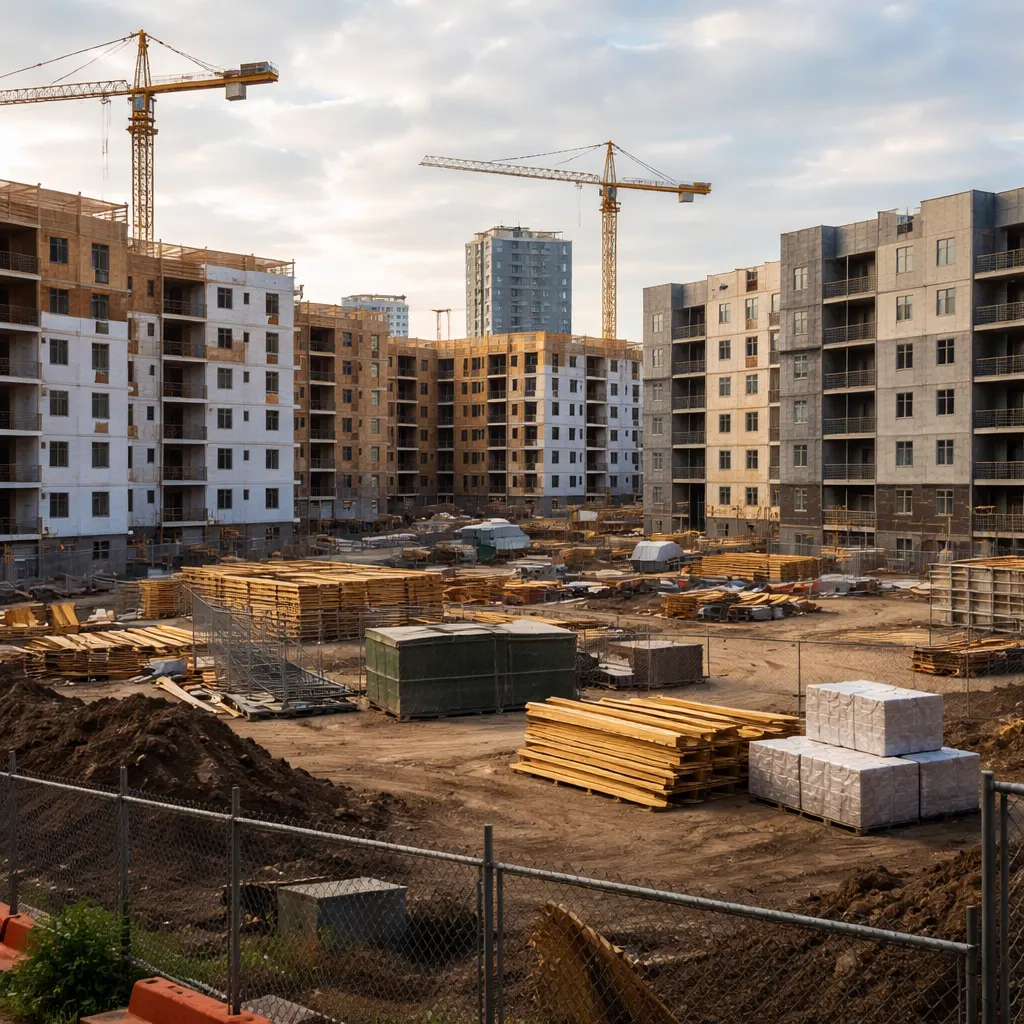
Affordable housing projects funded by Metro's 2018 housing bond have wasted more than a billion dollars due to poor spending decisions, according to a report published June 24, 2026, by the Cascade Policy Institute. The analysis by land-use policy expert Randal O'Toole finds that Metro's focus on increasing population density led to construction choices that made housing dramatically more expensive rather than more affordable. The agency's requirement to build only multi-story projects through nonprofit developers created costs that rival single-family homes while delivering apartments a fraction of the size.
The projects funded by Metro cost an average of about $490,000 per dwelling unit, close to the average cost of single-family homes in the Portland area. But these apartments average just 700 square feet in size, translating to $700 per square foot—two to three times the cost of constructing single-family homes. Three- to six-story projects funded by Metro cost about 50 percent more per livable square foot than the few two-story projects it funded. The one 11-story skyscraper in Portland's Hollywood district cost almost 100 percent more. Studies have found that projects built by nonprofit groups cost about 20 percent more per square foot than those built by for-profit groups, while the nonprofits developing these projects typically take about 12 percent of the money as "developer fees" before hiring for-profit construction companies to do the actual work.
According to the report, Metro's single-minded focus on density led it to "mostly fund projects that are three to six stories tall," which are more expensive because they require elevators, large common areas that don't contribute to livable housing space, and need more concrete and steel than one- and two-story buildings. The report notes that Metro decided to exclusively fund nonprofit organizations to develop these projects, which "merely adds another layer of bureaucracy that takes its share of the funds." O'Toole writes that the Census Bureau's 2024 American Community Survey found less than 7 percent of low-income people in the Portland urban area took transit to work, while 70 percent either drove alone or carpooled—undermining Metro's argument that subsidized housing should be concentrated near transit stops.
The report explains that Metro's projects actually made housing less affordable across the entire region through two mechanisms. First, the region has a shortage of skilled construction workers, meaning every worker building a subsidized housing project isn't available to build new market-rate homes for everyone else. Second, the housing bond is being repaid out of property taxes, and since banks limit home borrowing to 30 percent of income minus property taxes and insurance, an increase in property taxes makes housing less affordable for everyone. Meanwhile, the city of Portland runs its own subsidized housing program funded by a 1 percent tax on new home construction, which raises the cost of all housing in the region. The report points out that Metro is "fully aware" that housing costs rise with density, citing a 1997 study co-authored by a Portland Bureau of Housing staff member that found "housing development costs rise dramatically as building height and housing density increase."
The report concludes that at least 80 percent of Americans—and probably a greater percentage of Oregonians—would prefer to live in single-family homes rather than 700-square-foot apartments. Thanks to Metro's density campaign, single-family homes cost about twice as much as they ought to cost. O'Toole argues that Metro's subsidized housing program "does a disservice to taxpayers who can't afford to live in homes that cost $700 per square foot but are expected to pay for such homes for a few thousand lucky low-income people." The housing bond that was supposed to solve Portland's affordability crisis instead created a system where the few who benefit live in housing more expensive per square foot than luxury construction, while everyone else pays higher property taxes that make homeownership even harder to reach.