
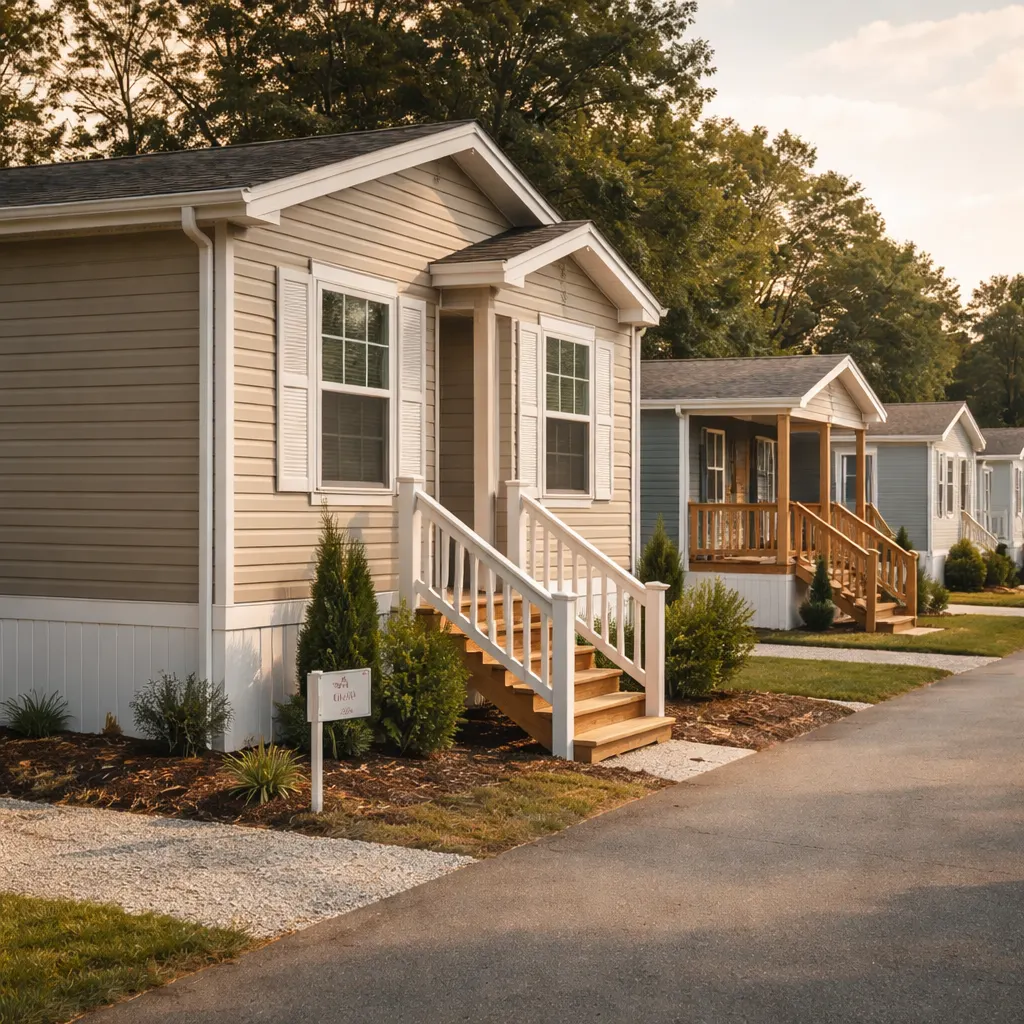
Mortgage applications for manufactured homes face denial rates more than 50 percentage points higher than those for site-built properties, according to a working paper published by the Federal Reserve Bank of St. Louis in April 2026. The research, which analyzed Home Mortgage Disclosure Act data from 2018 through 2024, reveals that even after controlling for income differences, manufactured housing applications are rejected at rates 5 to 8 percentage points higher than conventional homes. The report concludes that the primary barrier isn't what borrowers earn—it's the structural challenges lenders face in financing the homes themselves.
The denial gap remained remarkably stable throughout the study period, ranging between 50 and 56 percentage points, and showed no response to interest rate cycles that drove overall denial rates up and down. While rejection rates for conventional homes tracked closely with monetary policy—falling during low-rate periods and rising during tightening cycles—manufactured housing denials stayed persistently elevated regardless of economic conditions. Collateral concerns are cited as the primary reason for roughly 10% of mortgage denials nationally, but that share is considerably higher for manufactured homes. The geographic pattern is striking: in 2024, denial rates hit 31% in Mississippi, 29% in Louisiana, 24% in West Virginia, and 23% in both Arkansas and Kentucky, compared with a 15% national average.
The authors identify three structural hurdles that override borrowers' improved debt-to-income ratios when they choose manufactured housing. First, appraisals are complicated by a scarcity of comparable sales, particularly in rural areas where these homes cluster, creating uncertainty that translates into collateral risk for lenders. Second, a significant portion of manufactured housing stock is classified as chattel—personal property rather than real estate—especially when borrowers don't own the land beneath the home, pushing these loans outside the conventional mortgage pipeline and making them ineligible for sale to government-sponsored enterprises like Fannie Mae and Freddie Mac. Third, "institutional memory persists" around depreciation risk: lenders remain wary that manufactured homes will lose value faster than borrowers pay down principal, even though modern manufacturing standards have significantly improved quality and lifespan.
The report argues that this creates what it calls a "geographic penalty," where credit access depends more on local housing stock than on individual financial profiles. Two borrowers with identical incomes can face vastly different approval odds based solely on the predominant property type in their ZIP code. The authors note that traditional policy interventions—down payment assistance, FHA flexibility, regulatory debt-to-income caps—are designed to solve affordability problems and remain largely ineffective for manufactured housing, where borrowers aren't rejected due to insufficient income but because "the system is not built to underwrite the homes they can afford." The report recommends three institutional changes: developing a more integrated secondary market for manufactured housing loans, standardizing appraisal frameworks for low-density areas, and clarifying the legal path for manufactured homes to transition from chattel to real property status. Without these infrastructure improvements, the researchers conclude, the financing barriers facing rural communities—and the borrowers making the most fiscally conservative housing choices—will likely persist.