
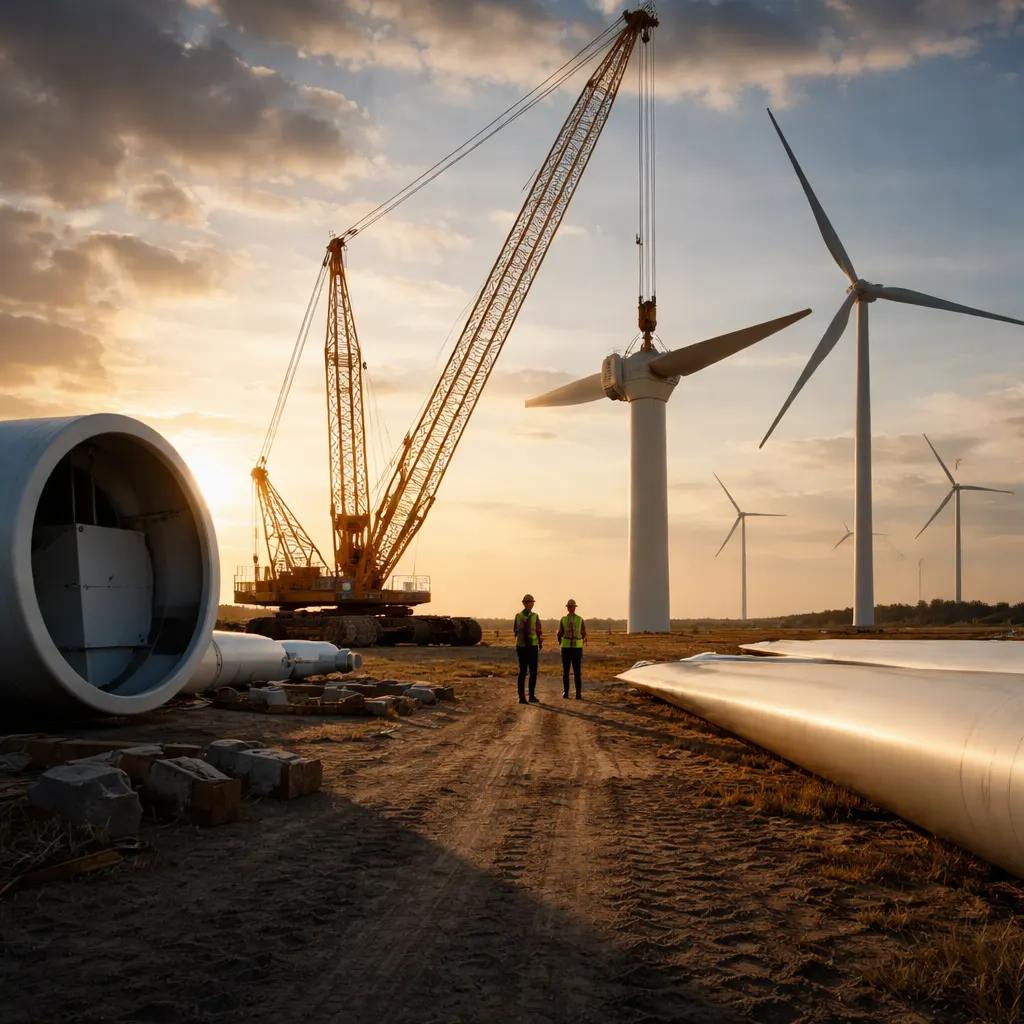
America's wind industry is racing to complete projects before federal tax credits disappear, with construction starts jumping 8% year-over-year in early 2026 and turbine orders surging to more than five times their 2025 levels, according to Wood Mackenzie's US Wind Energy Monitor Q2 2026 report. The report reveals a market split in two: developers are speeding up construction-ready projects while the pipeline of early-stage wind farms weakens under mounting permitting and supply chain pressures. Overall, the five-year forecast for new greenfield wind projects rose 5% from the previous quarter, though the growth isn't expected to last as developers prioritize finishing existing projects over planning new ones.
The deadlines driving this scramble are unforgiving. Projects that broke ground before July 4, 2026 have until December 31, 2030 to become operational and still qualify for tax credits, while those that missed the construction deadline must be fully running by December 31, 2027 to claim the incentives. Annual wind additions are forecast to peak in 2027, helped by offshore wind coming online. For onshore wind specifically, the biggest wave of new capacity has shifted from 2027 to 2028 as federal permitting delays push less mature projects further into the decade. Corporate demand for wind power is gaining strength, driven by data centres—Google and Xcel Energy's 1.9 gigawatt portfolio deal in the first quarter of 2026 illustrates the scale of this new buyer class as utility procurement slows.
The offshore wind sector faces a rougher path. More than 2,900 square kilometres of offshore leases were terminated during the first half of 2026, with a $2.7 billion federal buyout redirecting proceeds toward conventional energy, geothermal, and fossil fuel projects, the report states. Meanwhile, around 81 gigawatts of wind capacity will reach at least 15 years of age by 2035, concentrated in Texas, the Plains, and the Midwest. The report notes that replacing older turbines with larger, more efficient machines could boost energy output while leveraging existing land rights, grid connections, and permitting precedents—advantages that may cut costs and development timelines compared to building from scratch.
The phasing out of tax credits will slow wind development beyond 2030, but the report argues the industry won't hit a sudden cliff. Repowering aging wind farms offers a path forward: improved technology and higher capacity factors can reduce dependence on tax incentives, while rising electricity demand could create better revenue conditions across the sector. Developers who secure offtake agreements and grid capacity early, particularly for repowering sites, may find alternative routes to growth. The catch is that future success will require an investment strategy built on commercial fundamentals rather than tax equity—a shift that will test whether wind can stand on its own without federal support.