
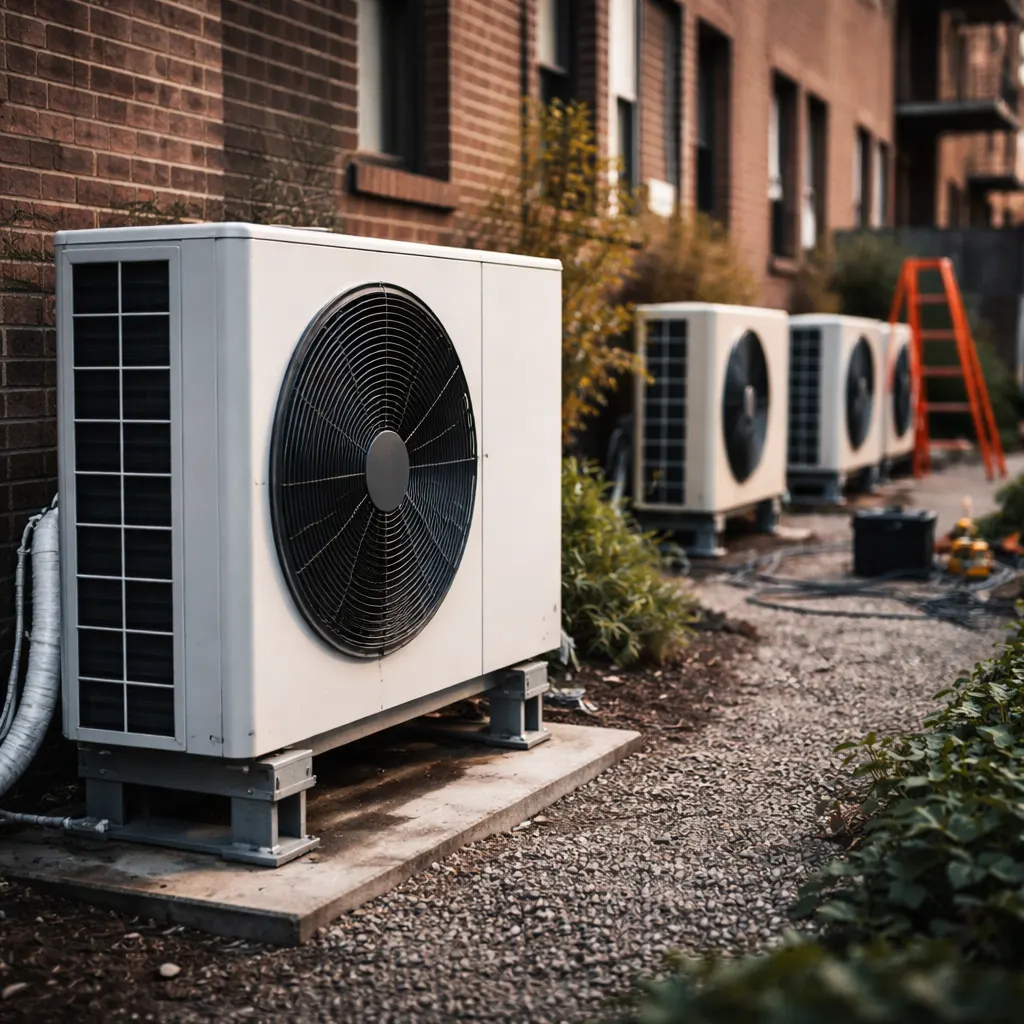
A single utility's electric and gas divisions are planning for vastly different futures, with the gap between their forecasts creating a risk of wasteful infrastructure spending, according to new research from Current Energy Group. In National Grid's Niagara Mohawk territory, the electric utility projects more than 30,000 additional heat pump installations by 2030 compared to what the gas division assumes will occur. The study warns that when utilities plan for fundamentally incompatible versions of the future, ratepayers face duplicative infrastructure, stranded assets, and higher bills.
The misalignment has concrete financial consequences. National Grid's gas division intends to spend $550 million by 2029 to support customer growth, based on a forecast that assumes minimal electrification—a projection its own electric arm contradicts. If the gas utility adopted the same electrification assumptions as its electric counterpart, it would serve roughly 15,000 fewer customers than current plans anticipate. Meanwhile, National Grid customers could see bills climb by around $300 annually for combined gas and electric service by the end of 2027 under current trends. This comes as 1.2 million New York households were already more than 60 days behind on utility bills in 2025, with $1.8 billion in utility arrears accumulated statewide and 2.2 million households spending more than 6% of their income on energy.
According to the report's authors, Brad Cebulko of Current Energy Group and Sarah Steinberg of Advanced Energy United, the divergent forecasts aren't accidental. "Utilities earn profits by building infrastructure, so both divisions have every incentive to forecast a future that justifies more spending," they write. The research notes that infrastructure costs—also called delivery costs—make up 75% of New York heating bills and a comparable share of electric bills, representing the largest driver of rising bills. The authors argue that no additional ratepayer dollars should be spent without proper verification that the expense is necessary and represents the lowest-cost option.
The report explains that fragmented planning has been standard practice for most, if not all, combined gas-and-electric utilities, but new risks, analytical tools, and energy trends have made change essential. The misalignment will lead to over-investment and underutilization in at least one system, creating real financial consequences for customers already under strain. Integrated gas and electric planning—which coordinates utility infrastructure spending across gas pipelines, electric wires, and distributed energy systems—can reduce costs by eliminating duplicative investments, help meet state clean energy goals more affordably, and improve reliability by identifying system interdependencies during extreme weather events. The approach includes five major components: procedural alignment, data sharing, aligned forecasting, identification of least-cost alternatives to traditional infrastructure, and coordinated investments.
New York has started moving in this direction. The state's 2025 Energy Plan calls for proactive, long-term, integrated gas and electric planning that prioritizes non-pipeline alternatives and demand management, recommending that the Public Service Commission reform regulations accordingly. A proposal pending in the New York State Senate, SB 5995, also requests the commission to take this on. Consolidated Edison has published an "Integrated Long-Range Vision," Central Hudson Gas & Electric has noted its focus on shifting from distinct gas and electric planning to a single energy delivery paradigm, and National Grid is piloting gas and electric collaboration as it designs various non-pipeline alternatives. By adopting this coordinated approach, New York has an opportunity to set a national standard for protecting ratepayers and moving beyond siloed utility planning.