
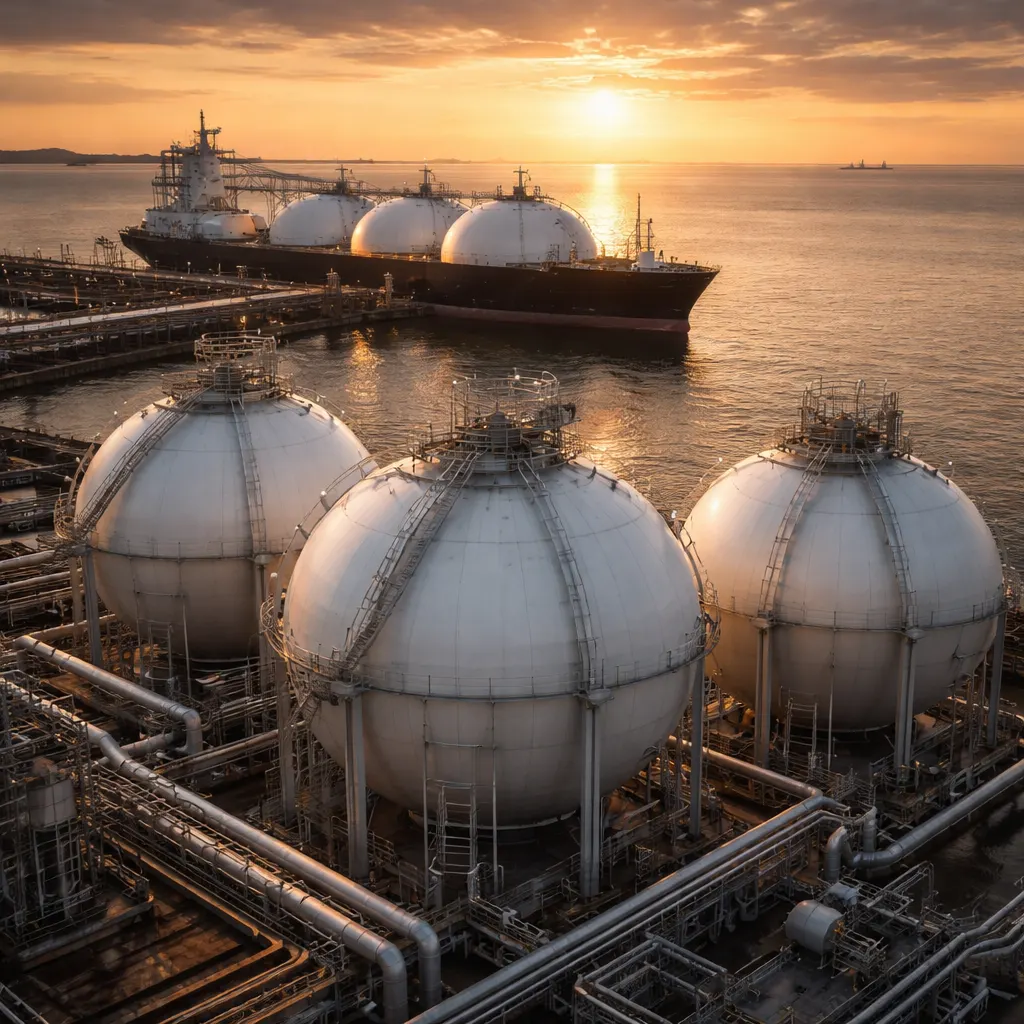
American exports of natural gas plant liquids reached 3.1 million barrels per day in 2025, climbing 7% from the year before, according to an analysis published March 30, 2026, by the U.S. Energy Information Administration. These fuels—extracted mainly from natural gas streams—have seen rising production every year since 2005, driven by stronger output from liquids-rich supply basins and growing international appetite for the materials, especially as raw ingredients for petrochemical manufacturing. Domestic production increases have pushed U.S. prices below global benchmarks in East Asia and the Middle East, boosting demand for American ethane, propane, and butane worldwide.
Shipments abroad grew by 212,000 barrels per day last year, with India accounting for a 70,000 barrel-per-day surge—a 101% jump. China, Japan, Canada, Mexico, and South Korea ranked as the top five destinations for U.S. natural gas liquids in 2025, with most volumes moving by sea. Ethane exports climbed 92,000 barrels per day, or 19%, to a total of 579,000 barrels daily spread across nine countries, fueled largely by two newly finished facilities: Mexico's Coatzacoalcos ethane cracker expansion in May 2025 and China's Yantai 2 ethane cracker around March 2025. A little over half of American ethane shipments went to China, followed by Canada via pipeline and India by tanker. Propane exports averaged a record 1.8 million barrels per day in 2025—the highest since data collection began in 1973—though the increase was just 3% year-over-year. Normal butane exports hit a record-high average of nearly 535,000 barrels daily, up 9% from 2024, while natural gasoline exports rose 22% to 176,000 barrels per day, with nearly all volumes heading to Canada by land.
The report notes that the United States stands as one of only two countries able to ship waterborne ethane, alongside Norway, which moves small quantities around Northwest Europe. Ethane serves primarily in petrochemical production of plastics, where it's cracked into ethylene, a foundational raw material for the industry. The analysis finds that propane is consumed globally for space heating and increasingly as a petrochemical feedstock, especially across Asia, while butane is used as cooking fuel, a petrochemical ingredient, and a gasoline blendstock during winter months. In many developing markets, governments have subsidized butane as a cleaner-burning replacement for wood or charcoal in cooking and heating applications.
Despite the overall growth, shifting trade patterns reveal how tariffs and new supply destinations are reshaping flows. China—the world's largest importer of U.S. propane—cut its receipts by 29% because of reciprocal tariffs on American propane imposed late in the year, while South Korea's imports dropped 20% and Japan's volumes stayed flat. Those declines were more than offset by increases elsewhere in Asia: India's propane imports jumped from 2,000 barrels daily in 2024 to 41,000 in 2025, while Vietnam, Singapore, and Indonesia combined for a 70,000 barrel-per-day rise. Europe, Latin America, and Africa also contributed to the cumulative increase. Butane exports grew even as Morocco, the top importer at 65,000 barrels daily in 2025, saw a 6% decline, while Indonesia rose 22% and India surged by 34,000 barrels per day to reach 36,000 total.
The report expects U.S. ethane exports to expand in 2026 with the third-quarter startup of the INEOS Project One cracker in Antwerp, Belgium, designed to handle roughly 80,000 barrels daily of ethane—making it the largest such facility in Europe and among the world's biggest. As American production continues to climb and new crackers come online abroad, the country's position as the dominant supplier of waterborne ethane and a record-setting exporter of propane and butane looks set to strengthen further, even as tariff disputes and subsidized fuel programs in emerging markets redraw the map of where those barrels land.