
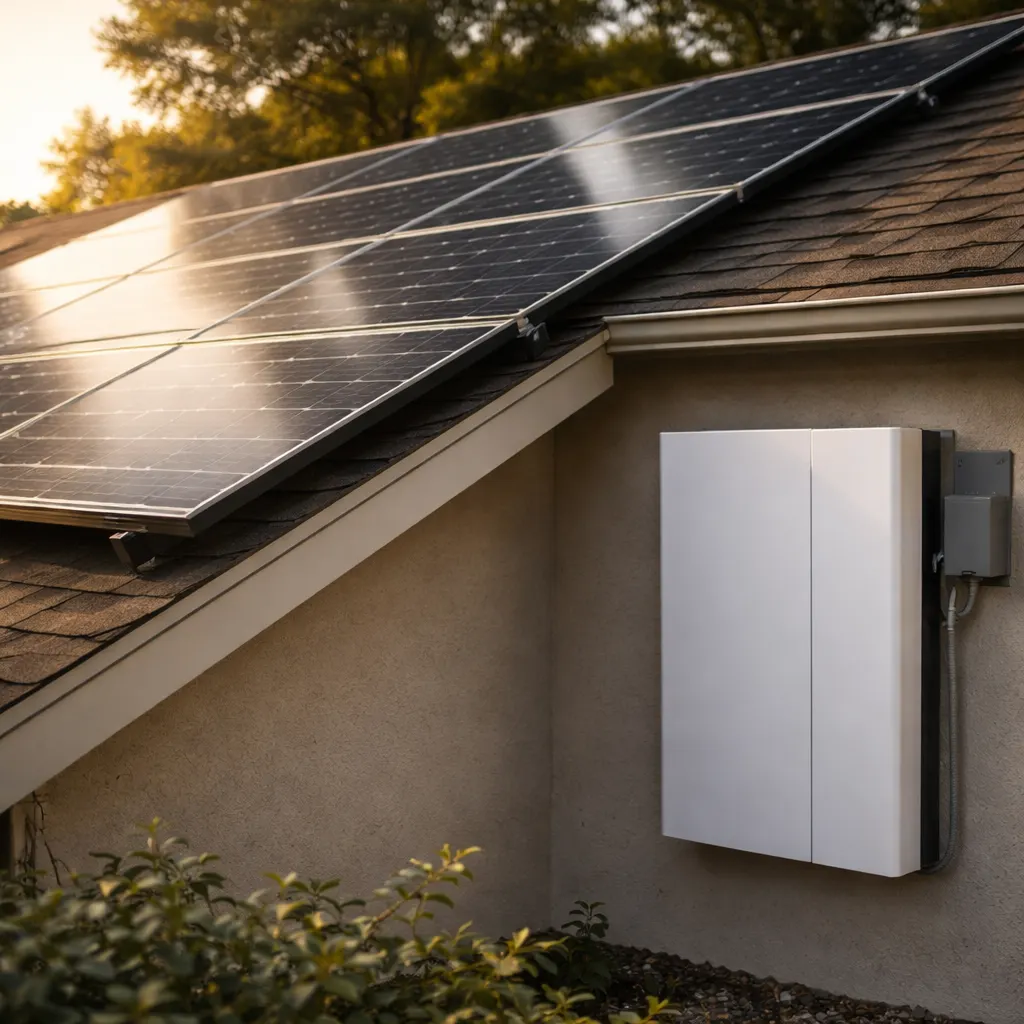
Sunrun, the nation's largest provider of third-party-owned home solar and storage systems, reported a 31% drop in new subscribers during the second quarter of 2026 compared to the same period in 2025, according to an earnings announcement released Wednesday. The company added 19,793 subscribers in the quarter while installing 174 MW of solar capacity and 332 MWh of battery storage, down 23% and 15% respectively from the prior year. Despite the declines, Sunrun saw its battery attachment rate climb to 74%, up from 70% in the second quarter of 2025, as the company shifts focus toward monetizing its existing network of more than 4.6 GWh of installed energy storage.
The company's full-year outlook also deteriorated, with Sunrun cutting its 2026 forecast for aggregate subscriber value to between $4.6 billion and $4.9 billion, down from a previous projection of $4.8 billion to $5.2 billion. The firm's stock dropped more than 10% following the earnings release before recovering some losses after the Trump administration issued final tariff guidance for imported solar components. Nearly three out of every four solar installations in the quarter included battery storage, with much of that capacity eligible to participate in virtual power plant programs such as California's Demand Side Grid Support initiative and New England's ConnectedSolutions program, the company said.
CEO Mary Powell said Sunrun is "scaling deliberately, with a focus on customer experience and asset quality" while "aiming to unlock new ways to monetize the network we've already built, from distributed power plant programs to emerging data center and grid edge applications," according to prepared remarks. The company attributed part of its subscriber decline to deliberate reductions in its affiliate sales channel and noted that monthly sales trends in its direct business "have inflected in June and July, turning positive, with monthly sales growth exceeding 10% compared to the prior year," Powell said. She predicted a "return to robust growth" in that channel going forward.
The company's SEC filing shed light on the forces behind the quarterly declines, pointing to complications from its transition away from affiliate-supported sales toward in-house representatives. The April bankruptcy of Freedom Forever, a major installation partner, amplified volume decreases that were already underway from the company's intentional pullback from the affiliate model. A slower-than-anticipated ramp in hiring and training new sales representatives further pressured results, while elevated interest rates threatened to reduce available capital for financing new system deployments. In California, the nation's largest residential solar market, the company noted that sales haven't recovered to pre-2023 levels following the state's switch to its current Net Billing Tariff, known as NEM 3.0, and warned that solar-plus-storage offerings "may be more confusing to customers when compared to solar-only offers from competitors," leading to longer sales cycles.
Looking ahead, Sunrun is pivoting toward extracting value from its existing customer base rather than chasing rapid subscriber growth. The company is working to add batteries to homes that currently have only solar panels, expand its virtual power plant operations, and pursue newer revenue streams including a distributed capacity offering and a pilot program that places high-powered computing chips in select customers' homes. In June, Sunrun announced a nonbinding agreement with Renew Home and Tesla Energy to make more than 16 GW of distributed energy resources available to hyperscalers, offering capacity "deployable in months, without the land, transmission, or interconnection burden of traditional generation." Powell and President Paul Dickson cautioned that the distributed compute pilot remains early-stage, with meaningful revenue unlikely before the second half of 2027 or 2028.