
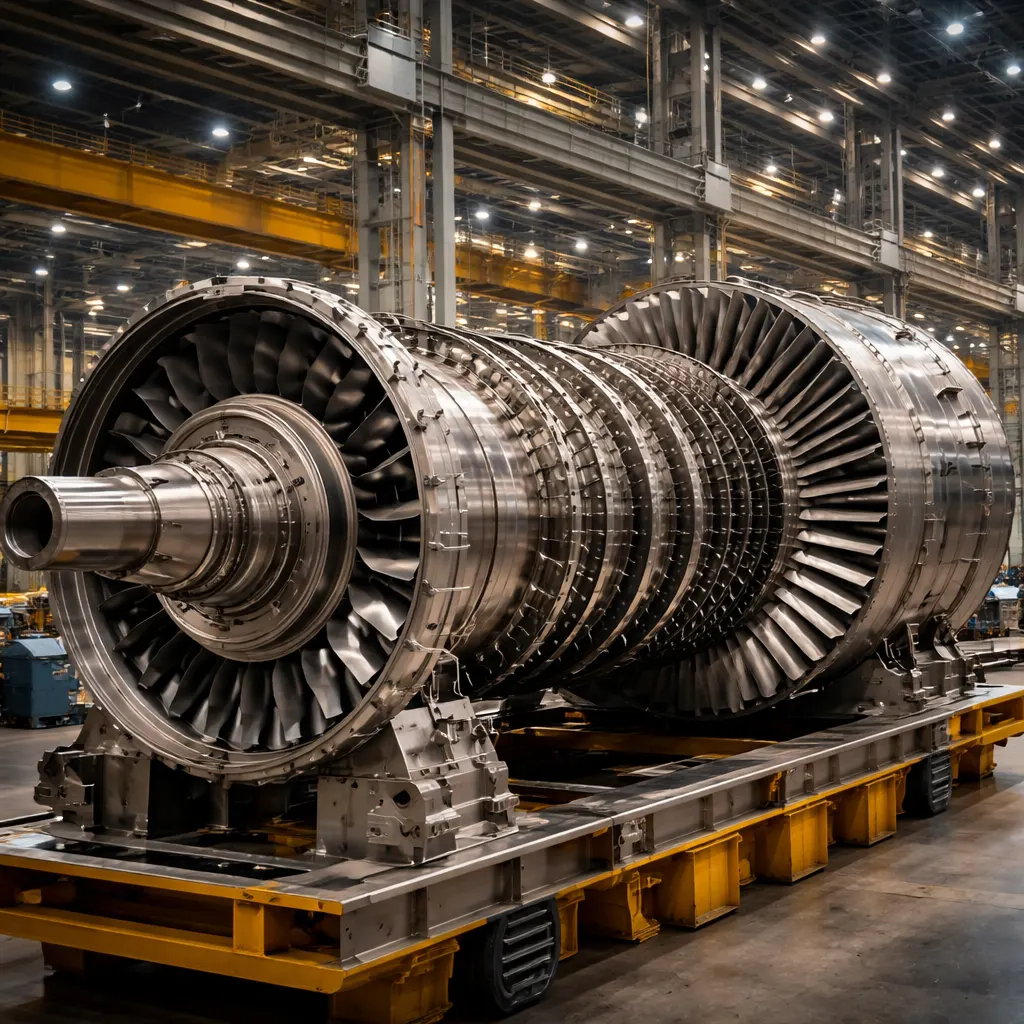
Siemens Energy is sitting on a 69 GW backlog of gas turbine orders, the company disclosed during its fiscal third-quarter earnings call last week. The German manufacturer has brought roughly 30 additional units of medium-sized gas turbine production capacity online since 2025 to meet what executives described as record-breaking demand. The company's gas services division alone booked 15 GW in new orders this quarter, with sales climbing 62% year-over-year to €10 billion ($11.6 billion).
The company shipped 6 GW of turbines during the third quarter, according to Chief Financial Officer Maria Ferraro. Lead times across Siemens Energy now stretch three years or longer. With the added manufacturing capacity, the company expects to deliver between 15 GW and 16 GW of gas turbines this year. Siemens currently operates about 35 units of large gas turbine manufacturing capacity and plans to add another 15 units in 2027. For medium-sized turbines, the company aims to expand from its current 80 units to roughly 100 units by 2028, adding 20 more units on top of the 30 already brought online this year. The company's Grid Technologies division, which produces transformers and related equipment, carried a €51 billion ($59 billion) order backlog as of June 30. Grid technology orders rose 28% year-over-year, with transformers driving the largest share of growth. Siemens also plans to boost its transformer and gas-insulated switchgear manufacturing capacity by approximately 50% by 2030.
Christian Bruch, president and CEO of Siemens Energy, told analysts the addressable market for gas turbines could reach 120 GW annually, with roughly half that demand originating in the United States. "We had seen over the last quarters a lot of capacity going into data centers and the U.S.," Bruch said during the call. Ferraro noted that fourth-quarter sales might dip slightly based on seasonal patterns but are likely to rebound in early 2027. Bruch also highlighted that Siemens Gamesa, the company's wind turbine arm, closed a profitable quarter for the first time since late 2022, though total orders fell year-over-year because two large offshore wind contracts inflated last year's figures.
Bruch projected sustained growth through 2027, driven by expanding demand beyond the U.S. data center boom that's dominated recent quarters. The CEO explained that turbine applications outside data centers had delayed purchasing decisions as capacity poured into the U.S. market, but now Asian and Middle Eastern buyers are reentering the market. That geographic shift underpins the company's optimistic outlook for next year. The wind division's return to profitability marks progress in what Bruch called a turnaround effort, with the full fiscal year break-even "firmly on track." However, he cautioned that Chinese wind manufacturers pose fierce competition in both onshore and offshore markets, forcing Siemens to rethink its positioning.
Siemens Energy expects the wind business consolidation with Siemens Gamesa Renewable Energy to advance under the new brand name Omterra, a rebranding process set to begin later this year. The company's aggressive capacity expansion reflects confidence that turbine demand will remain elevated as power infrastructure struggles to keep pace with data center growth and broader electrification trends. With lead times already exceeding three years and the addressable market potentially doubling current order levels, Siemens is betting that manufacturing capacity—not demand—will be the binding constraint for years to come.