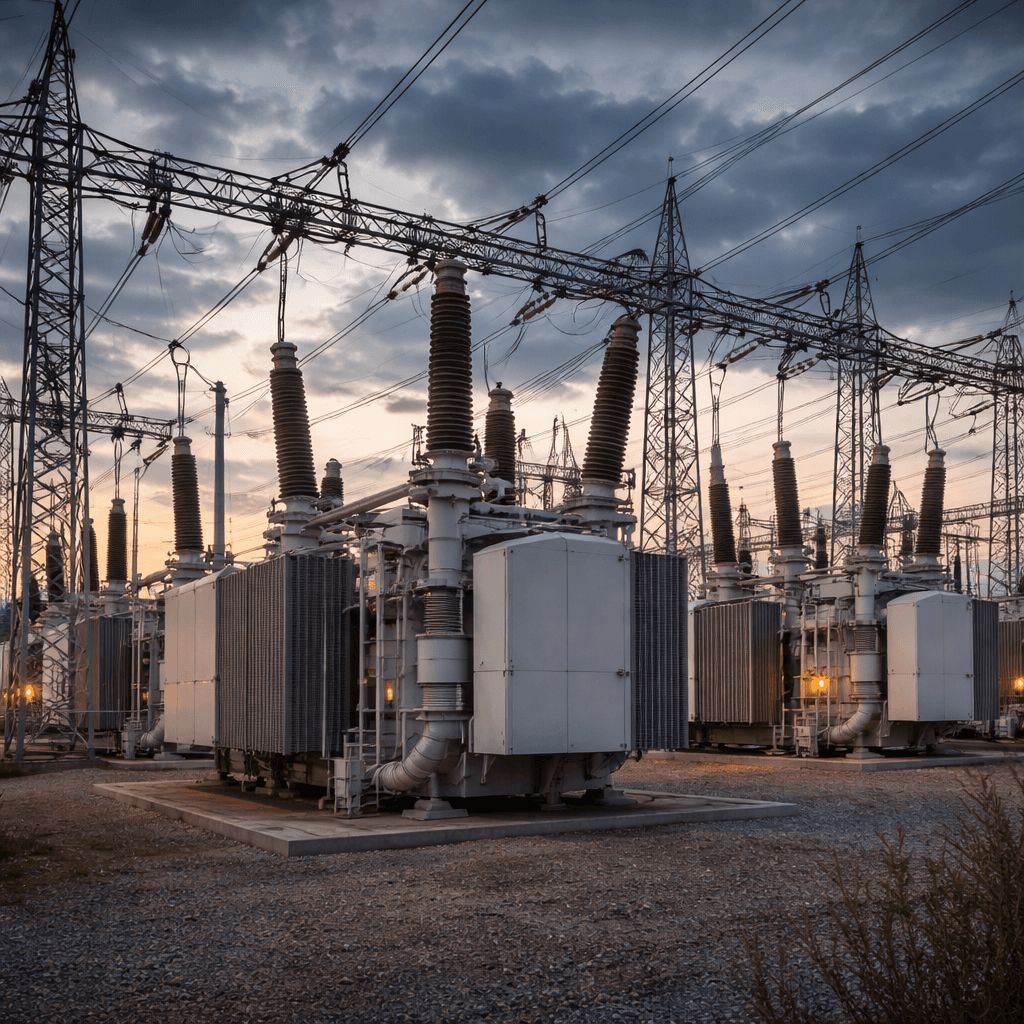
The United States has just nine high-voltage direct current facilities that enable power sharing between its three major electrical grids, and together they can transfer only about 2 gigawatts of electricity — roughly 0.15 percent of total U.S. power-generation capacity, according to a June 4 explainer from the Niskanen Center. The report finds that most of these "back-to-back" stations were built decades ago using outdated technology, and the North American Electric Reliability Corporation has stated the nation urgently needs 35 GW of additional power-transfer capability to ensure grid reliability. Upgrading these aging facilities with modern converter technology could help close that gap and meet rising energy demand.
The nine back-to-back HVDC stations are located in the Great Plains and Texas, linking the Eastern, Western, and ERCOT grid interconnections at points including Miles City, Montana; Rapid City, South Dakota; multiple locations in Nebraska, Colorado, and New Mexico; and two sites in Texas. The report shows these facilities were constructed between 1977 and 2014, with one system from 1988 currently out of service. Most were originally built to serve operational needs like linking utility service territories that span more than one grid interconnection. The stations are owned by a mix of federal agencies, cooperatives, and investor-owned utilities, including the Western Area Power Administration, Basin Electric Power Cooperative, and various subsidiaries of AEP and Xcel Energy.
According to the Niskanen Center authors, Rachel Levine and Maggie Zhang, most of the nine back-to-back facilities rely on line-communicated converter (LCC) technology, "reflecting the state of HVDC engineering when these installations were originally built." The report states that voltage-source converters (VSCs) — first built at grid scale in 1997 — offer significant functional improvements over the legacy LCC systems. The authors write that VSCs "can easily enable bidirectional current flow while functioning independently of the conditions of the surrounding grid," and are "the only type of converter station that can operate during AC grid blackouts and assist in recovery."
The report explains that back-to-back facilities are fundamentally different from traditional HVDC transmission lines. While long-distance HVDC systems move electricity across hundreds of miles, back-to-back systems are compact facilities with a small footprint that consist of two co-located converter stations on the same site. These stations convert alternating current electricity to direct current and then back to AC, allowing power to flow in a controlled manner between otherwise incompatible grid systems that operate asynchronously. LCC technology relies on the stability of the surrounding AC grid to maintain operation and reverse power flow direction, making it vulnerable during grid disturbances. VSC upgrades would eliminate this dependency, creating a more resilient system that can keep power flowing even during blackouts and help grids recover faster.
The authors conclude that as data centers and industrial manufacturing centers expand, "the resiliency that VSCs provide will be critical." The report states the back-to-back facilities are "geographically well-positioned to keep power flowing between grids and keep the grids reliable amid rising demand and severe weather, but only if they can be upgraded to accommodate future needs." The biggest barrier isn't technology or regulation but cost, since converter stations are among the most expensive components of HVDC systems. The report warns that failing to overcome these cost barriers through policy action "could leave valuable interconnection capacity and flexibility underused at a time when the grid increasingly needs more ways to move power to where it is needed most."