
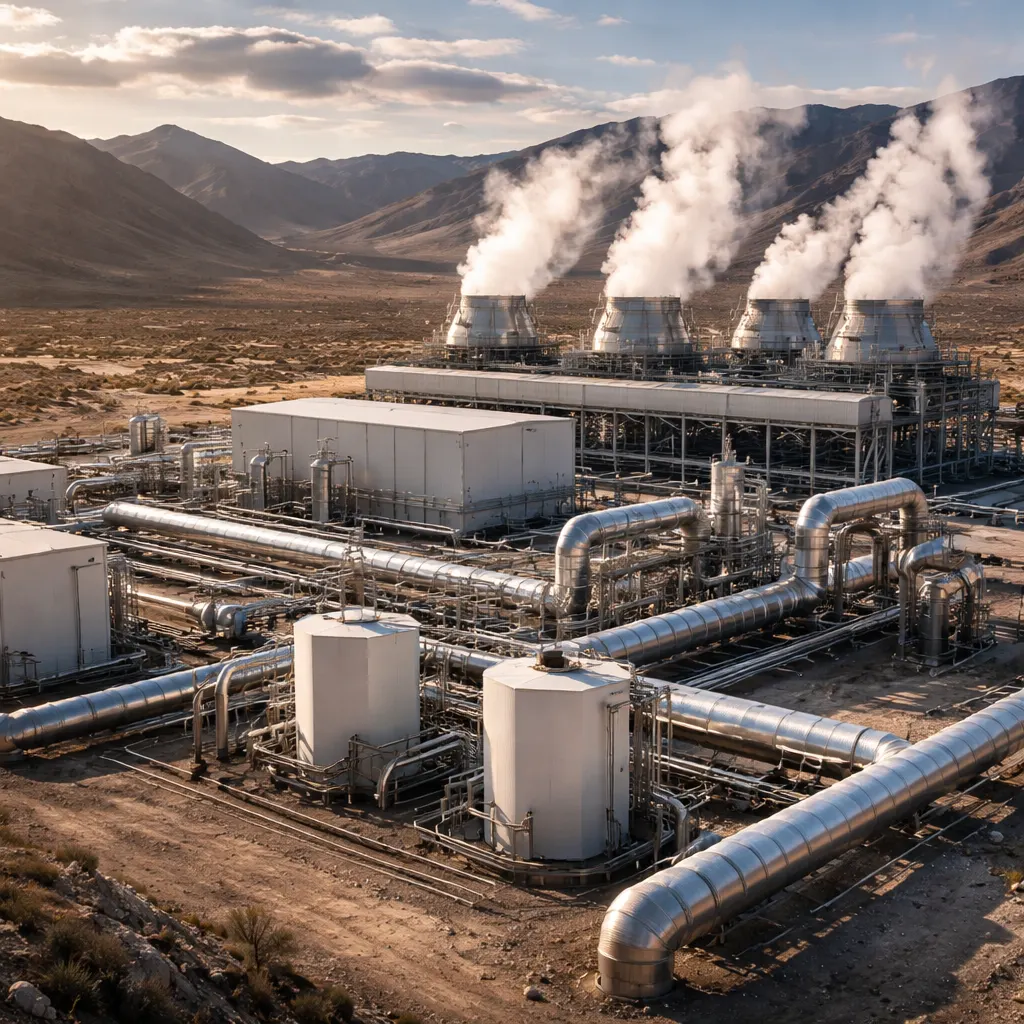
The first large-scale commercial enhanced geothermal system (EGS) power plant in the United States is set to begin operations in June 2026, according to a February 19 analysis from the U.S. Energy Information Administration. Fervo Energy's Cape Generating Station, currently under construction in Utah, represents a major milestone for a technology that could dramatically expand geothermal power beyond the limited volcanic and tectonic hotspots where it's currently confined. The plant will deliver 28 megawatts of net summer capacity, with plans for two additional generators of equal size to follow in early 2027.
The potential scale of this technology dwarfs today's geothermal footprint. The United States currently has 2.7 gigawatts of conventional geothermal capacity, representing just 0.2% of the nation's total summer generating capacity. By contrast, the U.S. Geological Survey estimates that 135 gigawatts of potential generation could come from EGS in the Great Basin of the Southwest alone. Studies project that as much as 150 gigawatts of cost-effective geothermal power could be operating using EGS in coming decades, depending on market conditions and technological progress. The National Laboratory of the Rockies calculated in 2023 that 90 gigawatts of EGS capacity could be economically constructed nationwide by 2050. Fervo Energy has already signed power purchase agreements totaling 320 megawatts with Southern California Edison, with further expansion planned for 2028.
The report explains that enhanced geothermal systems differ fundamentally from conventional plants by using drilling techniques borrowed from oil and gas production—including horizontal drilling and hydraulic fracturing—to create hydrothermal reservoirs where none naturally exist. According to the EIA, conventional geothermal relies on naturally occurring underground water and steam trapped in permeable rock formations, which are found only in limited locations near tectonic plate boundaries or volcanic hotspots. The analysis notes that geothermal power provides "carbon-free, renewable, continuous power throughout the day and season" without dependence on weather conditions, unlike wind and solar. Successful pilot projects have shown that man-made hydrothermal wells can expand geothermal generation at existing sites and enable placement throughout the country rather than exclusively in western states.
Still, significant hurdles remain before EGS can achieve widespread deployment. The report identifies elevated capital costs—particularly for well construction—as one of the main challenges facing both enhanced and conventional geothermal development. The risk of induced seismicity, or man-made earthquakes, presents another obstacle that must be managed. Developing a commercially viable reservoir for hot water and steam circulation, and accurately modeling a site's geophysical and mechanical properties for deep well drilling, add further complexity. Ongoing research to improve drilling techniques and operational controls is addressing these issues, with state and federal agencies and commercial partnerships funding demonstration projects. The Utah Frontier Observatory for Research in Geothermal Energy, sponsored by the Department of Energy, serves as a field laboratory for testing reservoir creation and management approaches. Meanwhile, the Department of Defense has partnered with six geothermal developers to construct EGS plants for military bases across California, Idaho, Nevada, New Mexico, and Texas, and Meta has signed an agreement with developer SAGE for up to 150 megawatts of geothermal power east of the Rockies—the first new geothermal capacity in that region. If Cape Generating Station succeeds as planned, it could mark the beginning of a transformation that takes geothermal from a niche renewable source to a major national asset.