
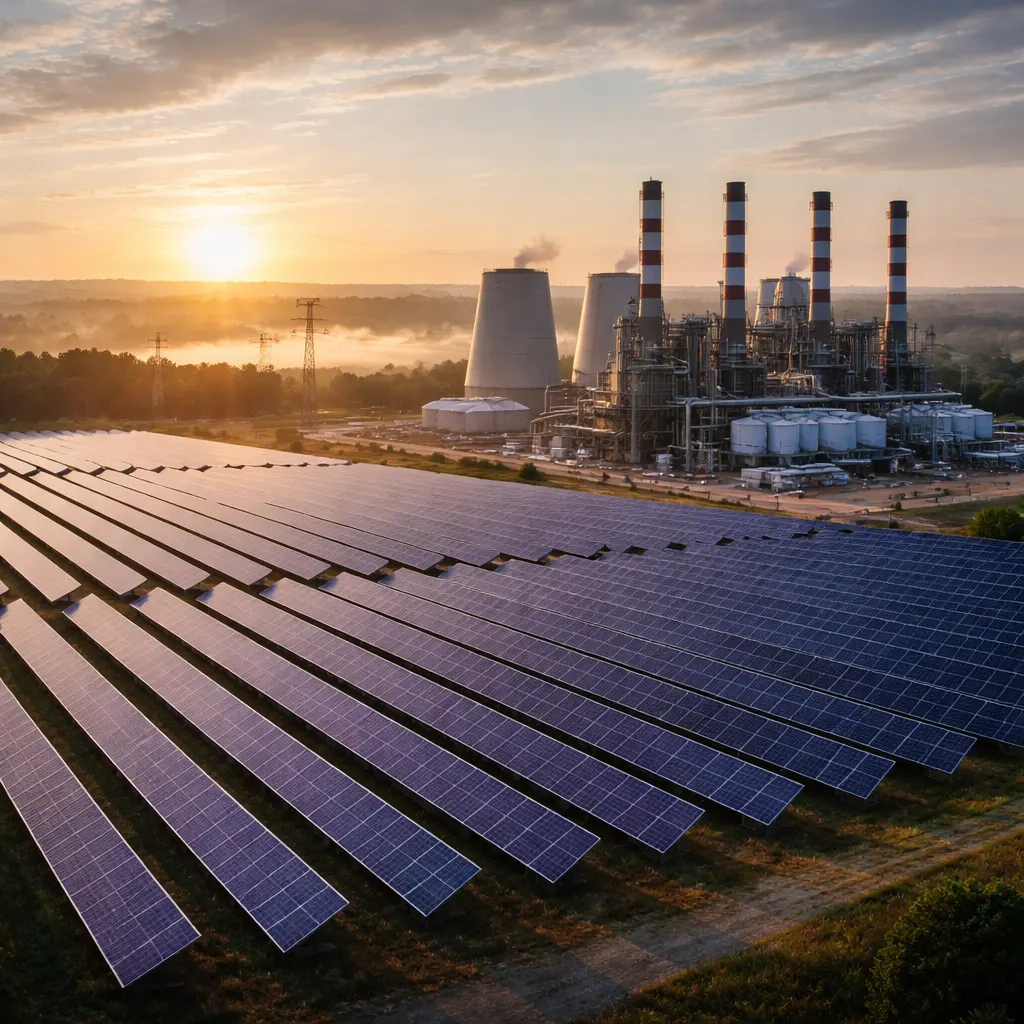
Duke Energy filed a resource plan with South Carolina regulators on Monday outlining an ambitious 15-year expansion that includes 18.5 GW of solar capacity, 14 GW of natural gas generation, and 13 GW of energy storage across its North Carolina and South Carolina service territories. The plan, submitted Aug. 17, 2026, to the Public Service Commission of South Carolina, aims to meet surging electricity demand in both states, which the utility describes as among the nation's fastest-growing. The recommended portfolio also includes roughly 4.5 GW of new nuclear capacity to support long-term grid reliability.
Duke's base planning forecast projects winter peak demand will climb by more than 10 GW through 2041, representing cumulative growth of approximately 30% across the Carolinas. The gas generation additions will be split between 8.2 GW of combined cycle generators and 5.8 GW of combustion turbines. The utility has already received approval for a 1.4 GW combined cycle facility in Anderson County, South Carolina, and has executed turbine supply agreements with GE Vernova. Duke also noted that solar procurement and construction remain active, including completed facilities, projects under construction, and requests for proposals for solar and solar paired with storage. The company is scaling battery storage execution, with storage projects in service, equipment secured, interconnection activity underway, and an RFP for 400 MW of standalone storage in South Carolina.
According to Duke, natural gas is a "major near-term reliability resource" as the utility works to meet immediate demand growth. The utility told regulators that new nuclear capacity represents an "important resource to support long-term reliability and system needs." Duke also said it's working to extend operating licenses for its existing nuclear fleet to 80 years of operation. To date, the company has received subsequent renewed operating licenses for two of its six nuclear sites, both in South Carolina, representing four of the fleet's 11 units.
The utility's aggressive expansion stems from rapid population and economic growth across both Carolinas, driving electricity demand upward at a pace that requires multiple generation sources to maintain reliability. Duke emphasized that grid edge programs are a "core execution tool" to reduce, shift, and shape demand through energy efficiency, demand-side management, load curtailment, customer programs, and storage demand response. The plan maintains a minimum annual energy efficiency savings target of 1% in Duke's load forecast and accounts for increasing demand response capabilities, aiming to moderate growth while new generation comes online.
The South Carolina Public Service Commission is expected to hold a hearing on the resource plan in April 2027 and issue an order by June, Duke said. The plan charts one of the largest buildouts by a U.S. utility over the next 15 years, balancing renewable energy goals with fossil fuel reliability and long-term nuclear investments to serve two of America's fastest-growing states.