
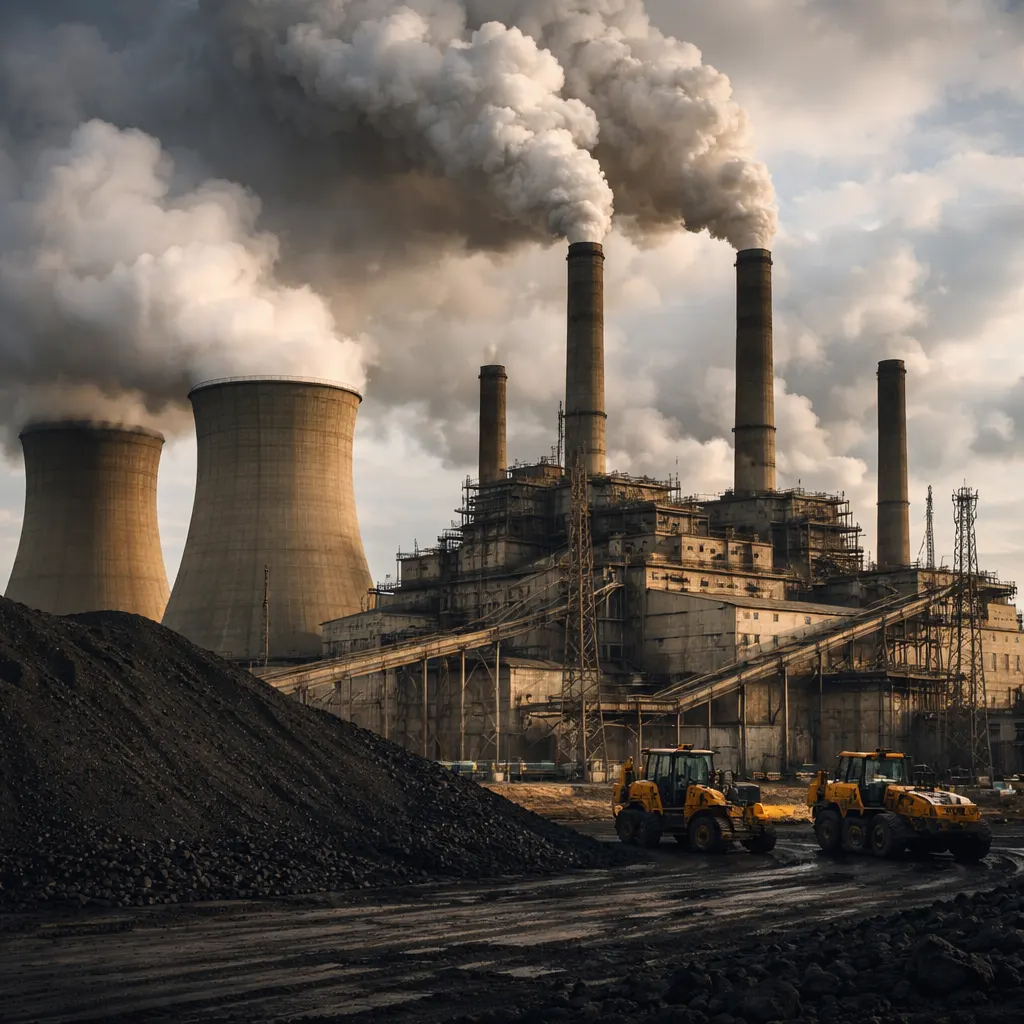
Power plants failed more often in 2025 than in years past, with the fleet-wide forced outage rate climbing to 9.2 percent against historical norms that rarely exceeded 8 percent, according to the North American Electric Reliability Corporation's 2026 State of Reliability report. While the grid as a whole "continues to deliver reliable electric service," challenges are mounting thanks in part to the "declining availability of aging combustion generation." The report contains particular lessons for Colorado's electricity sector, where the state's largest coal unit has been offline for nearly a year.
Coal-fired plants saw their forced outage rate rise from 11.2 percent in 2024 to 14.1 percent in 2025. NERC surveyed owners of generators that saw substantial increases in outages from 2024 to 2025 and found that of the 26 responses from generators, 16 units "experienced equipment destruction extensive enough to significantly prolong their 2025 outage(s)," another eight experienced supply chain constraints, and six indicated turbine blade release or vibration that needed addressing. Regulatory reasons for outages were the "most consistently increasing" cause of outages between 2017 and 2025, though those "did not indicate any alignment with a particular policy objective." In Colorado specifically, the 750 MW Comanche 3 unit near Pueblo has been offline since August 2025 for turbine repairs and isn't expected back until July 2026, causing coal's share of Colorado generation to fall from 28.1 to 23.7 percent in 2025, almost entirely because of that one outage.
The report explains that the results of its survey of coal plant outages "align with, but do not prove, industry assertions concerning coal and combined-cycle units." NERC goes on to say that these units "were not designed for regular cycling," which is now an "operational requirement" given regulation and the intermittent resources that are trying to replace baseload coal and natural gas. The report points out that inverter-based resources—meaning wind, solar, and batteries—are increasing operational complexity, especially in areas with "high renewable penetration during light-load conditions."
The report identifies a troubling dynamic: Comanche 3 averaged 91.5 outage days per year, traced to construction defects and poor maintenance. But Xcel has no incentive to rigorously maintain its coal-fired generation, given that Colorado's 2019 climate law requires Xcel to cut emissions 80 percent by 2030 and forces premature retirements. Asked why the state's coal plants struggled in August, the Public Utilities Commission's Erin O'Neill said that "we have been trying to make sure we don't overinvest on maintenance on units that are… reaching their retirement date." Xcel told regulators it has no viable alternatives to repairing Comanche 3, that replacing its capacity would cost billions and could not arrive before 2029. The PUC extended 50-year-old Comanche 2 through the end of 2026 to cover the shortfall, and the Department of Energy ordered Craig Unit 1 to stay open past its planned 2025 retirement.
Colorado is a leading example of what NERC found across the country. Its 2019 emissions mandate sets early retirement dates for baseload coal and natural gas plants and requires intermittent replacements, encouraging Xcel Energy to allow plants like Comanche 3 to fall into disrepair. Even running Comanche 3 at its $66.25 per megawatt-hour over its first decade will be cheaper, faster, and more reliable than spending billions to build new wind and solar. The question the report poses is stark: Why maintain it properly when the state is going to force the company to abandon that asset anyway?