
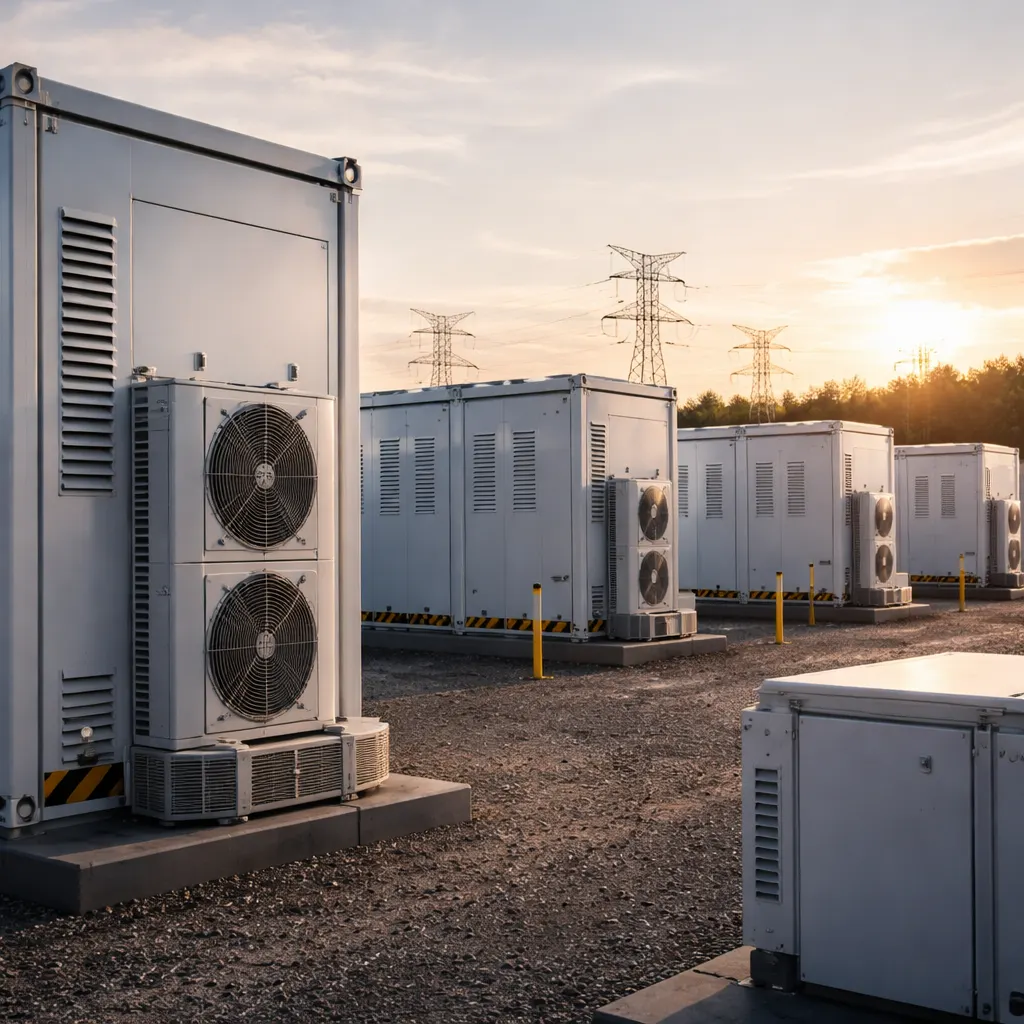
Chinese system integrators captured 76% of the global battery energy storage system (BESS) market in 2025, cementing their dominance in a sector critical to the clean energy transition, according to Wood Mackenzie's "Global energy storage system integrator market share" 2026 report. Eight of the top 10 global integrators are now headquartered in China, with Tesla and Sungrow retaining the top two positions for the third consecutive year. The findings underscore China's rapid expansion in global battery storage at a time when policy barriers in the U.S. and Europe are beginning to tighten.
Tesla and Sungrow held first and second place globally for the third straight year, while BYD advanced five places to claim third. The combined market share of the top three integrators fell from 36% in 2024 to 30% in 2025. In North America, Tesla retained its leadership position, while NextEra Energy entered the top three for the first time. In Europe, Sungrow held first place, BYD jumped from fifth to second, and Huawei entered the top three—meaning Chinese vendors now occupy all three leading positions in the region. In the Asia-Pacific region, CRRC topped the ranking for the third consecutive year, followed by HyperStrong and Envision, with China accounting for roughly 85% of the APAC market. In the Middle East, BYD and Sungrow together captured 87% of the regional market, while in Latin America, BYD's total contracted volume with Grenergy reached 6.5 GWh across all phases of the Oasis de Atacama project in Chile.
"China has expanded its global BESS footprint at remarkable speed," said Jiayue Zheng, senior research analyst at Wood Mackenzie. The decline in the top three integrators' combined market share "reflects rapid overall market growth and the rise of mid-tier vendors rather than any weakening at the top," according to the report. Zheng noted that "integrators that can meet these demands across diverse regulatory environments will build the most durable market positions through the remainder of the decade," pointing to policy compliance, grid-forming technology, software-driven revenue optimization, and financing support as decisive competitive variables.
The report attributes Tesla's North American leadership to its Megapack hardware platform, Autobidder software, and U.S.-based manufacturing, while NextEra Energy's rise to the top three stems from its position as a vertically integrated self-integrator insulated from tariff disruption. But new policy barriers are reshaping the competitive landscape. The One Big Beautiful Bill Act introduces Foreign Entity of Concern compliance thresholds for projects seeking the 48E Investment Tax Credit, with non-FEOC sourcing requirements starting at 55% of project costs in 2026 and rising to 75% by 2030—a trajectory that will significantly constrain the ability of Chinese manufacturers to supply into the U.S. market. In Europe, the Net Zero Industry Act, the Industrial Accelerator Act, and the EU Batteries Regulation all raise the bar for import-dependent suppliers and reward local manufacturing capacity. Meanwhile, the European market is expanding beyond the UK, Germany, and Italy, with Bulgaria, Romania, Belgium, Spain, the Netherlands, and Greece forming a second tier of growth markets.
The Middle East and Southeast Asia are emerging as new growth frontiers. The UAE announced a 5.2 GW solar project paired with 19 GWh of storage, and Saudi Arabia's two BESS tender rounds covered a combined 5 GW/20 GWh. Southeast Asia is advancing regulatory and procurement frameworks in the Philippines, Vietnam, Indonesia, Thailand, and Malaysia, though Australia remains the region's most accessible market for non-Chinese integrators due to its stringent technical standards and lender preferences. The report concludes that competition in the global BESS integrator market is shifting from scale alone to a multidimensional set of capabilities—and Chinese integrators' ability to navigate mounting policy headwinds will determine whether their 76% market share proves durable or vulnerable.