
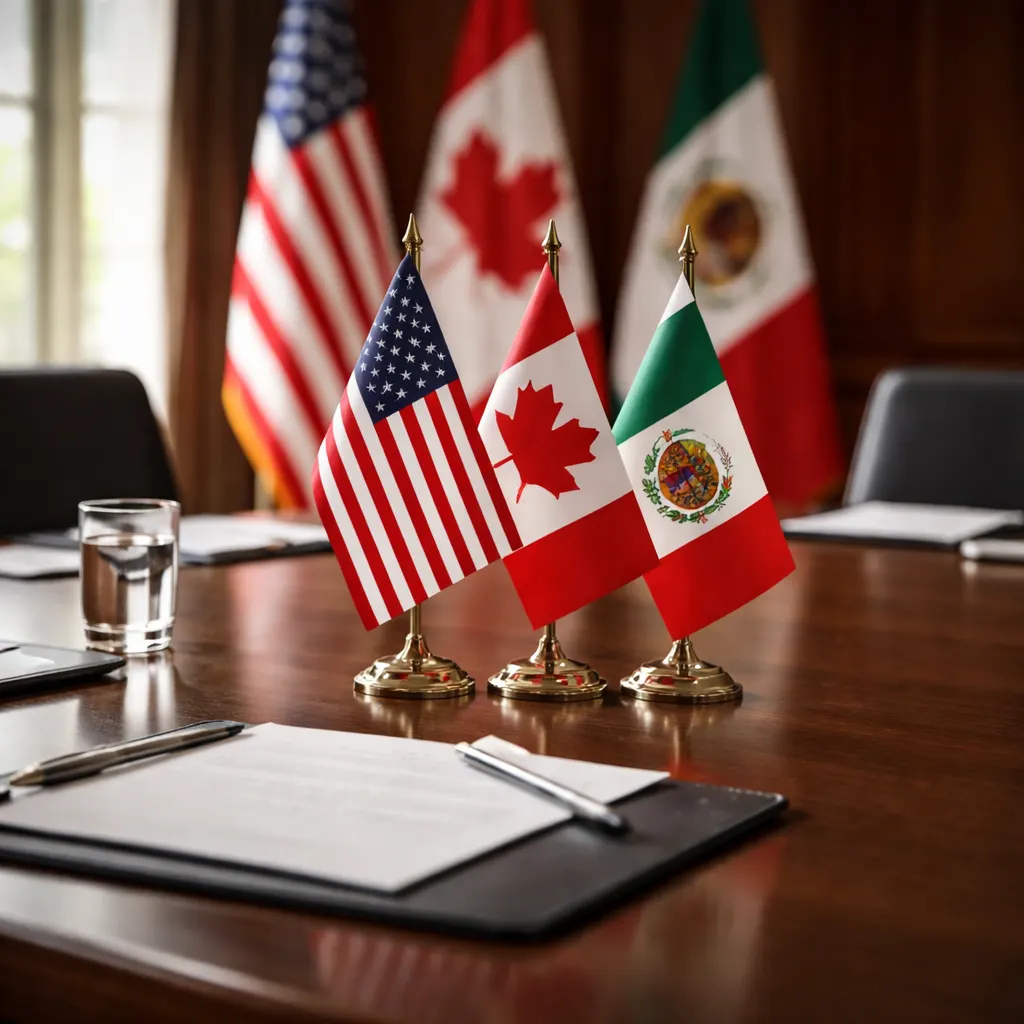
The United States has refused to extend the United States-Mexico-Canada Agreement for another 16 years, forcing the three nations into annual negotiations over the rules governing America's largest trading relationships. A report published by the National Taxpayers Union on August 25, 2026, warns that this decision creates a prolonged period of uncertainty that will damage investment and American competitiveness. Six years after USMCA replaced NAFTA, the agreement has reached a critical juncture where the Trump Administration is using the review process to demand concessions rather than providing the long-term stability businesses need.
In 2025, Canada and Mexico purchased $671 billion in American goods, representing roughly 31% of all U.S. goods exports, while selling $916 billion in goods to the United States. The two nations rank as America's largest trading partners, surpassing even China in total trade volume. The agreement's structure required all three countries to approve an extension by July 1, 2026, to lock in another 16-year term. Canada and Mexico completed the scheduled review and agreed to the extension, but the American government declined. Without unanimous approval, the nations must now reconvene every year until they reach agreement or the deal expires entirely.
The Office of the U.S. Trade Representative has stated it won't "rubber stamp" an extension before resolving ongoing disputes, according to the report. Probable sticking points include restrictions on Canadian dairy products, regulations determining what portion of a vehicle must be manufactured in North America—particularly within U.S. borders—to receive tariff-free treatment, and Chinese products being sent to America via Mexico or Canada, a practice known as transshipment. The Trump Administration has imposed tariffs under separate trade laws on steel, aluminum, automobiles, and other Canadian and Mexican products. In July, the White House announced an additional 50% tariff on certain Canadian goods, including items that would otherwise qualify for USMCA benefits, which the report states "almost certainly" violates the current agreement. The administration later postponed those tariffs by three days while working toward a more lasting arrangement.
The report explains that geography makes North America's trading relationship uniquely valuable and difficult to replace. Countries naturally conduct the most commerce with their neighbors because shorter distances cut shipping expenses and enable firms to split production across borders. North American automobile manufacturing operates as a tightly integrated regional network where engines, transmissions, and other components can cross international boundaries multiple times during assembly. Tariffs applied at each stage increase the total cost of building cars in the United States as well as in Canada or Mexico, ultimately harming both shoppers and global competitiveness. President Trump has argued that Canada and Mexico rely more heavily on the American market than the reverse, and while both nations do send a larger share of their exports to the U.S., the report notes that all countries benefit from trade. The United States possesses greater negotiating leverage than its neighbors, but it will face substantial costs from disrupting commerce with them.
The report concludes that the USMCA review should strengthen the agreement through better enforcement, updated rules of origin, enhanced digital services provisions, and stronger safeguards against transshipment—not create permanent instability through continuous annual reviews. Refusing to extend the agreement will discourage investment without making North American supply chains vanish. Canada and Mexico may lean more heavily on the United States than it does on them, but America is more prosperous and economically secure when trade functions under rules that businesses can rely on.