
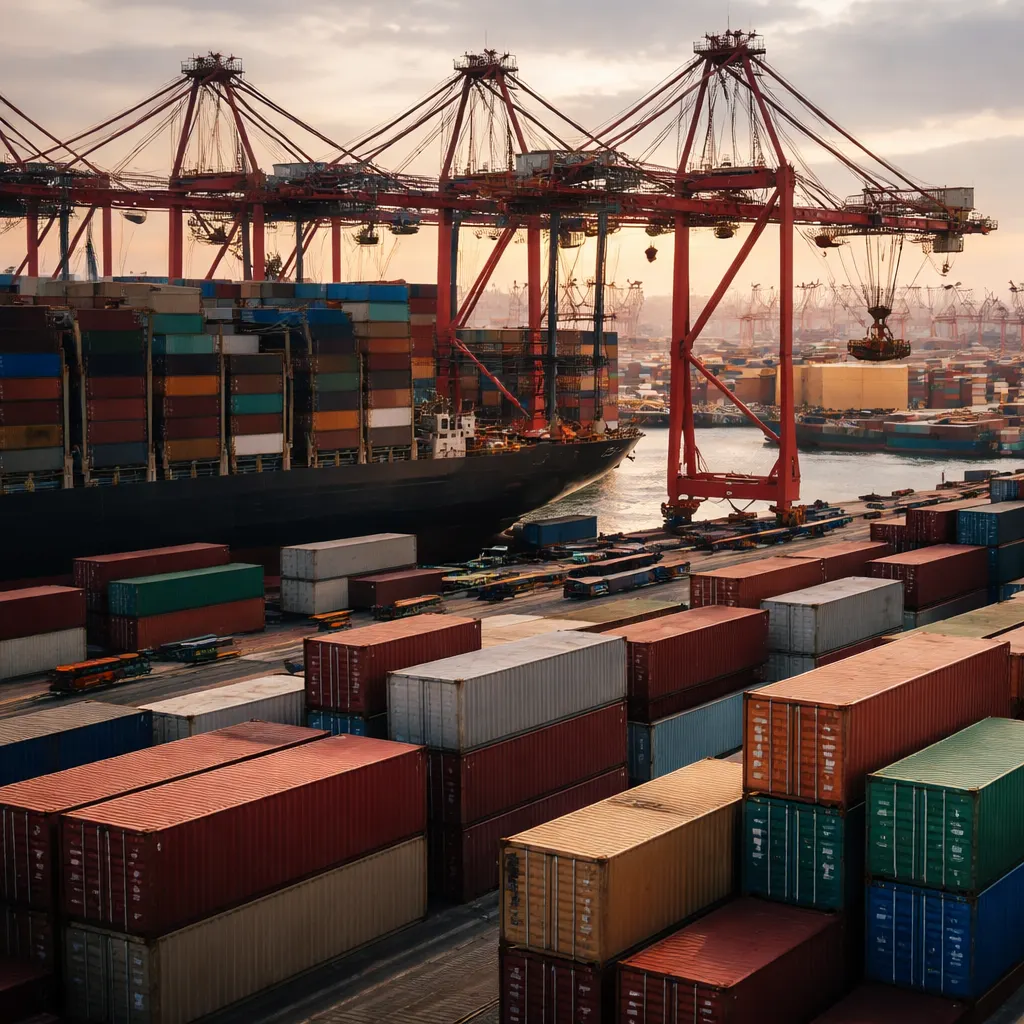
The Port of Long Beach handled 842,030 twenty-foot equivalent units (TEUs) in May, marking a 31.7% jump from May 2025 and the third-busiest May on record, according to figures released Thursday by the nation's second-busiest container gateway. The surge reflects retailers scrambling to stock shelves for the holidays while racing ahead of looming tariffs and manufacturer price hikes.
Imports drove the spike, soaring 40% to 418,851 TEUs, while exports climbed 32.9% to 109,168 TEUs. Empty containers, which often signal future import demand, rose 21.8% to 314,012 TEUs. Through the first five months of 2026, Long Beach has processed 4,050,247 TEUs, up just 0.2% year-over-year, closely tracking 2025's record volume. The port, which together with the Port of Los Angeles forms the busiest U.S. container gateway, saw May's numbers driven by retailers and shippers frontloading cargo to stay ahead of manufacturers' cost increases set to kick in this July.
"These numbers reflect the strength and adaptability of the supply chain," Chief Executive Noel Hacegaba said in a media briefing. "Shippers are responding to the higher cost of doing business by moving cargo earlier." The report notes that carriers have been adjusting capacity, pushing trans-Pacific rates significantly higher over the past several weeks while making booking space more scarce for shippers. Hacegaba warned that "uncertainty" from tariff policy, energy availability, and geopolitical concerns is clouding business plans, with the potential long-term effects of these factors shadowing supply chain decisions.
Rising fuel costs, tariff uncertainty, and geopolitical concerns are all contributing to expectations for an earlier peak shipping season, with higher-than-normal cargo volumes anticipated in July and August, according to Hacegaba. The report points to a recent peace agreement between the United States and Iran that led to the reopening of the Strait of Hormuz, adding another layer of complexity to energy markets and shipping routes. "While these issues may seem very different—security, energy markets and trade policy—they all point to the same challenge: uncertainty," Hacegaba noted. He emphasized that "supply chains perform best when businesses can plan with confidence," calling predictability one of the most important drivers of supply chain efficiency and economic growth.
The frontloading strategy reflects retailers' efforts to avoid getting caught short during the critical back-to-school and holiday selling seasons while dodging cost increases from multiple directions. With carriers tightening capacity and rates climbing, shippers face a narrow window to move goods before summer peak season drives costs even higher. The message from Long Beach is clear: when the future's uncertain, businesses stockpile now and ask questions later.