
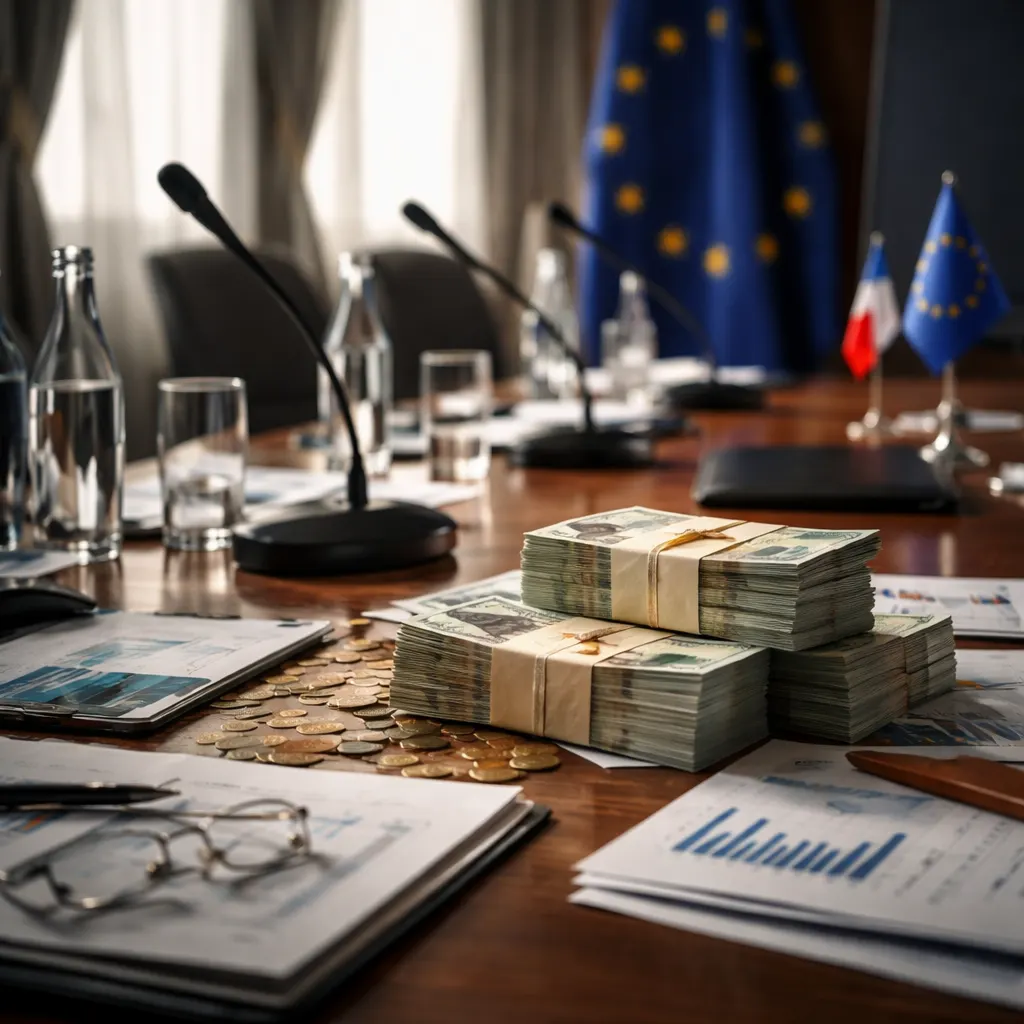
The European Union's upcoming seven-year budget of €2 trillion ($2.27 trillion) has hit a wall, with member states failing to reach agreement on everything except the need for more meetings. According to an analysis published by the Foundation for Economic Education, the EU's next Multiannual Financial Framework (MFF) covering 2028–34 has been called "the most ambitious ever proposed" by European Commission president Ursula von der Leyen, but after a two-day summit in Brussels in mid-June, negotiators managed only to agree on bringing "new funding ideas" to the next session in October. The budget, equivalent to 1.26% of the bloc's combined gross national income, must be approved unanimously by the end of 2027, but with general elections scheduled in almost a third of the EU's 27 countries next year, time is running short.
The budget battle has split the EU into two opposing camps with starkly different priorities. The "Frugal Five"—Germany, the Netherlands, Austria, Finland, and Sweden—are net contributors that collectively paid billions more into the last EU budget than they received back. Germany alone contributed €25.5 billion ($28.95 billion) more than it got back, while the Netherlands paid €7 billion more than it received. These countries support the proposed increases in competitiveness spending to €400 billion ($454.18 billion) and defense spending to €130 billion ($147.61 billion), and they back a major structural overhaul that would merge the Common Agricultural Policy and cohesion funding into a single streamlined fund. On the other side stand the "Friends of Cohesion"—sixteen countries from Central, Eastern, and Southern Europe, all net beneficiaries who receive more than they pay in. Poland, for example, receives €10 billion more ($11.35 billion) than it contributes. This group wants less spent on defense and competitiveness, more mutual debt, and a deferral of €170 billion ($193 billion) in repayments for pandemic recovery bonds that begin maturing in 2028.
The report highlights several specific points of contention that threaten to derail negotiations. The EU Commission proposes combining the Common Agricultural Policy and cohesion funds—which together accounted for almost two thirds of the previous MFF—into one streamlined fund that would reduce funding plans from over 500 to just 27. According to von der Leyen, "[A] lot of redundancy and overlapping is basically wasting potential that we cannot unlock." The Friends of Cohesion are "dismayed" by this proposal, pointing out that agricultural funding has been cut to €300 billion ($340 billion) from €386 billion ($438 billion) in the last MFF—a 30% reduction unmatched elsewhere in the new budget. German Chancellor Friedrich Merz has called the proposed budget "unacceptable and unbalanced." Italy has criticized what it calls an "anachronistic" rebate system that gives Denmark, Austria, Germany, the Netherlands, and Sweden discounts on their contributions, with Premier Giorgia Meloni threatening to demand rebates for Italy as well. France's president Emmanuel Macron, meanwhile, has called it "idiotic" to start repaying pandemic recovery loans in 2028 and wants permanent mutual debt schemes instead.
The report explains that the divisions reflect fundamentally different views on how the EU should respond to a geopolitical situation that has changed dramatically since 2021. The Frugal Five favor structural reforms that would give national capitals more flexibility in deploying agricultural and cohesion funds, aligning with the bloc's deregulation drive aimed at cutting administrative costs by almost €40 billion by 2029 ($45.42 billion). The Friends of Cohesion, however, resist these changes on the grounds that increased defense and competitiveness spending will drain money away from the programs their economies depend on. France, despite being the bloc's second largest net contributor after Germany in 2021 (paying in €12.4 billion more than it received, or $14 billion), remains outside the Frugal camp due to its status as the biggest recipient of agricultural funding. The interconnectedness of EU financing means reduced direct grants might be offset by entrepreneurship and competitiveness gains from streamlined funding, but the report notes the Friends of Cohesion's objection "is not without foundation"—Brussels still plans to spend €100 billion ($113.5 billion) on administration over seven years and create 2,500 more jobs at the EU Commission, which already employs 35,000 people.
The report concludes that Ireland, taking over the six-month presidency of the Council of the European Union at the end of June, faces the challenge of developing "new own resources"—proposed funding streams including shared cash from CO2 emissions permit sales, green taxes, and a windfall levy on the bloc's biggest companies—that must generate around €66 billion ($74.94 billion) to avoid further raiding member states' coffers. But the analysis suggests money alone won't resolve the standoff. All parties agree the world has changed dramatically in seven years, yet the Friends of Cohesion resist structural reforms while the so-called conservative nations push for radical change. The report argues that "ways of thinking need to change, to enable experimentation with the financial structures that underpin the MFF," because those structures determine whether spending is effective. When EU leaders reconvene in October, they'll need more than Irish ingenuity—they'll need consensus that the system itself, not just the dollar figures, must evolve.