
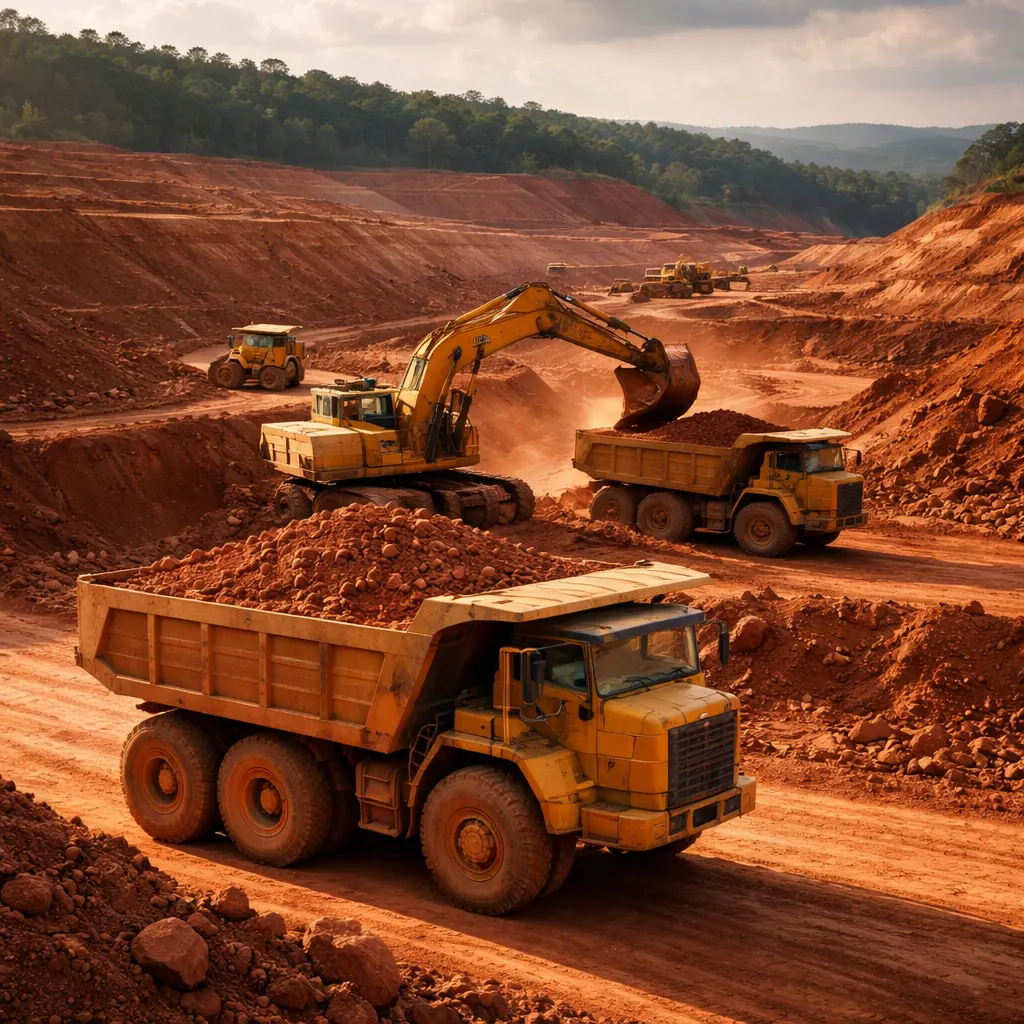
Alcoa has agreed to acquire South32's aluminium, alumina and bauxite assets in a transaction valued at up to $5.6 billion, marking one of the most significant deals in the global aluminium sector in years. According to a new analysis from Wood Mackenzie, the transaction will propel Alcoa past Rio Tinto to become the world's largest bauxite miner on an equity-attributable production basis, with global market share rising from 8.5% to 13.0%. The deal represents a decisive strategic shift for both companies, cementing Alcoa's dominant upstream position while allowing South32 to pivot toward copper and shed a significant decarbonisation burden.
The transaction is structured through $3.1 billion in upfront cash, approximately $1.0 billion in Alcoa equity through the issuance of around 17 million shares, approximately $750 million in assumed net debt and lease liabilities, and up to $750 million in contingent cash consideration payable through 2030 based on aluminium and alumina price performance. The deal adds approximately 18 million tonnes of attributable bauxite and 5 million tonnes of attributable alumina production to Alcoa's portfolio, while lifting its aluminium smelting capacity by approximately 26%. Alcoa's attributable bauxite production will rise 53.6% to 52,897 kilotonnes per year, with the production-weighted average cash cost falling 8.3% to $15.14 per tonne, moving Alcoa from the 21st to the 18th percentile of the global cost curve. In alumina, attributable volume grows 51.6%, with global share rising from 6.5% to 9.9%, while in aluminium, attributable volume grows 35.3% and global share rises from 3.3% to 4.5%.
Wood Mackenzie's sum-of-the-parts analysis derives a base case net asset value of $10.9 billion for the portfolio, implying a 49% discount at the transaction price. However, the report finds that on near-term trading multiples, the deal is broadly in line with listed aluminium peers, suggesting South32 is monetising at a perceived strong point in the cycle rather than leaving value on the table. "This deal is a cycle-timed exit by South32 and a long-term strategic bet by Alcoa," said James Whiteside, Director and Head of Corporate Research for Metals & Mining at Wood Mackenzie. Alcoa has quantified synergies at $900 million, with the proximity of the Worsley Alumina refinery to its existing Western Australian operations serving as a key driver.
The acquisition amplifies Alcoa's already structurally long raw material position and gives the company substantially greater influence over Atlantic basin alumina pricing, with the flexibility to direct volumes to its own smelters or into third-party markets. For South32, the divestment proceeds will support reinvestment through the 2027–2030 period as capital intensity peaks, particularly for its Hermosa copper project, now estimated at $3.3 billion in capital costs, and a further $725 million approved for the Sierra Gorda expansion. The report notes that the Mozal Aluminium smelter in Mozambique is excluded from the transaction and remains under South32's ownership on care and maintenance, with its exclusion avoiding the transfer of a structurally challenged, high-cost asset. The deal also materially reduces South32's emissions intensity, as the Hillside smelter alone accounts for approximately 60% of the company's operational emissions, cutting future capital requirements tied to decarbonisation.
Wood Mackenzie characterises the transaction as South32 crystallising value in a supportive price environment while pivoting toward copper, where it sees stronger long-term fundamentals, while Alcoa is leaning into the cycle and underwriting long-term value through greater integration, cost optimisation and a dominant position in seaborne alumina markets. The report flags increased market concentration in alumina as introducing regulatory and antitrust considerations that represent a key execution risk for full value realisation. The contingent consideration built into the deal structure has thresholds tied to aluminium prices of approximately $2,825–3,500 per tonne and alumina prices of approximately $345–471 per tonne, assessed through to 2030, effectively aligning both parties to commodity price performance over the medium term.